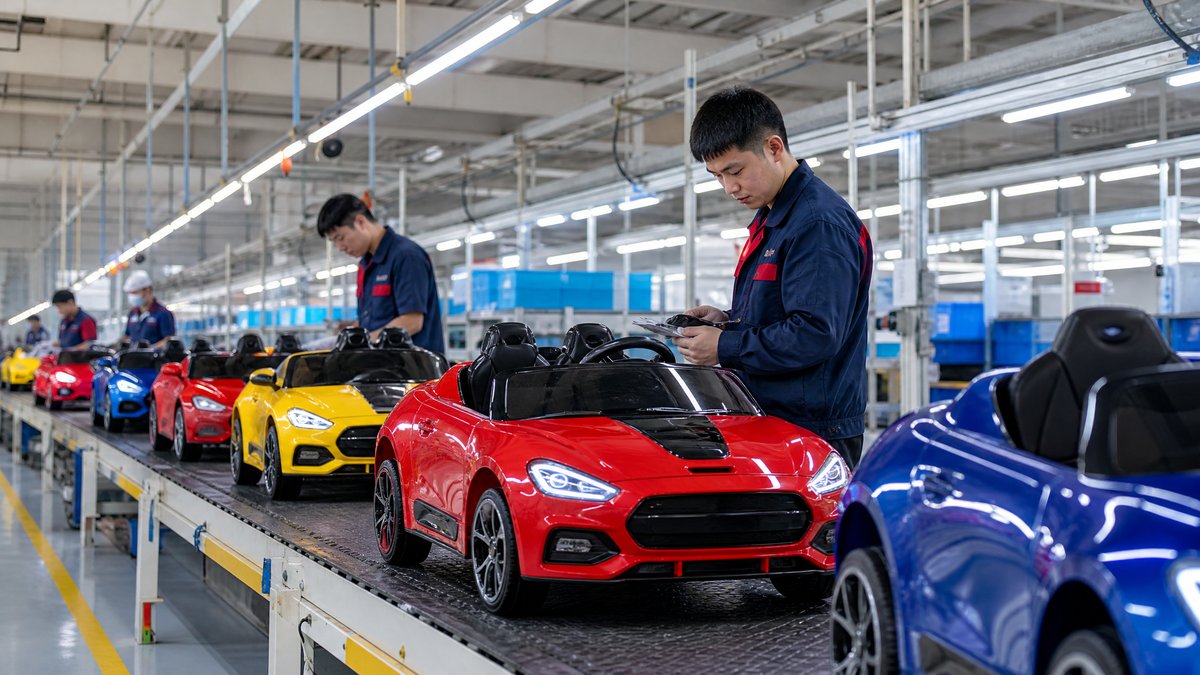
A wholesale warranty policy for kids electric ride-on cars should make six points unmistakable: what is covered, what is excluded, what evidence is required, who handles transport, how batteries are handled, and when each party must act. It should also distinguish the factory-to-buyer B2B agreement from the consumer-facing promise used by a distributor or retailer. Before issuing either document, verify the selected model’s specifications, battery configuration and transport requirements, and the requirements of the destination market.
For importers, wholesalers, distributors, and retailers, a good policy is not a generic “parts warranty.” It is a practical claims process that protects safety, traceability, customer experience, and commercial planning without making promises that the supplier or local seller cannot support.
Need a model-specific warranty and spare-parts discussion before you buy? Email KidsRideCar with the model, destination market, sales channel, and expected order volume.
Start With Two Separate Promises: B2B Supply Terms and Consumer Warranty
A distributor purchase order and a retail warranty answer different questions. Combining them in one vague document can create avoidable disputes.
- B2B supply warranty: Defines the supplier’s obligations to the importing buyer or distributor: covered defects, inspection process, claim evidence, remedies, spare-parts handling, freight allocation, and claim time limits.
- Consumer-facing warranty: Defines what the end customer sees at point of sale: who is the warrantor, how to request service, local-language terms, consumer-law disclosures, and any remedies that cannot be reduced by contract.
- Safety and compliance process: Sits alongside both warranties. A potential safety issue needs escalation, traceability, and corrective-action handling; it should not be treated as a routine cosmetic claim.
For U.S. consumer sales, a written consumer-product warranty may trigger federal disclosure, designation, and pre-sale availability requirements; the [FTC’s business guidance][ftc] also notes that rules discussed there apply to consumer products rather than products sold for resale or commercial purposes. This is one reason a U.S. retailer’s end-customer document should be reviewed separately from its factory purchasing agreement.
> Practical rule: Put the B2B policy in the supply agreement or warranty schedule, then have qualified local counsel or the relevant market authority review the downstream consumer wording. A commercial warranty is not a substitute for product-safety, labeling, or statutory consumer obligations.
The Wholesale Warranty Policy Checklist
Use the following table as a buyer-side drafting checklist. It is intentionally model-neutral: fill in the agreed terms only after the selected ride-on car, included accessories, battery type, destination, and sales channel are confirmed.
| Policy element | What the clause should say | Evidence or operational detail to agree before shipment |
|---|---|---|
| Covered product | Exact model, SKU, approved revision, color or OEM configuration, included charger, battery, remote control, and other supplied accessories | Purchase order, pro forma invoice, approved specification sheet, packaging list, and model/revision identifier |
| Covered defect | Define a manufacturing or material defect and the conditions under which it is assessed | Fault description, photos/video, serial or batch information, and a troubleshooting record |
| Covered components | State whether coverage differs for the vehicle body, motors, gearbox, controller, wiring, charger, remote, battery, and cosmetic parts | A component schedule and spare-parts list; do not assume one term suits every component |
| Remedy | Specify whether the agreed remedy is remote troubleshooting, spare part, repair authorization, replacement unit, credit, or another agreed option | Decision authority, approval workflow, service-part lead-time expectations if agreed, and disposition of failed parts |
| Start date and time windows | Identify when coverage begins and separate inbound inspection, transit-damage, missing-item, functional-defect, and safety-escalation windows | The event that starts each clock, how notice is given, time zone, and what pauses or does not pause the clock |
| Exclusions | List exclusions narrowly and clearly, including any misuse, unapproved modification, improper assembly, unapproved charging equipment, normal wear, or cosmetic damage—only where lawful and relevant to the cause | Causation standard, examples, and a review path if the cause is uncertain; do not use a blanket exclusion to bypass non-waivable rights |
| Freight and return handling | Allocate outbound shipping, transit-damage reporting, return authorization, reverse logistics, customs paperwork, and disposal responsibilities | Named delivery point, carrier claim process, photographs at receipt, return authorization process, and who authorizes charges |
| Battery handling | Identify battery chemistry/configuration, charger compatibility, transport-document responsibility, damaged-battery procedure, and replacement terms | Selected model documents, battery/charger labels, transport classification review, carrier requirements, and applicable test summary if relevant |
| Traceability and records | State which identifiers must be retained and who receives claim data | PO/invoice, batch or serial identifier where available, complaint log, approved corrective action, and privacy-safe evidence storage |
| Market review | Identify who owns review of local safety, labeling, warranty, and consumer-law requirements | Destination country, sales channel, local language needs, named importer/economic operator where applicable, and documented sign-off |
Define Coverage at the Component Level
“Electrical parts covered” is not enough. A ride-on car is a system of mechanical, electrical, and supplied accessory parts that can have different diagnostic paths and replacement logistics. A clear schedule should name the components included in the purchased configuration and state whether each has the same or a separate coverage term.
For example, the schedule may distinguish among:
- vehicle frame/body and supplied hardware;
- motors, gearboxes, controller, switches, wiring, and connectors;
- remote control and receiver, if supplied;
- charger and battery, if supplied with the selected model; and
- consumable, cosmetic, or wear-related parts, if any are treated differently.
Do not write coverage around a product family name alone. Confirm the selected model, production revision, included battery/charger, and approved accessories in the purchase documentation. Specifications, battery configuration, and market requirements must be verified for the selected model and destination market.
State the Remedy Without Overpromising
The policy should say what happens after a valid claim is confirmed. Useful options may include guided diagnosis, an approved replacement part, authorized repair, a replacement product, or a commercial credit—depending on the agreement and applicable law. It should also say who decides whether a return is needed and who may authorize a repair.
Avoid automatic language such as “full replacement in all cases.” In cross-border wholesale, the suitable remedy can depend on the diagnosed part, inventory, transport restrictions, customs implications, and the buyer’s ability to perform approved repairs. The clause should preserve any rights that cannot legally be limited in the destination market.
Make Exclusions Specific, Fair, and Reviewable
Exclusions can help separate a genuine manufacturing defect from damage after delivery, but they should be narrow, understandable, and linked to evidence. Overly broad wording may be commercially ineffective or legally unsuitable in a consumer-facing document.
A B2B policy may address, as appropriate to the contract and local law:
- damage connected to unauthorized modifications or non-approved replacement parts;
- damage attributable to assembly, use, storage, maintenance, or charging that conflicts with supplied instructions;
- damage from an incompatible or non-approved charger, where the evidence supports causation;
- ordinary surface wear or cosmetic marks that were not reported under the agreed inbound inspection process;
- damage occurring after the agreed point at which transport risk passes, subject to the separately agreed carrier-claim process; and
- faults caused by accident, abuse, or exposure outside the product’s documented intended-use conditions.
The key word is attributable. If the cause is unclear, require a documented technical review instead of rejecting the claim by default. Exclusions should never delay action on a suspected safety issue.
Keep Transit Damage Separate From Product Defects
Transit damage, shortage, and factory defect claims often require different proof and deadlines. Your policy should create distinct paths:
1. Visible external damage at receipt: Record the condition of cartons or pallets, retain carrier documentation where relevant, and notify the responsible party within the agreed receipt window.
2. Missing or incorrect items: Compare the shipment against the packing list and approved order documents.
3. Functional or latent defect: Follow the warranty diagnostic and evidence process.
4. Potential safety concern: Stop normal claims processing and use the safety-escalation route immediately under the agreed protocol and applicable market rules.
Do not rely on a shipping term alone to settle every dispute. The contract should identify the named delivery point, inspection obligations, carrier-claim cooperation, customs responsibility, and the evidence needed for each claim type.
Build an Evidence Standard That Speeds Up Claims
A claims policy should collect enough evidence to diagnose the issue without forcing a retailer to dismantle a product, send unnecessary personal data, or ship a potentially unsafe item before instruction.
Minimum Claim Pack for Wholesale Buyers
Ask for the following, where applicable:
- buyer name, purchase order or invoice number, and delivery date;
- model/SKU, production or batch identifier, and vehicle serial number where available;
- a concise description of the symptom and when it occurs;
- clear photos of the product, packaging condition, and relevant labels;
- a short video showing the issue when that can be done safely;
- photos of the charger and battery labels, without assuming the battery type or rating;
- the troubleshooting steps already completed according to the supplied instructions; and
- receipt documentation or carrier exception notes for transit-damage cases.
Include an instruction not to put children’s faces, private addresses, payment information, or other unnecessary personal information in photos or video. Limit access to claim evidence, set a retention practice, and check the applicable privacy rules for the destination market.
Add a Clear Decision and Escalation Path
A workable policy identifies who can approve each stage:
| Claim stage | Owner to name in the policy | Outcome to document |
|---|---|---|
| Claim intake | Buyer service contact / supplier after-sales contact | Claim ID, received evidence, missing information list |
| Technical triage | Designated technical contact | Safe troubleshooting steps or request for further evidence |
| Remedy approval | Named commercial and technical approver | Approved remedy, parts list, cost/freight allocation, authorization number if needed |
| Safety escalation | Named safety/compliance contact | Stop-sale or hold decision where appropriate, traceability review, regulator/legal review where required |
| Closure | Buyer and supplier record owner | Remedy completed, failed-part disposition, root-cause or corrective-action note if agreed |
Set response and claim-notice windows in the executed agreement rather than copying a generic number from another category. State the triggering event, the notification channel, the party that must acknowledge receipt, and what happens if evidence cannot be obtained immediately. This makes the time window auditable rather than ambiguous.
Address Battery Handling as Its Own Warranty Section
Battery complaints may involve product performance, charging equipment, transport classification, and safety. Treat them as a dedicated section, not a single line under “electrical parts.”
What the Battery Clause Should Cover
The clause should identify or require confirmation of:
- the battery chemistry and configuration supplied with the selected model, if a battery is included;
- the approved charger and connector arrangement for that configuration;
- supported storage, charging, and inspection instructions from the selected model’s documentation;
- the evidence needed for a battery or charger claim;
- who decides whether a battery is safe to move, return, replace, recycle, or dispose of;
- who supplies transport documents and packaging information when required;
- whether a replacement battery can be shipped separately and under what conditions; and
- the buyer’s local collection, recycling, or disposal responsibilities, if applicable.
Never assume that a battery used in one ride-on car can be substituted into another model or that one battery-shipping workflow applies to all destinations. Verify battery transport rules, carrier acceptance conditions, documentation, and destination-market requirements for the selected battery and route.
For U.S. transport, [PHMSA states][phmsa] that lithium cells and batteries offered for transportation must have passed the applicable UN Manual of Tests and Criteria, Section 38.3 design tests, and that manufacturers must make the prescribed test summary available on request. That transport-oriented documentation supports traceability; it does not replace the broader product-safety, conformity, or destination-market review required for the selected ride-on car.
Damaged, Recalled, or Suspect Batteries Need a Separate Route
The policy should tell the buyer not to send a damaged, defective, recalled, or suspect battery through ordinary returns without written instructions from the responsible transport/compliance contact. It should define a hold-and-escalate process, the contact point, and who checks applicable carrier and regulatory requirements. Follow the product instructions and the competent transport authority or carrier’s current rules; do not improvise repackaging or return shipment instructions in a retail service email.
Put Shipping and Reverse Logistics in Writing
A warranty can fail operationally when nobody has agreed who pays to move a part, product, or battery. Before dispatch, document the responsibilities below.
| Logistics question | Term to document |
|---|---|
| Outbound delivery | Named delivery point, agreed shipping arrangement, paperwork owner, and receipt-inspection process |
| Visible damage | Required carrier notation, photo standard, notification route, and evidence deadline |
| Replacement part | Who selects the shipping method, pays freight/duties where applicable, and provides address validation |
| Whole-unit return | Whether return is required, who issues authorization, packaging instructions, customs paperwork, and cost allocation |
| Battery movement | Whether transport is permitted, who approves it, required documents/packaging, carrier acceptance, and alternative local disposal path |
| Failed-part disposition | Return, hold, local destruction, recycling, or other method—only after written instruction and in accordance with applicable rules |
For distributors selling online, also align the warranty claims route with the information published on the product page, marketplace listing, and support channels. In the EU, the [General Product Safety Regulation][gpsr] treats certain targeted distance-sales offers as making products available on the market and requires specified economic-operator information in online offers. Review current destination-market obligations rather than treating a factory warranty clause as complete e-commerce compliance.
Review the Policy for Each Destination Market
The same English B2B template should not be assumed suitable everywhere. Before launch, assign responsibility for a market-specific review covering the product, paperwork, sales channel, and consumer-facing wording.
Questions for the Importer, Distributor, or Retailer
- Is the product classified and marketed appropriately in the destination market, including age grading, warnings, and instruction language?
- Who is the importer or other required local economic operator, and what contact/traceability information must appear with the product or in the distance-sales offer?
- What safety, conformity, technical-documentation, labeling, and complaint/incident obligations apply to this selected model?
- Are there mandatory consumer remedies, limitations on exclusions, disclosure rules, or pre-sale warranty availability requirements?
- Are there local battery take-back, recycling, hazardous-goods, or carrier rules that affect replacements and returns?
- Does the retailer’s marketplace or payment provider impose return, response, or document rules beyond the supplier agreement?
In the EU, importers must ensure products meet the general safety requirement before placing them on the market and must not place non-conforming products on the market until they are brought into conformity; the [GPSR][gpsr] also addresses product traceability and distance sales. In Great Britain, the government’s [toy-safety guidance][gb-toys] describes manufacturer and importer duties, including conformity assessment, technical documentation, traceability information, and safety instructions/warnings for toys within scope. These are examples of why a destination-market review must be completed by the responsible business with appropriate local advice—not proof that any particular model is compliant in every market.
Add a Safety-Issue Override
Include a short clause that overrides normal warranty timing and remedy procedures when a claim could indicate a safety risk. It should require prompt escalation to the named safety/compliance contact, preservation of traceability records, and review of any reporting, corrective-action, withdrawal, or recall obligations that may apply. Do not let a dispute over freight, cosmetic condition, or expired commercial coverage prevent timely safety assessment.
Suggested Internal Links for Buyers
Use these relevant KidsRideCar resources to help buyers connect warranty drafting with sourcing and after-sales execution:
- Supplier due diligence and documentation: [How to Source Kids Electric Ride-On Cars from China](/blog/how-to-source-kids-electric-ride-on-cars-from-china)
- Inbound checks and traceable evidence: [Quality Inspection for Kids Electric Ride-On Cars: A Buyer’s Guide to Pre-Shipment Checks in China](/blog/kids-electric-ride-on-car-quality-inspection-guide-china)
- Packaging, export, and retail-channel planning: [Kids Electric Ride-On Car Packaging Guide: Amazon FBA, Retail & Export Requirements](/blog/kids-electric-ride-on-car-packaging-guide-amazon-fba-retail)
- Service workflow after the sale: [After-Sales Service for Kids Electric Ride-On Cars: A Distributor’s Guide to Reducing Returns and Building Customer Loyalty](/blog/kids-electric-ride-on-car-after-sales-service-guide-distributors)
- EU importer context: [EU Toy Safety Directive & EN 71: What Every Importer of Kids Electric Ride-On Cars Needs to Know](/blog/eu-toy-safety-directive-en71-kids-electric-ride-on-cars-importers-guide)
Image Planning
| Placement | Suggested dimensions | English caption | Alt text | English AI prompt |
|---|---|---|---|---|
| Below the introduction | 1600 × 900 px | “A clear B2B warranty process connects the importer, supplier, retailer, and service team.” | “Wholesale buyer reviewing a kids electric ride-on car warranty checklist with supplier documents.” | “Photorealistic B2B sourcing scene in a bright warehouse office: importer and supplier reviewing a neutral warranty checklist beside an unbranded kids electric ride-on car, shipping carton and spare parts organizer visible, no logos, no readable personal data, professional editorial photography, landscape.” |
| In the evidence section | 1400 × 900 px | “Traceable claim evidence helps separate transit damage, missing items, and product defects.” | “Close view of a ride-on car serial label area, packaging checklist, and smartphone documenting a claim.” | “Clean commercial still life showing an unbranded children’s electric ride-on car detail, generic model label without readable numbers, shipping carton, checklist, and smartphone camera documenting condition, neutral background, realistic B2B after-sales concept, landscape.” |
| In the battery-handling section | 1400 × 900 px | “Battery claims need model-specific documentation and an approved transport route.” | “Approved battery handling workflow for a kids electric ride-on car, with charger, documentation, and hold area.” | “Professional product-safety illustration, not instructional: unbranded ride-on car battery and compatible charger placed near a document folder labeled ‘Transport Review’, a clearly marked hold area in a warehouse, no hazard labels copied from real regulations, no people, clean blue and white palette, landscape.” |
| Before the conclusion | 1600 × 900 px | “A destination-market review turns a generic policy into a launch-ready after-sales plan.” | “Importer, distributor, and retailer reviewing a destination-market warranty and compliance plan for ride-on cars.” | “Modern international B2B meeting with three diverse business professionals reviewing a map, product documentation, and an unbranded children’s electric ride-on car in a showroom, no logos, no text overlays, credible editorial photo style, landscape.” |
FAQ: Wholesale Warranty Policies for Kids Electric Ride-On Cars
1. What should a wholesale warranty cover for a kids electric ride-on car?
At minimum, identify the covered model/configuration and components, define a covered defect, list exclusions, state available remedies, set separate time windows for different claim types, require claim evidence, assign shipping and reverse-logistics responsibilities, and include a battery-handling and safety-escalation process. Confirm all details against the selected model and destination market.
2. Should the importer use the factory warranty as the retail customer warranty?
Usually, no. The B2B supply warranty and the consumer-facing warranty serve different parties and may be subject to different rules. The importer, distributor, or retailer should create or review its retail wording for the destination market, including required disclosures, language, and rights that cannot be excluded.
3. Who pays shipping for a warranty claim?
The answer should be written into the agreement by scenario: visible transit damage, missing item, confirmed factory defect, repair part, whole-unit return, and battery movement. Name the delivery point, evidence process, approval steps, carrier-claim cooperation, customs responsibility, and any duties/taxes allocation. Do not assume a general warranty sentence answers all of these cases.
4. What proof should a distributor collect before opening a claim?
Collect the order/invoice reference, model/SKU, serial or batch information where available, description of the issue, product and packaging photos, a safe video if useful, labels for the supplied charger/battery where relevant, and carrier documentation for transit damage. Avoid collecting unnecessary personal information from the end customer.
5. Can a battery be returned through normal parcel shipping?
Do not assume so. The battery type, condition, route, carrier rules, packaging, documentation, and destination-market rules must be verified first. A damaged, defective, recalled, or suspect battery should follow a written hold-and-escalate process rather than an ordinary retail return label.
6. How long should the warranty period and claim windows be?
There is no universal period or notification window that fits every model, market, sales channel, or component. Agree the terms in writing and define when each clock starts. Then have the consumer-facing version reviewed for the destination market, especially where statutory rights or pre-sale disclosure requirements may apply.
Conclusion
A strong wholesale warranty policy is a clear operating agreement, not a marketing promise. Define the model and components, distinguish transit issues from defects, set evidence and response routes, assign every shipping decision, treat batteries separately, and build in a market-specific legal and safety review. That structure gives importers, wholesalers, distributors, and retailers a more reliable way to manage claims while keeping customer service and traceability aligned.
Planning a wholesale ride-on car program? Contact KidsRideCar to request a model-specific discussion covering documentation, spare parts, battery configuration, and destination-market considerations.
[ftc]: https://www.ftc.gov/business-guidance/resources/businesspersons-guide-federal-warranty-law "FTC — A Businessperson’s Guide to Federal Warranty Law"
[gpsr]: https://eur-lex.europa.eu/eli/reg/2023/988/oj/eng "EUR-Lex — Regulation (EU) 2023/988 on general product safety"
[gb-toys]: https://www.gov.uk/government/publications/toys-safety-regulations-2011/toys-safety-regulations-2011-great-britain "UK Government — Toys (Safety) Regulations 2011: Great Britain"
[phmsa]: https://www.phmsa.dot.gov/lithiumbatteries "U.S. PHMSA — Lithium Batteries"
Official references
Explore these external resources for current regulatory and trade guidance. Confirm requirements with the relevant authority before placing an order.
Ready to Start?
Factory-Direct · CE & ASTM Certified · MOQ from 50 Units
Our export team works with buyers in 60+ countries. Get a quote within 24 hours.
KR
Written by KidsRideCar
China's leading kids electric ride-on car manufacturer. 500,000+ units shipped annually to 60+ countries. CE, ASTM & EN71 certified.