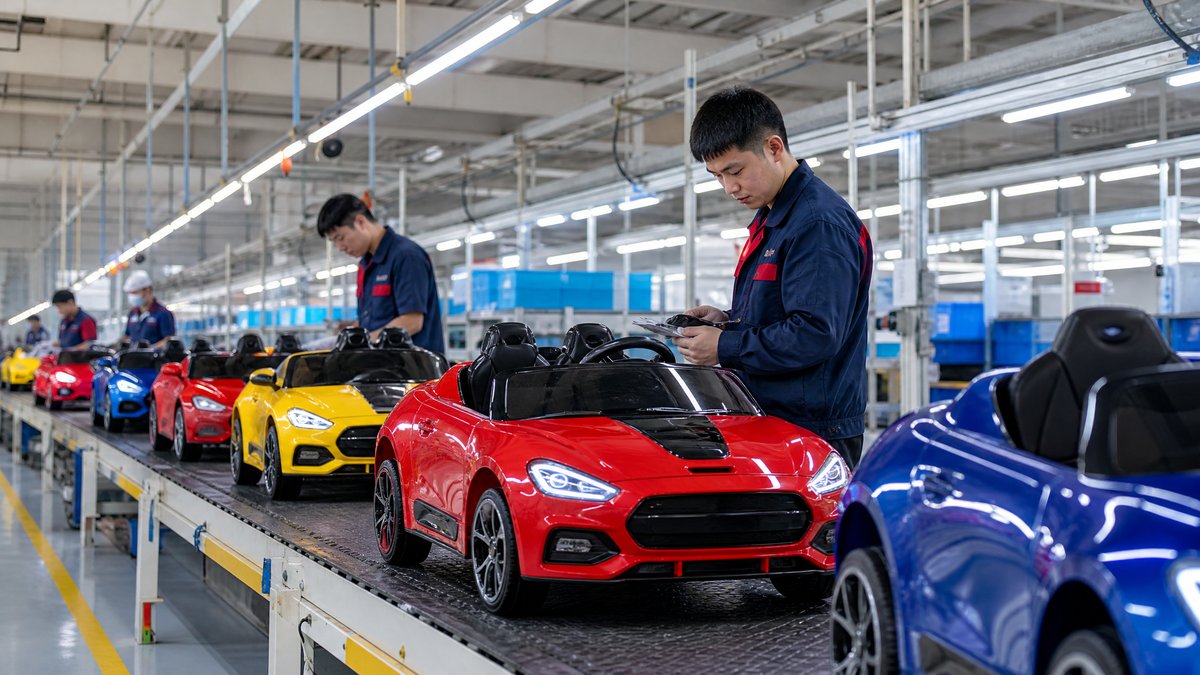
In the competitive landscape of children’s electric mobility, the integrity of the energy storage system serves as the cornerstone of both product reliability and business profitability. For global importers, distributors, and retail enterprises, the management of these power units is not merely a technical consideration but a critical strategic operation. The way these components are handled from the moment they leave the production facility until they reach the final user dictates the long-term success of a sourcing program. Proper oversight ensures that inventory remains viable during transit and storage, minimizing the financial burden of returns and protecting the reputation of the brand in a crowded marketplace.
Directly addressing the primary inquiry, the most effective practices for managing energy units in four-wheel ride-on vehicles involve a comprehensive framework of environmental control, systematic inventory rotation, and disciplined energy restoration cycles. These practices emphasize maintaining a stable chemical environment, ensuring that units are never allowed to reach a state of total depletion, and utilizing only the specific support tools provided by the original manufacturer. Importers must rely on written model documentation and current supplier evidence to establish their own internal protocols. Before implementing any large-scale management plan, businesses should seek written supplier confirmation and ensure all actions align with applicable destination-market requirements.
The Strategic Importance of Energy Storage in Children’s Mobility
For a professional importer, the energy unit is the most sensitive component within the vehicle assembly. It is the primary factor determining how long a product can remain in a warehouse before it requires attention and how satisfied a customer will be upon the first use. When a distributor manages a large volume of inventory, even a small percentage of energy-related issues can lead to significant logistical challenges. The costs associated with handling faulty units, including freight and labor, can quickly erode the margins of a sourcing contract. Therefore, establishing a culture of proactive care is essential for maintaining a healthy bottom line.
The journey of a ride-on vehicle often involves weeks or even months of maritime transport, followed by time spent in regional distribution centers. During this period, the energy cells are subject to natural discharge. If this process is not monitored, the cells may fall below a critical level where they can no longer be restored to their original state. By standardizing care protocols, importers can ensure that every unit delivered to a retail partner is ready for the end user, thereby reducing the rate of items reported as non-functional upon arrival.
Economic Implications of Battery Lifecycle Management
The financial impact of energy management extends far beyond the cost of a single replacement part. In the Business-to-Business sector, reputation is a primary asset. Retailers who receive consistent, high-quality products are more likely to place larger recurring orders. Conversely, a batch of products with failing energy systems can damage a relationship that took years to build. Importers must view energy management as a form of insurance against brand erosion.
Furthermore, the logistical complexity of returning heavy items makes prevention much more cost-effective than replacement. By implementing a non-destructive assessment of incoming batches, importers can identify potential issues before the products enter the retail stream. This proactive approach allows for better communication with the manufacturer and ensures that any systemic issues are addressed at the source rather than in the warehouse of a disgruntled customer.
Understanding Primary Energy Cell Technologies for Importers
In the realm of children’s mobility, two primary technologies dominate the market. Each has distinct characteristics that influence how a distributor should manage their inventory. Understanding these differences is vital for selecting the right product mix for a specific market and for developing appropriate handling guidelines.
Lead-Based Energy Solutions
Lead-based units have long been the standard for the industry due to their stability and cost-effectiveness. They are robust and well-understood, making them a reliable choice for a wide range of products. However, they are also heavier and more sensitive to being left in a depleted state. For these units, the primary goal is to prevent the chemical hardening that occurs when the cells remain empty for extended periods. Distributors must be diligent about checking these units if they remain in storage for more than a few months.
Lithium-Based Energy Solutions
Lithium-based solutions are increasingly popular in premium models due to their lighter weight and higher energy density. They offer a longer overall life and are generally more stable during long-term storage. However, they require more sophisticated management systems and are subject to stricter transportation rules. Importers sourcing these models must ensure they have all the necessary documentation for international shipping and that their warehouse staff are trained in the specific handling requirements for these high-performance units.
Sourcing and Selection Framework for Global Distributors
When selecting a manufacturing partner, importers should evaluate the energy storage system as a key performance indicator. A high-quality supplier will provide comprehensive documentation and clear evidence of their quality control processes. The following table provides a comparison of the two primary technologies from a Business-to-Business perspective.
| Feature | Lead-Based Units | Lithium-Based Units |
|---|---|---|
| Weight Impact | Substantial addition to landed cost | Minimal impact on total weight |
| Storage Stability | Requires frequent attention | Highly stable over long periods |
| Lifecycle Duration | Standard commercial life | Extended service life |
| Shipping Complexity | Standard logistics | Specialized handling required |
| Cost Profile | Economical for mass market | Premium positioning |
| Environmental Sensitivity | High sensitivity to depletion | Moderate sensitivity |
Professional Logistics and Warehouse Protocols
The warehouse environment is where the longevity of a product is either preserved or compromised. For a distributor, the goal is to create a stable environment that minimizes the natural degradation of the energy cells.
Environmental Controls for Long-Term Inventory
Temperature and humidity are the two most significant factors affecting energy storage. Extreme heat can accelerate the internal chemical reactions that lead to failure, while extreme cold can increase internal resistance and reduce the immediate effectiveness of the cells.
* Temperature Management: Units should be stored in a climate-controlled area that maintains a moderate, consistent temperature. Avoiding areas near heaters or direct sunlight is essential.
* Humidity Oversight: High humidity can lead to the oxidation of external connections. Keeping the warehouse dry and well-ventilated protects the integrity of the entire electrical assembly.
* Physical Arrangement: Pallets should be arranged to allow for adequate airflow, ensuring that no single area becomes a heat trap.
The First-In First-Out Inventory Strategy
Inventory rotation is perhaps the most important administrative task in a Business-to-Business warehouse. Because energy cells are perishable, the oldest stock must always be the first to be shipped. Importers should implement a clear labeling system that allows warehouse staff to identify the arrival date of each batch at a glance. This prevents units from sitting at the back of a warehouse for a year or more, which almost certainly leads to energy-related issues.
Operational Guidelines for Retail Partners
Distributors play a vital role in educating their retail partners on how to handle the products they receive. Clear communication can prevent many of the common issues that arise when a vehicle is first taken home by a consumer.
The Initial Energy Saturation Process
One of the most critical steps in the life of a ride-on car is the first time it is connected to a power source. Importers should emphasize to their clients that the initial energy restoration must be thorough. This process, often requiring a full day or a significant portion of a day, ensures that the chemical components are fully activated and that the internal management systems are properly calibrated. Skipping this step can lead to a permanent reduction in the total energy the unit can hold.
Routine Usage and Energy Restoration
Once a vehicle is in active use, the rule should be to restore energy after every session. Allowing the cells to become completely empty is the most common cause of premature failure. Users should be encouraged to connect the unit to its manufacturer-approved support tool as soon as they notice a decrease in performance. Additionally, allowing the unit to rest for a short period after use before beginning the restoration process can help manage thermal stress.
Quality Assurance and Non-Destructive Assessment
A robust quality control program includes a systematic inspection of incoming goods. For energy systems, this should focus on an external visual check and a review of the provided documentation.
* External Visual Check: Inspect the outer casing for any signs of irregularity, such as swelling or unusual markings. Ensure that all external connections are clean and secure.
* Documentation Review: Verify that the batch is accompanied by current supplier evidence and that all markings match the written model documentation.
* Functional Sampling: Perform a non-destructive assessment on a small percentage of each batch to ensure the energy restoration process functions as expected.
Safety Boundaries and Professional Support
Safety is the paramount concern in the children’s toy industry. Importers must establish clear boundaries regarding what can and cannot be done by non-professionals.
* External Maintenance Only: Maintenance tasks should be limited to cleaning the exterior of the vehicle and ensuring the connection points are free of dust or debris.
* Qualified Support: Any issues that cannot be resolved through an external visual check or by following the manual-led setup should be referred to manufacturer-approved support.
* Stop Use Protocol: If there is any concern about the performance or physical state of the energy unit, the instruction must be to stop use if there is a concern and seek qualified support immediately.
* No Internal Modifications: Importers must never suggest that a retailer or consumer attempt to look inside the energy unit or alter the internal components. All such work must be handled by qualified professionals using original equipment parts.
Frequently Asked Questions
Q: What is the most common reason for a unit failing to function shortly after purchase?
A: The most frequent cause is an incomplete initial energy restoration. When the first cycle is interrupted or not allowed to reach full saturation, the chemical balance within the cells may be compromised. This often results in a unit that seems to lose power quickly or fails to hold energy altogether. Ensuring that the first session lasts for a full day as recommended in the written model documentation is the best way to prevent this issue.
Q: How should a distributor manage stock that has been in the warehouse for an extended period?
A: If a batch has remained in storage for more than a few months, it is a best practice to perform a refreshment cycle. This involves a brief energy restoration for each unit to ensure the cells remain within a healthy range. During this process, a non-destructive assessment should be performed to verify that the units are still meeting the requirements set forth in the current supplier evidence.
Q: Can a distributor upgrade the energy system of a vehicle to provide better performance?
A: No. Any change to the original configuration of the vehicle is strongly discouraged. The internal systems are specifically designed to work with the components provided by the manufacturer. Attempting to use a different type of energy cell or a non-approved support tool can lead to systemic failure and will void all manufacturer-approved support. Always rely on original equipment and follow the manual-led setup for all inventory.
Request a wholesale quote
Official references
Explore these external resources for current regulatory and trade guidance. Confirm requirements with the relevant authority before placing an order.
Ready to Start?
Factory-Direct · CE & ASTM Certified · MOQ from 50 Units
Our export team works with buyers in 60+ countries. Get a quote within 24 hours.
KR
Written by KidsRideCar
China's leading kids electric ride-on car manufacturer. 500,000+ units shipped annually to 60+ countries. CE, ASTM & EN71 certified.