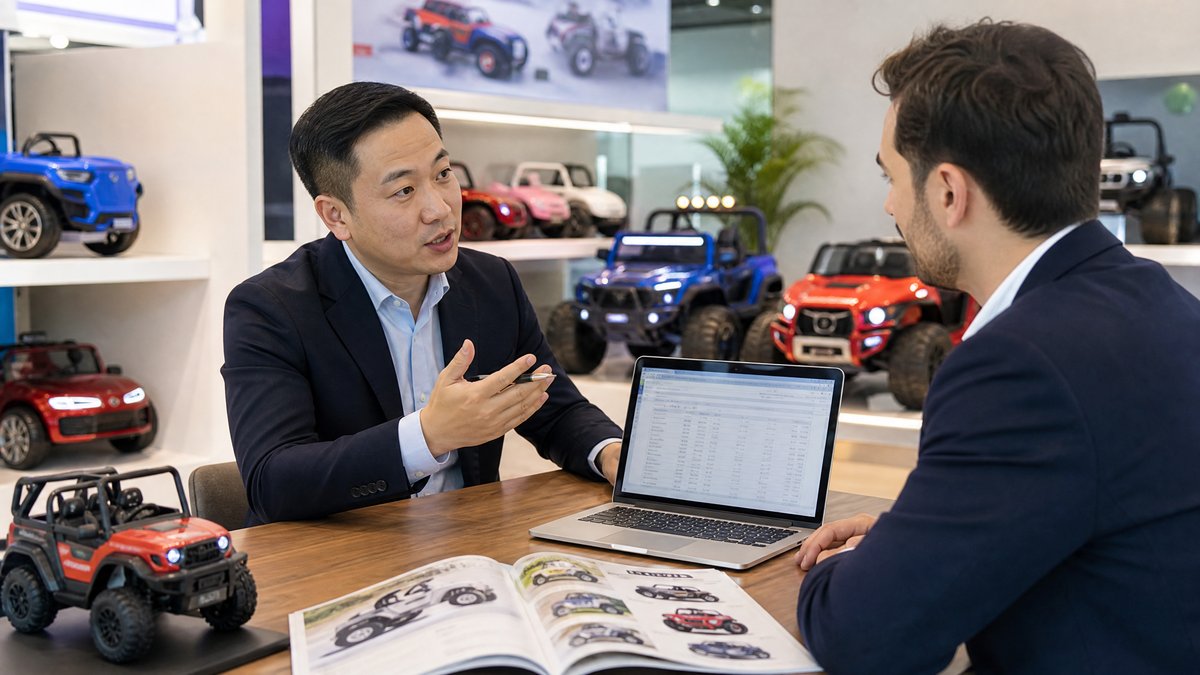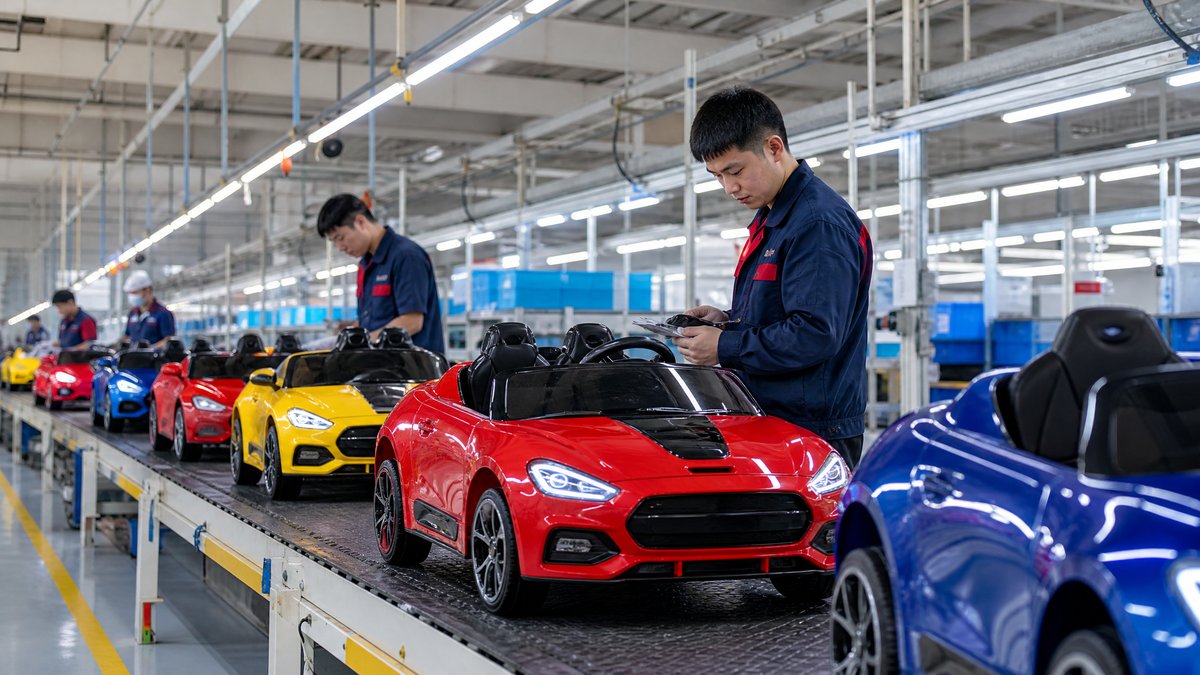
Buyers should treat a kids ride-on car pre-production sample review as a controlled release decision, not simply a chance to look at a finished-looking unit. The review should connect the approved commercial specification to the actual build: configuration, materials and finish, supplied accessories, labeling and packaging, documentation, safety information, and the records that will let both parties identify the approved standard later. End the review with written findings, photo references, an owner and deadline for each correction, and a clear release status—approved, approved with defined changes, or not approved for production.
This is different from evaluating a showroom sample or conducting a pre-shipment inspection. A showroom sample may illustrate a style, while a pre-production sample should represent the proposed production configuration. A pre-shipment inspection checks completed goods. The pre-production review is the buyer’s opportunity to align expectations before the factory moves into full production.
Start With a Review Pack, Not Memory
Ask the supplier to send a controlled review pack before the meeting or sample delivery. Give each file a model name, date, and revision number. This reduces the risk that a decision is later tied to an outdated drawing, accessory list, or packaging artwork.
At a minimum, the pack should include:
- The purchase specification or approved product data sheet, including intended age guidance, maximum user load claim, dimensions, colors, and feature configuration.
- A bill of materials or component list at the level the supplier can provide, highlighting buyer-selected items such as wheels, seat, remote control, charger, decals, and packaging inserts.
- Current drawings, artwork proofs, label layouts, and carton markings.
- The draft user manual, assembly instructions, charging information, warning content, and spare-parts list proposed for the destination market.
- A sample identification record: model/SKU, build date, component revisions, and any known deviations from the agreed specification.
- A proposed production-control plan describing how the factory will keep key approved features consistent. Buyers should request clarification if terms are unclear rather than assuming a particular test or certification has been completed.
Review the Product Against the Approved Configuration
Verify identity, configuration, and visible execution
First, confirm that the sample is the correct product version. Match its model number, colorway, seating configuration, wheel type, power and charging components, remote-control version if included, music or lighting functions if specified, and included accessories against the review pack. Do not accept vague statements such as “same as mass production”; record the observed version and any substitution disclosed by the supplier.
If operation is within the planned review, have the supplier demonstrate normal functions according to the supplied instructions. Record what was demonstrated and any issue observed. Do not modify wiring, bypass controls, open electrical parts, or attempt repairs to make a sample operate. Any functional concern should be documented and referred back to the manufacturer for assessment and an approved corrective action.
Confirm children’s-use information and supervision boundaries
Check that the draft age guidance, user-load statement, warnings, charging instructions, assembly steps, supervision wording, and operating-surface guidance are consistent across the product, manual, labels, carton, listing copy, and buyer specification. Contradictions create avoidable retailer and customer-service problems.
Make Compliance and Documentation a Release Gate
The sample itself is not proof of compliance. A pre-production review should therefore include a document and claim check, not unsupported conclusions that the product is certified or legal to sell. Ask the supplier what current documents are available for the exact intended configuration, then have the importer or its competent adviser verify which requirements apply in the destination market.
Track each document as available, pending, or needing clarification. Requirements vary by market, channel, configuration, and date, so buyers should verify current destination-market requirements before authorizing production or publication.
Review Packaging, Accessories, and the Customer Experience
Check that assembly instructions identify supplied parts without unsupported claims. Confirm language versions, contact information, barcode placement, retailer marks, and every component promised in a bundle.
Turn Observations Into a Controlled Decision
Use one issue log with fields for sample ID, requirement reference, observation, evidence file, severity or priority, requested action, supplier response, owner, target date, and closure evidence. Separate changes into three practical groups:
1. Release-blocking items: issues that must be resolved and re-reviewed before production authorization.
2. Production changes: agreed corrections that require revised artwork, parts, instructions, or sample evidence before release.
3. Non-blocking observations: items recorded for a later revision, with no effect on the present approved configuration.
The final release note should identify the sample, approved revision set, any accepted deviation, purchase-order reference, effective date, and authorized signatories. Attach it, the issue log, and dated photos to the quality file.
FAQ
Is a pre-production sample the same as a golden sample?
Not necessarily. Buyers may choose to designate an approved pre-production sample as the physical reference for production, but the status should be stated in writing. Record where it is stored, who controls access, and which documents define it. A sample without a controlled revision record is a weak reference.
Who should approve the sample on the buyer side?
The answer depends on the buying organization, but purchasing alone should not silently approve product, packaging, compliance, and after-sales matters for every SKU. Assign one final decision owner and obtain documented input from the relevant functions. Define in advance who may accept a deviation and who may authorize production.
What should happen when the sample differs from the specification?
Log the difference against the relevant requirement, collect clear evidence, and ask the supplier for a proposed correction and timing. Decide whether it is release-blocking, can be accepted as a documented deviation, or requires a revised sample. Update affected artwork, manuals, and purchase-order details so that one correction does not create conflicting files.
Should buyers test every feature themselves?
Buyers can observe or request a normal-operation demonstration in line with the product instructions and their agreed review plan. However, a buyer’s observation is not a substitute for applicable conformity assessment, factory controls, or professional evaluation. Do not bypass safety features, rewire the unit, disassemble electrical parts, or carry out unapproved repairs during a review.
Can a buyer approve production before all documents are complete?
That is a commercial risk decision, but incomplete documents should be visible as an open release condition rather than ignored. For market-access, labeling, or safety-information items, obtain the appropriate current verification before goods are placed on the intended market. Agree in writing which evidence is required, who provides it, and whether production or shipment may proceed.
Conclusion
An effective pre-production sample review gives buyers a traceable bridge between an agreed ride-on car concept and repeatable production. Review the full configuration, customer-facing materials, documentation, and open issues—not only the vehicle’s appearance. Then convert findings into a controlled approval record with evidence, owners, and explicit release conditions. That discipline helps procurement teams communicate clearly with suppliers while preserving the checks needed for their own market and channel.
For a sample-review checklist aligned to your planned SKU, email KidsRideCar’s B2B team.
To discuss product configuration, packaging, or documentation for an upcoming order, contact KidsRideCar.
Official references
Explore these external resources for current regulatory and trade guidance. Confirm requirements with the relevant authority before placing an order.
Ready to Start?
Factory-Direct · CE & ASTM Certified · MOQ from 50 Units
Our export team works with buyers in 60+ countries. Get a quote within 24 hours.
KR
Written by KidsRideCar
China's leading kids electric ride-on car manufacturer. 500,000+ units shipped annually to 60+ countries. CE, ASTM & EN71 certified.