Introduction
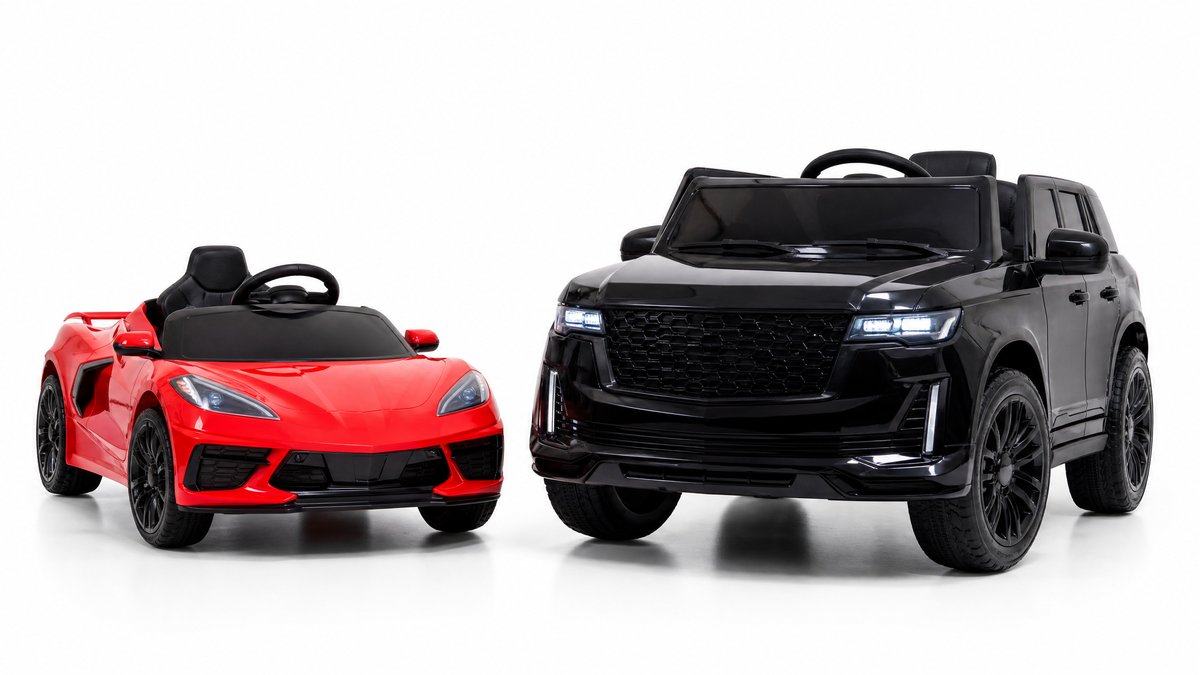
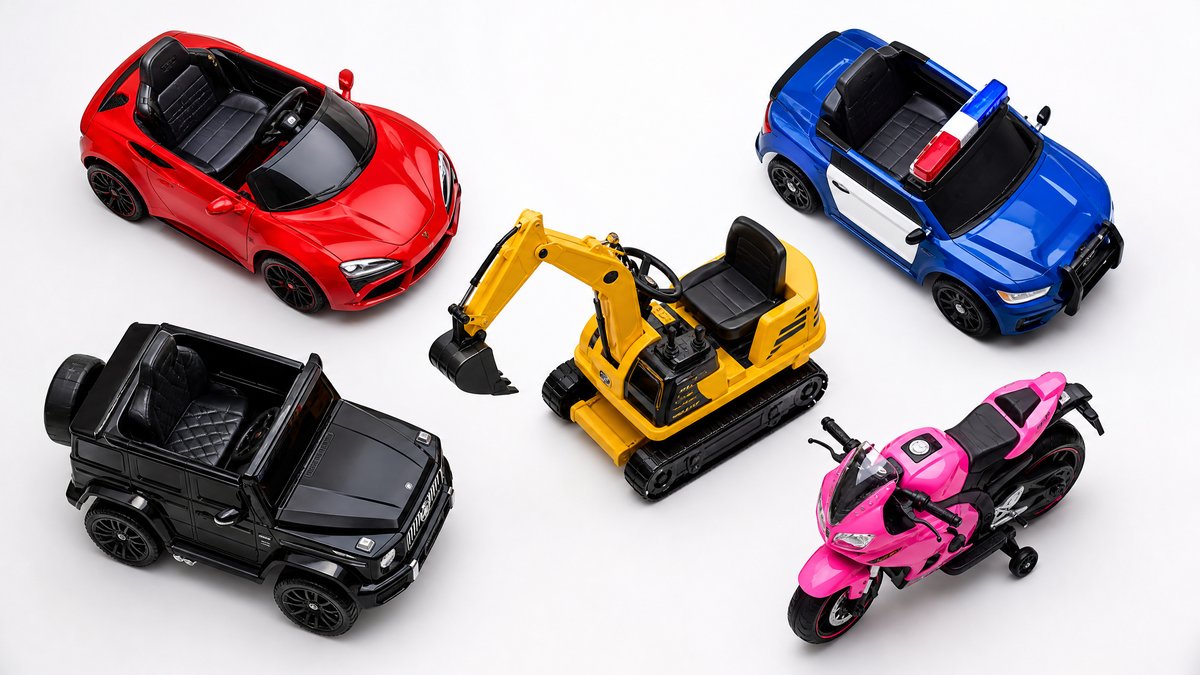
A vehicle-shaped range can help a retailer, distributor, rental operator or ecommerce brand serve several customer needs without treating models as interchangeable. A children’s electric jeep may suit an adventure-themed shelf, a truck can support construction or farm play, a golf cart can appeal to family leisure channels, and a tractor can create a clear seasonal or rural-lifestyle theme. The opportunity is to build an assortment, not order the largest vehicles.
This guide explains how to compare these body styles, plan a 12V and 24V range, ask useful specification questions, review packaging and display needs, and prepare an RFQ. It does not assume a particular supplier policy, price, MOQ, stock position or performance result. Battery, safety, labeling, transport and market-access requirements must be confirmed for the exact model and destination market with the supplier, relevant authorities and qualified local advisers.
Choosing Vehicle Types by Retail Channel
Start with the channel and customer use case, then select the body styles that support it. A general toy retailer may need recognizable silhouettes, manageable carton dimensions and clear age-grade information. An outdoor leisure retailer may give more shelf space to jeep, truck or tractor styling. An ecommerce seller may prioritize product photography, shipping dimensions, assembly content and a low rate of avoidable returns. A rental or family entertainment operator needs a separate review of operating procedures, supervision, charging, cleaning, replacement parts and venue suitability.
Use these questions for each proposed SKU:
- Who is the buyer: gift purchaser, parent, venue operator, distributor or reseller?
- Is the product intended for indoor play, smooth outdoor surfaces, or another stated use described by the supplier?
- Does the body style communicate a clear theme without implying road use, agricultural use or vehicle licensing?
- Is it a single-seat or two-seat configuration, and how does that affect carton volume and merchandising?
- Are the age guidance, dimensions, maximum load information and warnings consistent across the product, manual and listing?
- Does the model need a parent remote, speed selection, lights, sound, seat belt or other feature to fit the channel brief?
A “kids electric jeep wholesale” assortment may be visually strong, but it should still be compared against practical data. A tractor can be distinctive while requiring more careful explanation of its intended play context. A golf-cart shape can work well for a leisure theme, but the listing should not imply that a toy is suitable for public roads or real golf-course operation. Product names and marketing claims must match the actual configuration and the destination market’s rules.
12V and 24V Assortment Planning
Voltage is a specification field, not a simple age recommendation. A 12V model and a 24V model can differ in battery arrangement, motor and controller configuration, charger, wiring, weight, dimensions and applicable documentation. Do not select voltage from a product title alone. Request the model-specific specification sheet and instructions, then have the proposed age grading and use claims reviewed for the destination market.
A practical range can use 12V models for a smaller entry assortment and 24V models where the supplier’s specification and channel brief justify a larger or differently configured vehicle. Neither voltage is universally safer or better; review the complete design, child abilities, supervision, surface, load information and local requirements.
For every SKU, record:
1. Voltage, battery type and capacity.
2. Charger input/output, plug type and destination compatibility.
3. Motor and drive configuration, without inferring performance from voltage alone.
4. Dimensions, net weight, maximum load and seat layout.
5. Control features, age guidance, warnings and manual language.
6. Model number or revision code linking the unit to documents.
Ask the supplier to identify what changes between the 12V and 24V variants. A listing that says “24V truck” is not enough for a purchasing decision. Before launch, confirm that the charger, battery, product label, carton marks, manual and any test or conformity evidence all refer to the same configuration.
Truck and Dump-Truck Specification Questions
Trucks and dump trucks often attract buyers through their utility-style appearance. For procurement, however, “dump” should describe the body styling or toy function rather than suggest real hauling capacity. Ask whether the bed is fixed or manually movable, whether any moving parts have pinch or access hazards, and what the instructions say about use. Do not publish an unsupported payload, terrain, towing or commercial-use claim.
A truck-focused RFQ should request:
- Exact model name, SKU, revision and product photographs from all relevant sides.
- Seat count, seat dimensions and any restraint or supervision features supplied.
- Body, wheel and tire materials as specified in the technical file.
- Drive layout and whether the model is rear-wheel, four-wheel or another configuration.
- Battery and charger details, connector information and included accessories.
- Carton dimensions, packed weight, units per master carton and pallet or container guidance if available.
- Assembly steps, tools required, spare fasteners and final inspection points.
- Parts diagram or replacement-parts identification method.
- Warnings, age grading, instructions and market-specific label artwork requirements.
When comparing a “kids electric dump truck manufacturer,” evaluate revision control. Ask what happens if a controller, charger, wheel or body component changes. A revised component may affect the product listing, instructions, packaging, spare-parts catalog or compliance file. Require written approval before a change is introduced into a private-label or repeat order.
Packaging and Display Considerations
The product sells before the customer drives it, so packaging and merchandising deserve the same discipline as the vehicle specification. Request a carton drawing or approved packaging specification that identifies length, width, height, gross weight, packaging materials, shipping marks and the quantity per outer carton. Use confirmed carton data for warehouse and freight planning; do not estimate container loading from product photos.
For retail packaging, check that the front panel communicates the correct model and does not promise features absent from the approved unit. The side or back panels should leave room for age guidance, warnings, operating information, importer or distributor details where required, battery and charger information, barcode, model identification and languages needed by the destination market. Artwork should be reviewed after the final sample and again before print.
For ecommerce, prepare a consistent content pack:
- White-background and lifestyle images that show the model and included accessories.
- A dimension diagram with units and a clear packed-versus-assembled distinction.
- A specification sheet that separates confirmed data from optional features.
- Assembly, charging, storage and supervision information approved for publication.
- A parts and support contact route for customers and dealers.
- Delivery notes that do not promise a date until the logistics provider confirms it.
For showroom displays, decide whether the unit will be assembled, how it will be secured, who may operate it and how the battery will be charged. Do not encourage unsupervised operation or use outside supplier guidance.
RFQ Fields for Utility-Style Models
A useful RFQ reduces back-and-forth and makes supplier responses comparable. Send the same brief to each candidate supplier and request answers by model. Include:
Buyer and destination: company name, buyer role, destination country, delivery city or port, sales channel and planned launch window.
Assortment: body styles required, target number of SKUs, preferred single-seat or two-seat layout, 12V or 24V variants to quote, colors and any private-label requirements.
Product data: model number, dimensions, maximum load, age guidance, battery type and capacity, charger specification, drive layout, remote-control details, included accessories and replacement-parts options.
Packaging: assembled dimensions, carton dimensions, gross and net weight, units per carton, packaging photos or drawing, shipping marks, barcode area, languages and artwork process.
Commercial terms: unit quotation basis, currency, Incoterm to be quoted, sample availability, sample conditions, payment options, quote validity and any separate tooling or artwork charges. Request actual MOQ and lead-time assumptions.
Quality and documents: inspection process, approved sample procedure, change-control process, user manual, parts diagram, warranty terms, complaint process, test reports or declarations relevant to the destination market, and battery or transport documents where applicable.
Response format: ask the supplier to mark each field as confirmed, optional, unavailable or requiring model-specific review. This prevents an attractive catalog description from being mistaken for a contractual specification.
Comparing Suppliers and Approving a Range
Score suppliers on evidence and communication, not only on the lowest quotation. A simple internal scorecard can allocate separate review lines for product fit, document completeness, packaging accuracy, sample quality, change control, spare-parts support, after-sales response and commercial terms. Keep the model number on every quotation, sample record, photograph and approval note.
Use a staged process:
1. Shortlist models by channel, body style and market.
2. Send the same RFQ and request model-specific documents.
3. Compare replies and flag missing fields.
4. Inspect samples under an agreed brief.
5. Record changes between catalog, sample and artwork.
6. Approve the reference sample before production.
7. Arrange an appropriate pre-shipment inspection.
8. Reconcile cartons, labels, manuals, parts and shipping documents at receiving.
Do not treat a test report or declaration as universal proof for every color, voltage, battery, body style or revision. The scope must match the exact product configuration and destination market. For example, U.S. guidance addresses stability and overload for ride-on toys and specific requirements for battery-operated toys, labeling and instructions [1]. EU toy rules cover general and particular risks and require the applicable conformity assessment route and CE marking for toys placed on the EU market [2]. GB importer duties include checking conformity information, traceability, storage and transport conditions, and retaining relevant records; current rules should be checked before launch [3].
Compliance, Battery and Safety File
Create a file for each SKU rather than one generic folder for the entire assortment. It can include the approved specification, risk or safety review, test evidence where applicable, declarations, manual, warnings, label artwork, packaging artwork, product photographs, supplier identity, batch information, inspection record and change history. Whether a document is required, acceptable or current depends on the destination market, product classification and exact configuration.
Battery and charger information deserves a dedicated review. Confirm chemistry or battery type as stated, voltage, capacity, charger model, connector, charging instructions, storage guidance and transport information. Do not ask a supplier or customer to bypass protection, alter wiring, combine incompatible parts, open a live electrical system or perform hazardous repairs. If a battery, charger or controller is damaged or does not match the model, stop use and escalate to the supplier or an appropriately qualified service provider.
CTA: Build Your Utility-Style Assortment
Ready to compare jeep, truck, golf-cart and tractor models for your channel? Request a wholesale quote with your destination, voltage mix, target SKUs, packaging needs and documentation requirements.
FAQ
How should retailers compare kids electric vehicle types?
Compare the intended channel, body style, seat layout, dimensions, age guidance, maximum load, voltage, battery and charger, control features, packaging and documentation. Then test whether the product information is consistent across the catalog, sample, carton, manual and online listing. A visual difference is useful only when it supports a clear use case and model-specific information.
What should be confirmed for a dump-truck model?
Confirm the exact model and revision, bed function, seat and restraint details, drive configuration, battery and charger, dimensions, carton data, warnings, assembly instructions and spare-parts process. Ask the supplier to define any claimed function in writing. Do not publish real-world hauling, towing, road-use or performance claims unless they are expressly supported and lawful for the destination market.
When is a 12V or 24V variant appropriate?
Neither voltage is automatically appropriate in every situation. Review the complete design, age guidance, supervision needs, surface, load information, charger, battery, instructions and market requirements. Use the supplier’s model-specific documents and obtain local compliance advice before finalizing an assortment or making safety claims.
Which documents should accompany a wholesale order?
Request the commercial invoice, packing list, approved specification, user manual, warnings and label artwork, packaging details, model-specific test or conformity evidence where applicable, battery and transport information, parts identification, inspection record and change history. The final list depends on destination, Incoterm, carrier and configuration; confirm it with the importer, freight provider and local adviser.
Conclusion
A reliable wholesale range of kids electric jeeps, trucks, golf carts and tractors starts with channel planning and ends with document-controlled execution. Compare body styles by use case, separate 12V and 24V specifications, verify truck functions, plan cartons and displays, and send an RFQ that forces clear answers. Approve the exact sample and documentation set before production, then review every market, battery and safety requirement for the destination.
Ask for the KidsRideCar catalog and share the vehicle types, voltage mix, destination market and packaging brief you are considering.
References
[1]: https://www.cpsc.gov/Business--Manufacturing/Business-Education/Toy-Safety "U.S. Consumer Product Safety Commission Toy Safety Business Guidance"
[2]: https://single-market-economy.ec.europa.eu/sectors/toys/toy-safety_en "European Commission Toy Safety in the EU"
[3]: https://www.gov.uk/government/publications/toys-safety-regulations-2011/toys-safety-regulations-2011-great-britain "UK Government Toys Safety Regulations 2011: Great Britain"
Official references
Explore these external resources for current regulatory and trade guidance. Confirm requirements with the relevant authority before placing an order.
Ready to Start?
Factory-Direct · CE & ASTM Certified · MOQ from 50 Units
Our export team works with buyers in 60+ countries. Get a quote within 24 hours.
KR
Written by KidsRideCar
China's leading kids electric ride-on car manufacturer. 500,000+ units shipped annually to 60+ countries. CE, ASTM & EN71 certified.