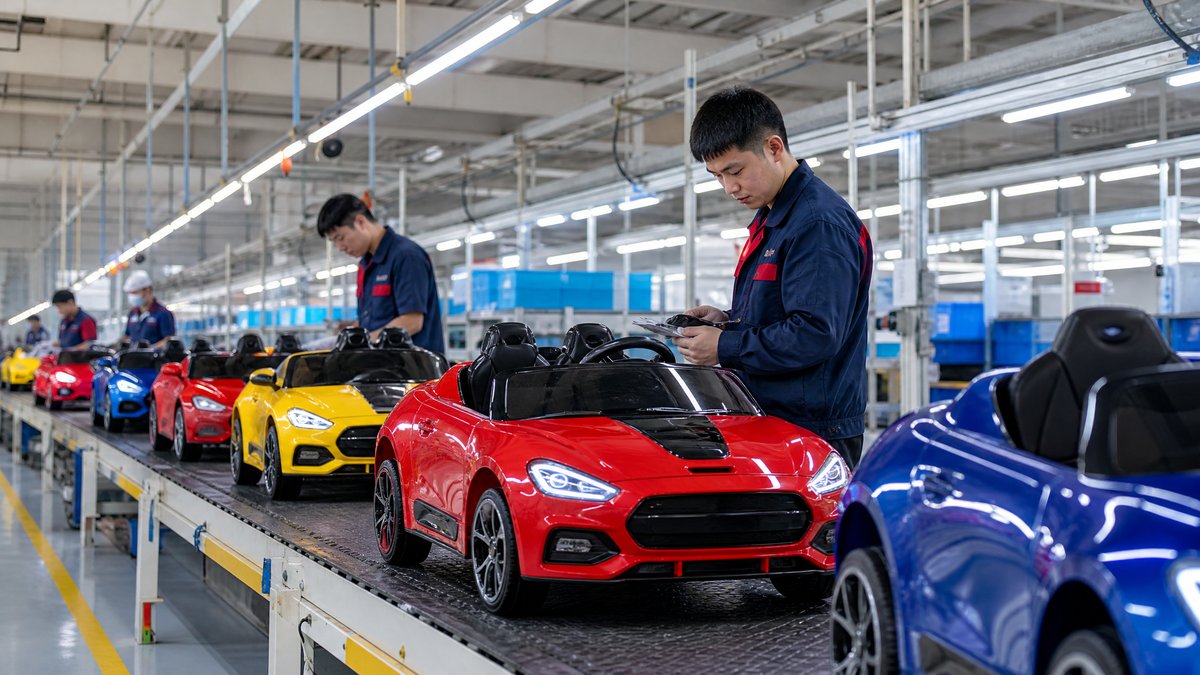
A dealer onboarding program should do more than introduce a catalog. It should help a new dealer understand which models fit its market, explain products accurately, quote and order with fewer errors, present safety information responsibly, and know what to do after a sale. It creates a consistent customer experience across importers, wholesalers, retailers, and regional resellers.
The most useful onboarding plan combines product education with practical sales readiness. It gives dealers approved information, clear workflows, and an escalation path without asking them to make unsupported claims. Because requirements and buyer expectations differ by destination, every product file and sales message should be reviewed for the intended market and model. The following framework can help a B2B supplier build an onboarding program that is useful before the first purchase order and after the dealer begins selling.
1. Start with the dealer’s market, channel, and business goals
Before presenting every available model, collect information about the dealer. Record its destination countries, sales channels, customer types, showroom or warehouse setup, expected order pattern, and experience with children’s products. An importer may need carton, freight, and document support, while a specialty retailer may need demonstration guidance and concise customer-facing answers. An OEM buyer will need a different path covering artwork, specifications, approvals, and change control.
The program should define the dealer’s role and territory, if applicable, along with the communication contacts for sales, product questions, logistics, and service. Clarify whether the dealer will sell to consumers, rental operators, toy stores, online marketplaces, or other resellers.
A short onboarding questionnaire and a kickoff meeting are practical starting points. Set milestones such as catalog review, sample approval, staff training, first order, listing approval, and post-launch review. Avoid promising exclusivity, sales volume, or delivery timing unless those terms have been agreed in writing.
2. Build a product and assortment curriculum
Dealers need a product map, not just a PDF catalog. Group models by meaningful buying criteria such as intended age guidance, seat configuration, dimensions, maximum stated load, drive layout, battery system, controls, included accessories, and recommended use environment. Explain which specifications are model-specific and which are general category information. Dealers should know where to find the approved specification sheet for each SKU.
An assortment exercise can help a new dealer select a manageable opening range. For example, compare a compact model, a larger two-seat model, and a feature-led model, then discuss which store formats and price positions each might suit. Product pages such as [/products/kr-s900](/products/kr-s900), [/products/kr-l700](/products/kr-l700), and [/products/kr-t600](/products/kr-t600) can be used as internal reference points when they match the dealer’s approved range. Do not imply that a model has a feature, rating, or market approval unless its current documentation confirms it.
Training should also cover how to explain differences without exaggeration. A higher nominal voltage, remote control, lighting package, or two-seat layout may affect positioning, but dealers should not turn a specification into an unsupported promise about speed, runtime, terrain, or safety. Teach staff to use phrases such as “refer to the model specification and manual” when a customer asks for a result that depends on load, surface, temperature, usage, or maintenance.
3. Prepare compliance, safety, and product-information files
Sales readiness depends on accurate documentation. The onboarding pack should identify the current specification, manual, assembly and charging guidance, warnings, age-grading information, carton markings, spare-parts list, warranty terms, and available compliance documents for each model. Include version dates so dealers do not continue using an outdated label, image, or manual after a product change.
Market compliance must be confirmed for the destination market and model. A dealer should know which party is responsible for checking applicable toy, electrical, battery, labeling, language, packaging, chemical, and marketplace requirements. The supplier can provide available technical files and declarations where appropriate, but the dealer or importer should verify obligations with qualified local advisers, authorities, or marketplace requirements. Do not describe a general certificate as universal approval for every country or every SKU.
Create a simple claims-control sheet. List approved claims, claims requiring model-specific evidence, and claims that must not be used. This prevents product listings from inventing runtime, load, speed, waterproofing, age suitability, or certification statements. Include safe-use reminders: adult supervision, use only in suitable areas, inspection before use, correct charger and charging procedure, and keeping children away from moving parts and charging equipment. The program must never train dealers to bypass a safety device, rewire a battery, solder internal connections, or perform hazardous repairs. Unsafe or uncertain units should be isolated and escalated through the supplier’s service process.
4. Equip dealers for sales conversations and demonstrations
A dealer needs a repeatable way to move from customer questions to a suitable model. Provide a discovery checklist covering the child’s age range, fit, intended surface, indoor or outdoor setting, storage space, supervision, one- or two-seat preference, budget, and local delivery constraints. Staff should confirm the model’s manual and specification rather than making a judgment from appearance alone.
Create a short answer library for common questions: What is included? How is the car charged? Is assembly required? How does the parental remote work? What surfaces are suitable? What happens if a part is missing? Which information applies to the local market? Answers should be concise, factual, and tied to the correct SKU. If a question concerns a defect, injury, overheating, unusual noise, or a damaged battery, staff should stop improvising and follow the escalation process.
For physical retail and events, include a demonstration checklist. It should cover a clear, controlled area; adult supervision; pre-demo inspection; charge status; remote-control pairing; speed-mode explanation where applicable; customer consent and child supervision; and a shutdown and storage procedure. The demo should show normal operation without encouraging racing, steep slopes, wet use, collisions, overloading, or operation near traffic. Online dealers need equivalent assets: accurate photos, dimensions, carton details, assembly expectations, manuals, warnings, and a clear returns and service contact.
5. Train dealers on quoting, ordering, and launch execution
Onboarding should turn product knowledge into an error-resistant order workflow. Give dealers an approved price list or quotation template that identifies SKU, color, packaging, accessories, quantity, trade terms, currency, validity period, payment milestones, and any tooling or artwork charges. Explain which costs are estimates and which are confirmed. Freight, duties, taxes, local handling, storage, and marketplace fees should not be hidden inside a vague “landed price.”
Show dealers how to submit an order with the exact model code, color, quantity, packaging version, destination, required documents, and requested ship window. Establish who confirms inventory, production status, artwork, sample changes, and final shipping documents. A written change-approval step is important: no substituted component, color, label, accessory, or packaging change should be treated as accepted merely because it appears in an informal message.
Add a launch-readiness review before listings go live. Check that product data, images, manuals, warnings, translations, price, stock status, carton dimensions, delivery terms, and contact details match the approved version. Link dealers to the company [/blog](/blog) for general education and to the [/inquiry](/inquiry) page for a formal quotation or product question, while keeping model-specific commitments in the dealer’s commercial documentation.
6. Make after-sales ownership and measurement explicit
A dealer onboarding program is incomplete without a service handoff. Explain how to register a unit, record the serial or batch information where available, photograph a packaging or product issue, identify missing parts, and open a warranty or quality case. Provide response priorities for safety-related reports, non-use defects, cosmetic issues, missing hardware, and routine parts requests. Dealers should know what evidence is needed, what they may inspect safely, and which work must be referred to an authorized technician or supplier.
The spare-parts section should identify commonly requested external parts, ordering codes, packaging, storage, and approval requirements. Do not teach internal battery modification or improvised repairs. For a damaged, swollen, leaking, hot, or otherwise questionable battery, follow the applicable local handling and transport rules and contact the responsible service team.
Measure onboarding with operational indicators rather than only attendance. Track time to complete product training, listing-error rate, order corrections, first-order completeness, demo incidents, response-time adherence, return reasons, and recurring customer questions. Review these measures after the first shipment and at a defined quarterly interval. Feedback can show whether a manual is unclear, a product page lacks dimensions, or a dealer needs more training on compliance communication.
FAQ: Kids Ride-On Car Dealer Onboarding
What is the ideal length of a dealer onboarding program?
There is no universal duration. A small retailer may need a focused product, safety, demo, and ordering session, while an importer or OEM buyer needs additional work on documentation, packaging, forecasting, and approvals. Use completion milestones rather than a fixed number of hours.
Should every dealer receive the same product range?
No. Start with the dealer’s market, channel, storage, customer profile, and compliance needs. Offer an approved core range, then add models only when the dealer has the documentation and service capacity to support them.
What compliance documents should a supplier provide?
Provide the current documents available for the specific model, such as specifications, manuals, warnings, and relevant test or declaration materials. The importer or dealer must confirm market compliance for the destination market and model; documents for one market do not automatically establish compliance elsewhere.
How should a dealer respond to a product safety complaint?
Stop making assumptions, record the model and batch information where available, preserve photos and customer details, and follow the agreed escalation route. If there is overheating, smoke, physical damage, or another immediate hazard, keep people away and seek appropriate local emergency or technical guidance rather than attempting an internal repair.
What should happen after the first dealer order?
Review receiving records, product listings, customer questions, missing-part reports, returns, and warranty cases. Use the findings to correct training materials and confirm whether the dealer is ready for additional SKUs or a larger reorder.
Conclusion
A strong kids ride-on car dealer onboarding program connects market knowledge, product selection, compliance discipline, sales tools, demonstration practices, order controls, and after-sales ownership. It helps dealers sell with confidence while keeping model claims and market obligations accurate. Suppliers that document these steps create fewer ordering mistakes, more consistent listings, and a clearer path from first sample to repeat business.
For help building a dealer-ready assortment, reviewing product documentation, or discussing wholesale and OEM requirements, contact KidsRideCar at info@kidsridecar.com.
Official references
Explore these external resources for current regulatory and trade guidance. Confirm requirements with the relevant authority before placing an order.
Ready to Start?
Factory-Direct · CE & ASTM Certified · MOQ from 50 Units
Our export team works with buyers in 60+ countries. Get a quote within 24 hours.
KR
Written by KidsRideCar
China's leading kids electric ride-on car manufacturer. 500,000+ units shipped annually to 60+ countries. CE, ASTM & EN71 certified.