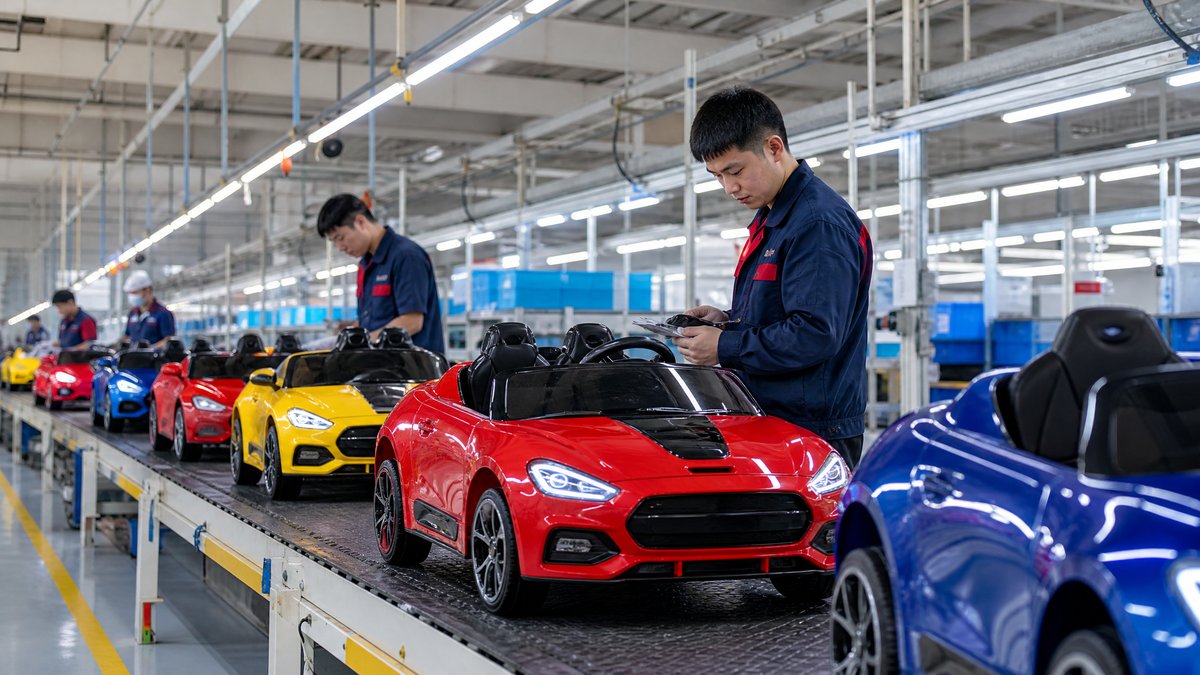
For professional entities engaged in the global procurement of children’s recreational vehicles, selecting a manufacturing partner and finalizing a bulk acquisition is a multi-layered endeavor requiring meticulous attention to detail. In the current international trade environment, the success of a distribution network or retail chain depends heavily on the consistency and reliability of the products offered. When dealing with sophisticated items such as motorized vehicles designed for younger users, the importance of a robust verification framework cannot be overstated. This guide is intended for importers, large-scale distributors, and retail procurement officers who seek to establish a high standard of quality assurance before any significant investment is made. The core of a successful sourcing strategy lies in the ability to verify that every unit meets the necessary safety benchmarks and functional expectations without relying on internal modifications or unauthorized adjustments. Before committing to a large-scale order, a professional buyer must ensure that the manufacturer provides comprehensive written model documentation and current supplier evidence that supports the product’s suitability for the intended market. By following a structured approach, business-to-business buyers can minimize the risks associated with product inconsistencies and ensure a positive reception in their respective markets.
Phase One: Supplier Verification and Historical Performance
Before a single unit is produced, a professional buyer must conduct a deep dive into the manufacturer’s background and operational capabilities. This initial phase of due diligence is critical for identifying potential risks before they manifest in the final product. A manufacturer with a strong track record of delivering high-quality goods to international markets is more likely to maintain the standards required for a successful bulk order. One of the most important aspects of supplier verification is the review of official documentation. Professional buyers should request current supplier evidence that demonstrates the manufacturer’s ability to meet international safety benchmarks. This includes looking for appropriate product markings that are recognized in the destination market. It is essential to verify that the documentation is specific to the models being sourced and that it has been issued by reputable, independent organizations. Furthermore, buyers should ask for written supplier confirmation regarding the materials and components used in the vehicles. This documentation should outline the origin of the primary materials and provide assurance that they meet the necessary chemical safety requirements. By insisting on comprehensive written model documentation, importers can build a strong case for the product’s integrity and facilitate a smoother entry into their local markets.
Phase Two: Material Assessment and Chemical Integrity
The materials used in the construction of children’s vehicles play a significant role in both the safety and the longevity of the product. For professional buyers, ensuring that the plastics, paints, and other components are of high quality is essential for maintaining brand reputation and consumer satisfaction. While some aspects of material quality require specialized documentation, many issues can be identified through a thorough external visual check. Buyers should examine the finish of the plastic components, looking for any signs of inconsistency, such as discoloration, surface irregularities, or sharp edges. The presence of these issues can indicate a lack of control during the molding process or the use of lower-quality raw materials. In addition to the plastic parts, the quality of the paint and decals should also be assessed. A high-quality finish should be smooth, even, and resistant to minor abrasions. During a non-destructive assessment, buyers can check that all decorative elements are securely attached and that there are no signs of peeling or bubbling. Beyond the visual aspects, the chemical composition of the materials is a critical concern. Importers must ensure that all components are free from restricted substances that could pose a risk to the end-user. This is where written supplier confirmation becomes invaluable. Buyers should request detailed reports that confirm the absence of harmful chemicals in the plastics and coatings used on the vehicle.
Phase Three: Structural Integrity and Mechanical Assessment
The physical design and construction of a ride-on vehicle are the primary factors in its overall safety and stability. A well-engineered product should be able to withstand the rigors of normal use while providing a stable and secure experience for the child. One of the most important mechanical checks involves assessing the vehicle’s stability. This is particularly relevant for models with a higher profile, such as those styled after off-road vehicles. A professional assessment should include checking the vehicle’s performance on a slight incline to ensure that it does not tip or become unstable during operation. Buyers should also look for designs that feature a wide base and a low center of gravity, as these characteristics contribute to a more stable ride. Furthermore, every model has a maximum mass threshold that should be clearly communicated in the written model documentation. Professional buyers must ensure that these thresholds are appropriate for the intended age group and that the vehicle’s structure is robust enough to support the expected weight. A non-destructive assessment can involve applying pressure to key structural points to check for any signs of flexing or weakness. The security of all external components is another critical area of focus. This includes ensuring that the wheels, steering assembly, and seating are all firmly attached and function as intended. During an external visual check, inspectors should look for any loose fasteners or components that appear to be poorly fitted.
Phase Four: Power System Safety and Documentation-Led Verification
The energy delivery system is a core component of any electric ride-on vehicle. Given the nature of these systems, it is essential to approach their verification with a high degree of caution and a reliance on official documentation rather than internal inspection. For professional buyers, the primary goal is to ensure that the power system is stable and reliable. This involves verifying that the energy storage units and the associated delivery components meet international safety benchmarks. Instead of attempting to examine the internal power housing, buyers should focus on the written supplier confirmation and the appropriate product markings that indicate the system has undergone a thorough assessment by the manufacturer. The documentation should provide evidence that the system includes features to manage energy delivery and prevent issues such as overheating. This includes information on the energy storage unit’s stability and the manufacturer’s approach to ensuring a safe and consistent power level. The points where the vehicle connects to a power source for charging are also important to consider. These areas should be easily accessible but also protected from the elements and accidental contact. A professional buyer should check that the charging interface is well-designed and that the appropriate product markings are present on both the vehicle and the charging unit.
Phase Five: Functional Verification and User-Facing Features
Once the structural and power systems have been assessed, the next step is to verify the vehicle’s functional performance. This ensures that the product delivers the experience that was promised to the consumer. Many modern ride-on vehicles include features that allow for adult supervision, such as a parental control function that can take precedence over the child’s inputs. For professional buyers, verifying the reliability of these features is a high priority. The assessment should focus on the ease of use and the responsiveness of the control system, ensuring that it provides a consistent and reliable way for an adult to manage the vehicle’s movement. The vehicle may also offer different operational modes, such as different pace settings or directions of travel. These should be checked to ensure that they function as described in the manual-led setup. The transition between different modes should be smooth and predictable, with no sudden or unexpected movements. Secondary features such as integrated sound systems, working lights, and other electronic enhancements add to the overall appeal of the product. These should be checked for functionality and quality. For example, the sound levels should be moderate and not exceed the levels recommended for children’s toys. The lights should be bright and clearly visible, adding to both the fun and the safety of the vehicle.
Sourcing Checklist for Professional Buyers
A detailed checklist is an essential tool for any procurement professional. It ensures that no critical steps are missed during the verification process.
| Category | Checkpoint | Verification Method |
|---|---|---|
| Documentation | Written Model Documentation | Review official files for completeness and accuracy. |
| Documentation | Current Supplier Evidence | Confirm safety benchmarks and market-specific requirements. |
| Visual | External Visual Check | Inspect the finish, paint, and overall craftsmanship. |
| Visual | Appropriate Product Markings | Verify that all required markings are present and legible. |
| Mechanical | Mass Threshold Assessment | Confirm the vehicle's structure supports the intended weight. |
| Mechanical | Stability Assessment | Check performance on a slight incline and during maneuvers. |
| Power System | Written Supplier Confirmation | Review evidence of power system stability and energy management. |
| Power System | Manual-Led Setup | Verify that charging and connection instructions are clear. |
| Functional | Parental Control Verification | Test the responsiveness and reliability of supervision features. |
| Functional | Operational Mode Check | Ensure all pace and direction settings function correctly. |
| Packaging | Labeling and Traceability | Verify that all batch codes and importer information are present. |
Conclusion
Successfully sourcing kids' electric ride-on cars in bulk requires a disciplined approach to quality and safety. By implementing a multi-phase verification process that emphasizes documentation, external assessments, and functional checks, professional buyers can significantly reduce the risks associated with large-scale procurement. A commitment to quality not only protects the interests of the importer and the distributor but also ensures that the final consumer receives a product that is safe, reliable, and enjoyable. Always prioritize manufacturers who are transparent about their processes and who can provide the necessary written model documentation to support their claims. Remember that a professional relationship built on clear communication and shared quality standards is the best foundation for long-term success in the competitive recreational vehicle market. If there is ever a concern regarding the structural integrity or the power system of a vehicle, the best course of action is to stop use if there is a concern and seek manufacturer-approved support or qualified support.
Frequently Asked Questions
Q: How can a professional buyer verify the accuracy of the safety documentation provided by a manufacturer?
A: Verification should involve cross-referencing the information in the reports with the official records of the organizations that issued them. Most reputable entities that provide safety assessments have online databases where documentation can be verified using a unique reference number. It is also important to ensure that the documentation specifically mentions the models being sourced and that it is up to date. If a supplier is hesitant to provide full documentation or if the information is incomplete, it may be necessary to seek written supplier confirmation or consider alternative manufacturing partners.
Q: What are the most common quality issues to look for during an external visual check?
A: During an external visual check, professional buyers should look for any signs of poor craftsmanship or material quality. This includes checking for sharp edges on plastic components, inconsistent paint finishes, and poorly applied decals. It is also important to inspect the fit and finish of all external parts, ensuring that there are no large gaps or misalignments. The presence of these issues can be an indicator of a lack of control during the production process and may suggest that more significant problems exist beneath the surface.
Q: Why is it important to rely on manufacturer-approved support for any technical concerns?
A: Relying on manufacturer-approved support ensures that any issues are addressed by individuals who have the necessary knowledge and tools to handle the specific model correctly. Attempting to perform internal assessments or circuit adjustments without the proper guidance can lead to further problems and may compromise the safety of the vehicle. For professional entities, directing technical concerns to qualified support is the most responsible way to manage product issues and maintain the integrity of the brand. If a product does not perform as expected, the safest approach is always to follow the guidance provided in the written model documentation.
Request a wholesale quote
Official references
Explore these external resources for current regulatory and trade guidance. Confirm requirements with the relevant authority before placing an order.
Ready to Start?
Factory-Direct · CE & ASTM Certified · MOQ from 50 Units
Our export team works with buyers in 60+ countries. Get a quote within 24 hours.
KR
Written by KidsRideCar
China's leading kids electric ride-on car manufacturer. 500,000+ units shipped annually to 60+ countries. CE, ASTM & EN71 certified.