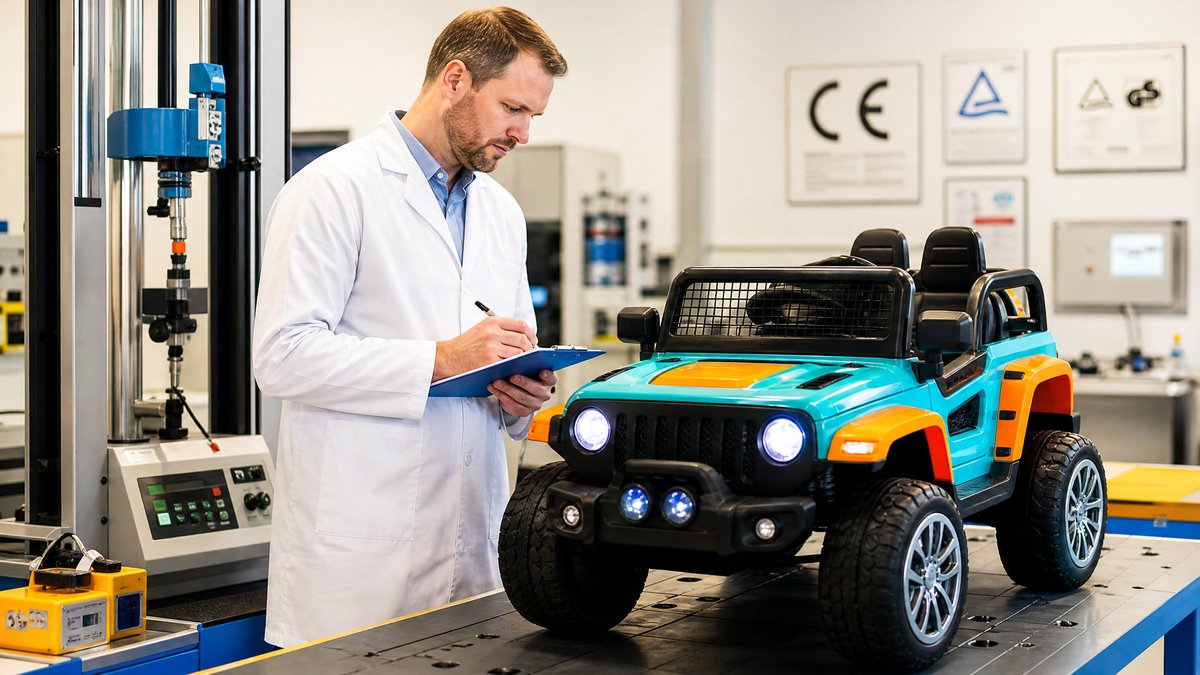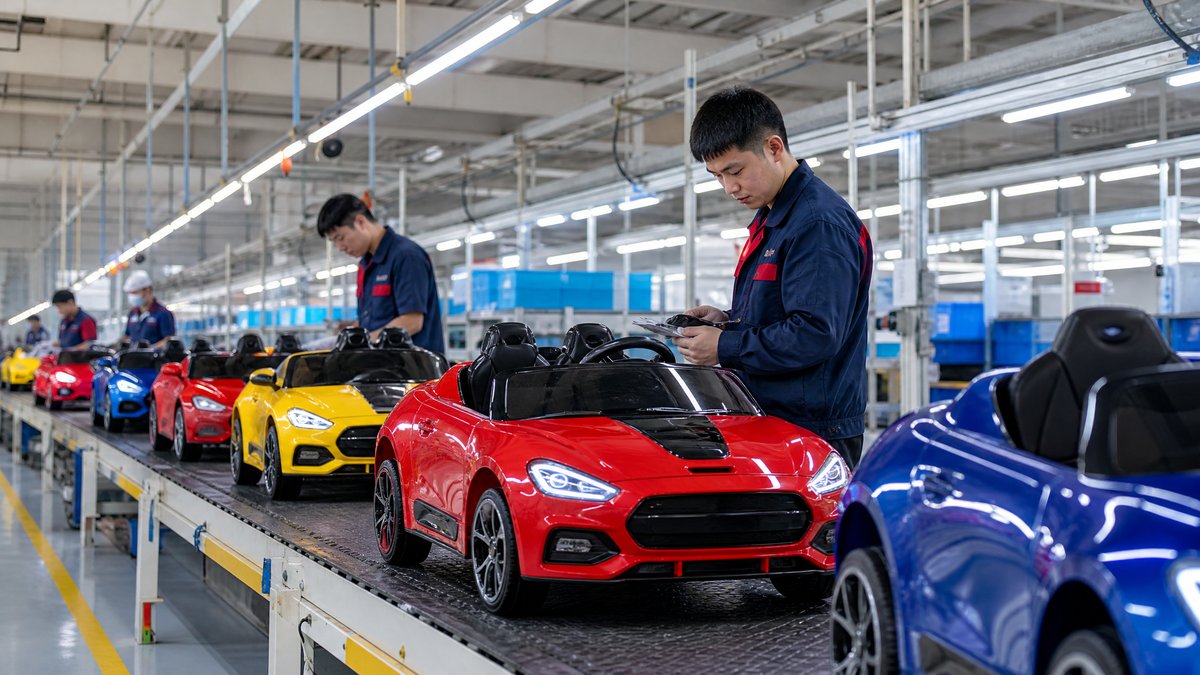
A dealer can build a safe kids ride-on car demonstration SOP by turning every demonstration into a controlled, repeatable process: approve the space, inspect the specific unit, brief the family, assign a trained supervisor, manage the ride, and record exceptions before the unit is used again. The SOP should follow the product’s supplied instructions and warnings, applicable local requirements, and the dealer’s own risk-management rules. It is not a substitute for them.
For importers, wholesalers, distributors, retailers, and OEM buyers, a written SOP does more than organize a showroom activity. It helps dealers give customers consistent information, protect demonstration stock, identify recurring issues early, and send clear feedback through the supply chain. This article focuses on the operating system behind a demonstration—not on claims that any particular model is suitable for every child or location.
Why a demonstration SOP matters to B2B sellers
A ride-on car demo is a live product interaction involving the child, accompanying adult, vehicle, surface, store traffic, and staff. An SOP prevents improvisation by defining who authorizes and supervises a demo, where it occurs, the checks and briefing required, stop criteria, and the route for reporting observations.
It is an operational document, not a product data sheet or sales script. The current product manual and labeling remain the model-specific authority. Use the [KidsRideCar products page](/products/) to organize approved SKUs, but keep each unit’s supplied instructions, labels, and approved retailer documents at the demo station.
Define the SOP boundary before writing it
Begin by writing one sentence that defines the scope. For example: “This SOP governs supervised customer demonstrations of approved kids ride-on car display units within designated dealership areas.” That statement prevents a retail demo procedure from quietly becoming a rule for home use, rentals, outdoor events, or unstaffed displays.
Set non-negotiable operating principles
Use plain language and make the following principles visible in the SOP:
1. An adult accompanying the child remains responsible for the child. Staff supervision supports, rather than replaces, that responsibility.
2. Only approved demonstration units are used. A retail unit that has not completed the required checks is not a demo unit.
3. The manufacturer’s instructions and product labels control model-specific use. Do not assume features, modes, remote-control functions, seating arrangements, or charging equipment are the same across SKUs.
4. Stop is always an acceptable decision. Sales pressure must never override a staff member’s decision to pause or end a demonstration.
5. No modification is part of a demo fix. Staff should never bypass protections, rewire components, solder, open batteries, or make internal repairs. If a product concern is found, isolate it and follow the authorized service or supplier process.
These statements give a store manager a clear basis to train seasonal employees, third-party promoters, and new dealer partners.
Assign owners with a simple RACI-style table
A practical SOP names responsibilities rather than saying “staff will check.” Adjust titles to your organization.
| Activity | Store manager | Demo supervisor | Sales associate | Distributor/importer |
|---|---|---|---|---|
| Approve demo zone and opening checklist | Accountable | Consulted | Informed | Consulted as needed |
| Conduct pre-demo unit check | Accountable | Responsible | May assist | Provides approved product information |
| Brief adult and child | Accountable | Responsible | May assist | Provides training materials if agreed |
| Pause or tag out a unit | Accountable | Responsible | Can report and stop access | Reviews escalated product concerns |
| Review logs and trends | Responsible | Contributes | Contributes | Reviews repeated or material reports |
For a small shop, one trained employee may hold multiple roles, but the handoff must remain clear.
Build the SOP around five decision gates
A useful dealer SOP works like a series of gates. Staff proceed only when the current gate is satisfactory. This format is easier to audit than a long narrative and supports brief shift handovers.
Gate 1: Authorize the site and session
Before opening, check that the designated route is clear, visible, access-controlled, and separated from traffic, stairs, drop-offs, water, moving stock, spills, cords, and customer queues. If the approved area cannot be maintained, pause the demo rather than relocating it informally. Post simple rules: supervised use only, remain in the marked zone, follow labels and staff instructions, and wait for approval to enter.
Gate 2: Release the specific unit for demonstration
Use a daily checklist for the exact SKU, revision, and accessory set. Confirm visible condition, intended external parts, accessible fittings, legible warnings, and handling of the supplied charging arrangement in line with its instructions. Check that the unit is clean, dry, and free from obvious damage or loose items; test only normal user controls as instructed.
Record date, time, SKU or unit ID, checker, and outcome. A visible available, in use, hold for review, or out of service status prevents uncertainty. Do not dismantle the vehicle, access internal components, or use unapproved fault diagnosis.
Gate 3: Screen the demonstration, not the customer
The pre-ride conversation confirms that intended use matches the product information and controlled setup; it is not a personal judgment. Ask the accompanying adult to review applicable age, size, loading, seating, supervision, and environment guidance. Confirm the adult will remain present, the child can follow directions, and the demo stays in the marked area.
If guidance is unclear, conditions become unsuitable, or required adult participation is absent, defer the demo respectfully. A neutral script is: “We can proceed only while an accompanying adult stays with the child and the vehicle remains in the marked area.” Never assure a family that a child is safe or suited to use outside documented guidance.
Gate 4: Conduct the ride with active supervision
A supervisor must see the whole route, communicate with the child and adult, and stop the activity promptly. Explain the route, stopping point, boundary, and only the normal model-specific controls stated in the instructions. Maintain a clear waiting area; do not permit passengers, items, or use patterns outside the documentation.
Stop triggers include an entered route, lost supervision, unsuitable surface, unexpected behavior, visible damage, a missing external part, or failure to follow rules. Calmly stop, move the family away from the route, and assess the next step—never continue merely to complete a sale. Train any adult-control feature only from approved documentation and never present it as a replacement for direct supervision.
Gate 5: Close, inspect, and decide the unit’s status
After each ride, park the unit, clear the area, and perform a visible check. Record reported or observed concerns, then decide whether the unit remains available, needs authorized routine attention, or must be held.
For a safety-related concern, use a conspicuous “do not use” tag and remove customer access. Keep the unit ID, observation, date/time, staff name, and relevant photos or references. Return it only after the authorized, documented review.
Create records that suppliers can act on
Good documentation is not paperwork for its own sake. It gives a distributor or OEM buyer usable evidence without overstating what happened. A demo log can be short, but it should be consistent.
| Record | Minimum fields | Why it helps |
|---|---|---|
| Opening/site check | Date, area, checker, pass/hold, notes | Shows whether the environment was authorized |
| Demo-unit release check | Unit ID, SKU, visible condition, status, initials | Separates a product concern from a general sales note |
| Incident or observation report | What was observed, location, time, people involved by role, photos if permitted, immediate action | Supports factual escalation without assigning cause |
| Hold/release record | Unit ID, reason, reviewer, decision, date | Prevents accidental return to use |
| Weekly review | Repeated themes, actions, owner, due date | Identifies training or supply-chain follow-up |
Use factual language: “staff observed a loose external fitting during the post-demo check” is better than declaring a cause or safety conclusion. Preserve the original product information, batch or traceability references when available, and all related communication. Follow your organization’s privacy policy when recording customer information; a demo log rarely needs more personal detail than is necessary for the event.
Procurement example: make the SOP part of dealer onboarding
A distributor launching a new range can request an onboarding pack from the importer or supplier that includes the approved manual, warning-label artwork, product data, normal-use instructions, parts identification, and authorized escalation contact. The distributor then maps each SKU to its own demo checklist and trains retail partners on the applicable version.
The purchase or supply agreement can state the process for receiving document revisions and reporting field observations. It should not promise that a generic store procedure establishes compliance in every market. Local importers and dealers remain responsible for determining the requirements that apply to their operations.
Procurement example: turn recurring observations into a controlled review
Suppose several dealers record the same type of external-condition observation on incoming demo units. The distributor should consolidate unit identifiers, photos, relevant dates, and factual descriptions; verify whether the reports concern the same SKU or component; and submit the packet to the supplier through the agreed channel. Do not edit units to test theories or instruct stores to make internal repairs.
The supplier’s response, any authorized corrective instruction, and the distributor’s decision should be linked back to the affected demo-unit IDs. This creates traceability from the sales floor to the sourcing team without inventing a root cause or outcome.
Train, rehearse, and review the procedure
The best SOP is short enough to use under pressure. Convert it into three training tools:
1. A one-page opening and release checklist at the demo station.
2. A role-play script for the adult briefing, boundary explanation, and respectful stop decision.
3. An escalation card listing the store lead, distributor contact, and the instructions for holding a unit.
Have staff rehearse unusual but realistic operational situations: the route becomes crowded, a warning label cannot be read, a family requests a use pattern outside the instructions, or a unit shows an unexpected visible condition. The correct response is to pause, secure the area or unit, document facts, and ask the designated person for direction.
Review the SOP after a change in store layout, product range, product documentation, local operating rules, or repeated feedback from stores. Version the document with an owner, issue date, and revision history. Archived versions matter because a distributor may need to know which instruction set a dealer used at a particular time.
For broader operational topics, dealers may find useful context in the [KidsRideCar blog](/blog/). For a specific model, obtain current materials and confirmation before making training or retail claims.
Frequently Asked Questions
Does a demonstration SOP replace the ride-on car manual?
No. The SOP organizes dealer actions around the manual, labeling, and approved product information. It should not replace model-specific instructions or create unsupported operating guidance. When there is a conflict or uncertainty, pause the demonstration and use the current approved documentation.
What should a dealer do if a demonstration unit appears damaged or behaves unexpectedly?
End the demonstration, prevent further customer access, identify the unit as held for review, and document the observable facts. Follow the authorized service, distributor, or supplier escalation path. Do not bypass protections, rewire any part, solder, open the battery, or attempt internal repairs.
Can one SOP cover every ride-on car in a dealer’s assortment?
One core workflow can cover the site checks, supervision roles, hold process, and records. However, each approved SKU needs its own references to current instructions, labels, accessories, and normal user controls. A generic checklist should never override product-specific guidance.
What should wholesalers provide to dealers for safe demonstrations?
At minimum, provide current approved product documents, clear escalation contacts, version control for updates, and training material that does not add unverified claims. Wholesalers can also request structured feedback logs so store observations reach the right technical or quality contact efficiently.
Conclusion: make every demo repeatable and traceable
A safe kids ride-on car demonstration SOP is built from disciplined gates, not vague reminders to “be careful.” Define the location and roles, release each unit through a documented check, brief the accompanying adult, supervise the route actively, stop when conditions change, and hold any unit that needs review. Then turn factual store observations into a traceable feedback loop for the distributor, importer, and supplier.
If you are building a dealer-ready program, KidsRideCar can help you discuss product documentation and B2B requirements for your range. Contact our team or send your sourcing brief through the [inquiry page](/inquiry).
Official references
Explore these external resources for current regulatory and trade guidance. Confirm requirements with the relevant authority before placing an order.
Ready to Start?
Factory-Direct · CE & ASTM Certified · MOQ from 50 Units
Our export team works with buyers in 60+ countries. Get a quote within 24 hours.
KR
Written by KidsRideCar
China's leading kids electric ride-on car manufacturer. 500,000+ units shipped annually to 60+ countries. CE, ASTM & EN71 certified.