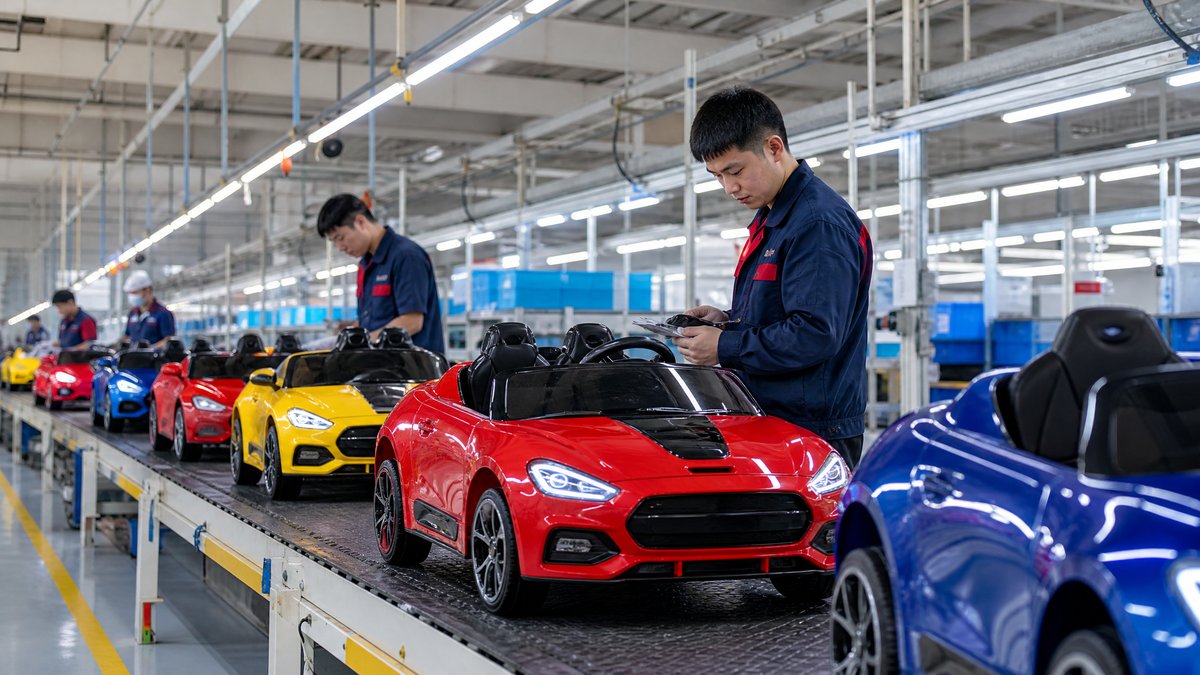
Answer first: Train retail staff to qualify the child and the use setting before discussing features; demonstrate only the functions fitted to the selected model; give consistent setup, supervision, charging, and storage instructions; and know when to stop selling advice and escalate. A responsible sale is not a feature recital. It is a documented, model-specific handover that helps the buyer match the product label, instructions, and local requirements to the intended child and environment.
> Non-negotiable rule for distributors: Verify the selected model’s specifications, supplied documents, battery transport rules, and destination-market requirements before training staff or making a sales claim. Do not transfer information from one model, battery version, or market to another without confirmation.
For a model-by-model retail training pack or review of the documents needed for your destination market, contact KidsRideCar.
Why responsible staff training protects the sale
A kids electric ride-on car is an assembled product, a battery-and-charger system, and a child-use item. Retail staff therefore influence both conversion and the quality of the customer handover. The goal is to help the family make an informed choice—not to imply that a feature removes the need for adult judgment or supervision.
Build training around four habits:
1. Ask before recommending. Age alone is not a complete fit check.
2. Demonstrate the actual unit. Describe only supplied, verified functions and accessories.
3. Hand over the use routine. Setup, supervision, charging, storage, and inspection should be part of the sale.
4. Escalate uncertainty. If a question involves compliance, a suspected defect, a missing instruction, or battery damage, staff should not guess.
This approach is especially useful for importers and wholesalers supplying independent retailers, where a short, repeatable counter script can prevent inconsistent claims across stores.
Build a retailer-ready training kit
Give every store a controlled package rather than asking staff to memorize catalog copy. For each SKU and destination market, the distributor should provide:
- The current, approved product specification sheet and exact model/SKU identifier.
- The applicable user instructions, warning labels, assembly guide, and charger/battery information supplied for that model.
- An approved feature-and-benefit sheet that separates fitted features from optional, custom, or market-dependent features.
- A one-page child-fit and home-use question card.
- A live demonstration checklist for the display unit.
- A charging and storage handover card that points customers back to the product instructions.
- An escalation contact, case form, and stop-sale/quarantine procedure for suspected product issues.
- A version-control field: document date, market, model, and distributor approval owner.
Train the difference between a feature and a promise
Staff may explain what a verified feature does. They should not turn a feature into an absolute safety, performance, or compliance promise.
| If the selected model has a verified feature | Responsible explanation | Avoid saying |
|---|---|---|
| Parent remote-control function | “This model includes a parent control. Let’s demonstrate its operation using the supplied instructions before you decide.” | “The remote makes the car safe without supervision.” |
| Seat belt or restraint | “This model is supplied with this restraint; please use it as instructed and check the label and manual for the intended user.” | “A belt means it can be used anywhere.” |
| Speed or mode selection | “This model has the modes shown in its instructions. We can show how the controls are selected.” | “It is right for every child of this age.” |
| Lights, sounds, music, or connectivity | “These are entertainment or convenience features supplied on this version.” | “These features indicate a higher safety level.” |
| Suspension, wheels, or body style | “These are product-design features. Surface use must still follow the manual and adult judgment.” | “It is suitable for rough, wet, sloped, or public-road use.” |
A parent control, restraint, or low-speed setting may be relevant to the purchase conversation, but none should be represented as a substitute for attentive adult supervision, the product instructions, or a suitable riding area.
Ask age-fit questions before showing the “best” model
Age labels and warnings on the selected product are the starting point. Staff should never replace them with a broad in-store rule such as “this is for toddlers” or “this works until school age.” A practical fit conversation combines the product’s stated age/size limits with the child’s ability to sit securely, reach and operate the controls as intended, and use the product only in a suitable supervised setting.
The seven-question qualification card
Train staff to ask these questions in order:
1. Who will use it? Confirm the child’s age and compare it with the selected model’s label and instructions.
2. What are the child’s current size and ability? Check the model’s stated occupant limit and seating/control fit; do not estimate suitability from age alone.
3. Will one child use it at a time? A second seat or large body shell does not automatically authorize two riders. Confirm the specific model’s intended occupancy.
4. Where will it be used? Ask about a private, level, clear area away from traffic, water, stairs, drop-offs, pools, driveways, and other hazards. The family must follow the manual’s use limits.
5. Who will supervise? Confirm that a responsible adult will be present and understands the product’s use instructions.
6. Who will assemble and charge it? Identify the adult who will read the instructions, perform the stated checks, and manage charging.
7. Which exact model is under consideration? Read the model label and current documentation before discussing functions, age suitability, load/occupancy, or charging.
If the buyer cannot confirm the intended rider, use environment, or supervising adult, staff should pause the recommendation and offer the instruction sheet or follow-up rather than force a model choice.
A simple age-fit conversation staff can use
> “Let’s start with the child, not the body style. We’ll check the age and occupant information on this exact model, how the child fits in the seat and reaches the controls, where it will be used, and who will supervise. Then we can show the functions that are included with this version.”
For additional merchandising support, suggest the existing KidsRideCar age-group buyer’s guide as a supplementary resource—not a replacement for the selected product’s label and instructions.
Demonstrate setup before the product leaves the store
A display demonstration should be controlled, repeatable, and limited to the approved instructions. Never improvise an assembly step or use a substitute charger, battery, part, or control explanation.
Staff demonstration sequence
1. Identify the model. Match the display unit to its SKU, revision, manual, and approved feature sheet.
2. Show the supplied parts and documents. Point out the manual, warning information, charger information, and any parts that require adult assembly or inspection.
3. Explain the pre-use check. Teach the buyer to follow the manual’s stated checks for assembly, connections, fasteners, wheels, controls, battery compartment, and charger. Do not claim a pre-delivery inspection replaces customer checks.
4. Show seating and controls. With no child on the unit, show entry/exit, restraint use if supplied, start/stop, direction, and any mode or parent-control procedure exactly as documented.
5. Explain the riding area. State that the adult should choose and inspect an appropriate area in line with the manual; staff should not approve a particular home, pavement, slope, or public space without model-specific guidance.
6. Give the handover card. Ask the buyer to name the adult who will assemble, supervise, and charge the unit.
Retail counter handover checklist
| Checkpoint | Staff action | Buyer-facing message | Escalate or pause when |
|---|---|---|---|
| Exact model | Confirm SKU, manual revision, and market pack | “These instructions and warnings apply to this version.” | Documentation does not match the unit or market. |
| Child fit | Compare the product label/instructions with intended child and occupancy | “Please follow the stated age, size, and rider guidance.” | Staff cannot confirm the applicable label or buyer intends use outside it. |
| Assembly | Point to the prescribed adult assembly and pre-use checks | “Complete all steps in the manual before first use.” | Parts, manual, or required hardware are missing or damaged. |
| Supervision and area | Confirm an adult and suitable intended location | “Adult supervision and a clear, appropriate riding area remain essential.” | Buyer describes hazardous or unsupervised use. |
| Charging | Explain model-specific charger, place, and instructions | “Use the supplied/approved charging equipment only as the instructions state.” | Charger, cable, connector, battery, or battery compartment looks damaged or unusual. |
| After-sales route | Give contact and record model/serial information where applicable | “Keep your proof of purchase and product identification for support.” | Any complaint indicates a possible safety issue or nonconformity. |
Make supervision and safe-use messaging part of the product story
The safest sales language is direct, calm, and repeatable. Staff should state that children should use the product according to its instructions with responsible adult supervision and in an appropriate riding area. They should avoid minimising risk because the product looks toy-like or is used at home.
Approved safe-use messages
- “Please read the model-specific instructions and warnings with the supervising adult before first use.”
- “Use the product only as directed for the intended child, number of riders, and riding environment.”
- “An adult should supervise; features do not replace supervision.”
- “Stop use and consult the instructions or your retailer if the unit is damaged, behaves unexpectedly, or has missing parts.”
- “Keep the product away from conditions and locations prohibited by the manual.”
Messages staff should not use
- “It is safe for any child who can sit in it.”
- “A remote control means parents can leave the child unattended.”
- “It is fine on any driveway, slope, or surface.”
- “Any charger with a matching connector will work.”
- “The product is certified for your market” unless the distributor has supplied the exact, current evidence for that product configuration and destination market.
When market requirements are raised, staff should refer the question to the distributor’s compliance owner. Requirements can differ by product configuration and destination. In the United States, the CPSC identifies potential battery and charger hazards and notes that battery products and chargers should be considered as a system; local regulators and applicable standards bodies should be consulted for the market in question.[^cpsc-batteries]
Teach charging and battery messaging without overpromising
The battery, charger, vehicle, and instructions must be treated as one model-specific system. The CPSC notes potential hazards associated with batteries and chargers, including overheating, fire, electrical shock, and thermal burns, and emphasizes suitable chargers and system-level testing for battery-powered products.[^cpsc-batteries]
Retail staff do not need to diagnose a battery. They do need to deliver a consistent handover and recognize when to stop.
The charging handover script
> “Before charging, please read the instructions supplied with this exact model. Use only the charger and battery arrangement specified or approved for it, follow the stated charging location, connection, timing, and storage directions, and keep charging under adult control. Do not use damaged equipment or improvise repairs. If anything appears unusual, stop and contact the retailer or distributor.”
Train staff to confirm, rather than assume:
- Which charger and plug configuration is supplied for the selected destination market.
- Whether the battery is installed, removable, or packed separately for the specific SKU.
- The instructions for first charge, routine charging, storage, and replacement supplied for that model.
- The approved service route for a lost charger, damaged cable, damaged connector, unusual smell, heat, swelling, leakage, or unexpected performance.
Do not state a charging duration, run time, battery chemistry, or replacement compatibility unless it appears in the current approved documentation for that exact version. Direct interested buyers to the existing KidsRideCar guide to charging a ride-on car correctly for general education, while making clear that the supplied model instructions take priority.
Transport and destination-market checks belong upstream
Battery transport rules are not a retail promise. They depend on battery type, configuration, shipment mode, route, packaging, documentation, and current rules. IATA explains that air carriage can depend on configuration and rechargeable-battery watt-hour rating and maintains battery guidance for supply-chain participants.[^iata-batteries] Before importing, shipping, or offering a replacement battery, verify the selected model’s battery documentation and the rules of the carrier, forwarder, and destination market. Do not describe a battery shipment as compliant without the appropriate verification.
Prepare staff for common objections
Objection handling should clarify the buyer’s need, then return to the label, instructions, and verified features. It should never persuade the customer to ignore warnings or suitability limits.
| Buyer question or objection | Responsible staff response | Next step |
|---|---|---|
| “Can my younger child use it if an adult holds the remote?” | “We need to follow the age and user guidance for this exact model. A parent-control feature does not override the instructions.” | Check the label/manual; offer a model only if its verified guidance fits. |
| “Can two children ride because there are two seats?” | “We must check the stated rider and occupancy guidance for this model.” | Verify the documentation; do not infer from the seat layout. |
| “Can I charge it overnight or use another charger?” | “Please follow the supplied charging instructions and use only the specified/approved equipment.” | Give the charging handover card; escalate compatibility questions. |
| “Will it work on our slope, grass, wet patio, or near the road?” | “The manual and the intended riding environment guide that decision. We cannot approve use outside the stated conditions.” | Review instructions; recommend a clear, appropriate area rather than making a terrain promise. |
| “Is it certified or legal here?” | “We can request the current model- and market-specific compliance information from our distributor.” | Escalate to the compliance owner; do not give a legal conclusion. |
| “The battery/charger seems hot, damaged, or odd.” | “Please stop use and charging. Do not attempt a repair or substitution.” | Follow the distributor’s safety escalation procedure immediately. |
Set a clear escalation ladder
Retail teams need permission to say, “I need to verify that.” Create a visible escalation ladder and train staff that a pause is better than an unsupported answer.
Level 1: Store clarification
Use for routine, non-safety questions that can be answered from the current approved model pack: included accessories, documented controls, instructions, warranty process, or ordinary assembly clarification.
Level 2: Distributor product or compliance owner
Escalate when the question concerns an unsupported model claim, age/occupancy ambiguity, destination-market requirements, documentation mismatch, replacement part or charger compatibility, battery transport, or a request for certificates/declarations. The owner should respond with controlled, model-specific information and keep a record of the version supplied.
Level 3: Safety or quality incident route
Immediately pause sale, demonstration, charging, or use as appropriate under the distributor’s procedure when there is a suspected defect; damaged, swollen, leaking, smoking, unusually hot, or otherwise abnormal battery/charger; missing or contradictory safety documentation; injury report; fire report; or potential product safety issue. Preserve the product identification, photos where appropriate, purchase details, and incident facts without altering the product or speculating about cause. Follow the distributor’s incident process and the relevant destination-market reporting obligations; the competent authority or regulator should guide any required reporting.
For distributors establishing an after-sales workflow, the existing KidsRideCar after-sales service guide for distributors and battery safety guide for importers are relevant supporting reads. They do not replace the selected model’s documentation or local regulatory advice.
Run training as a repeatable store process
A practical rollout can be completed in short modules and refreshed whenever a model, manual, charger, packaging, or market pack changes.
Suggested training flow
1. Product pack review: Staff find the correct SKU, manual, labels, and approved claims.
2. Qualification role-play: One person plays a caregiver; the other asks the seven fit questions.
3. Hands-on demonstration: Staff perform the documented display sequence without a child rider.
4. Charging handover: Staff use the approved script and identify the correct escalation contacts.
5. Objection role-play: Staff practice saying “I need to verify that” for unsupported questions.
6. Knowledge check: Require staff to identify prohibited claims, required handover points, and stop-sale triggers.
7. Store audit: A manager checks that the display unit, documents, point-of-sale copy, and approved contact route match the current model pack.
Keep a simple record of training date, trainer, attendees, covered SKUs, document revisions, and open questions. This helps distributors refresh guidance when a product variant or market requirement changes.
FAQ
What is the first question retail staff should ask when selling a kids electric ride-on car?
Ask who will use the product, then compare the child and intended use with the exact model’s age, rider, occupancy, and other guidance. Age is a starting point, not a substitute for the model-specific instructions and child-fit conversation.
Should staff promise that a parental remote control makes a ride-on car safe?
No. Staff may demonstrate a verified parent-control function as documented, but should explain that it does not replace the product instructions, suitable use environment, or responsible adult supervision.
What charging advice can a retailer safely give?
Give only the charging instructions approved for the selected model: use the specified/approved charger and battery arrangement, follow the supplied instructions, do not use damaged equipment, and stop for anything unusual. Escalate questions about timing, compatibility, replacements, or abnormal behavior when not addressed in the current documents.
How should a retailer answer a certification or legality question?
Do not give a broad assurance. Record the exact model, configuration, and destination market, then ask the distributor’s compliance owner for current, applicable documentation. Market requirements and evidence can vary.
When should a store stop a demonstration or sale?
Pause and escalate if the unit or charger appears damaged or abnormal, required instructions or labels are missing or inconsistent, a buyer describes use outside stated guidance, or a safety/compliance question cannot be supported by the controlled model pack.
Conclusion: sell the right guidance with the product
Responsible retail training makes the customer conversation more useful: staff can explain verified features, check age and use fit, demonstrate the documented setup, reinforce supervision and charging guidance, and escalate issues rather than invent answers. For every sale, keep the focus on the selected model, the destination market, and the current instructions and labels.
Need a controlled retail staff script, model-specific training pack, or distributor escalation template? Email KidsRideCar to discuss your product range and target market.
Image planning
| Asset | Suggested dimensions | Placement | English caption | Alt text | English AI prompt |
|---|---|---|---|---|---|
| Retail staff training hero | 1600 × 900 px | Below the introduction | “Responsible retail guidance starts with the child, the model, and the use setting.” | “Retail associate explaining a kids electric ride-on car to a parent using a product manual” | “Photorealistic B2B retail training scene in a bright toy showroom: a professional retail associate calmly explains a generic kids electric ride-on car to a parent, open instruction manual and product information card visible, another adult listens, no visible brand logos, no claims or certification marks, clean safe display area, realistic proportions, horizontal composition, generous negative space on the left for article title.” |
| Fit-question visual | 1200 × 800 px | In ‘Ask age-fit questions’ section | “A short qualification conversation helps staff recommend responsibly.” | “Retail staff member checking product guidance with a caregiver before recommending a children’s ride-on car” | “Editorial-style photograph of a retail staff member and caregiver reviewing a plain product information sheet beside a generic children’s electric ride-on car, child is not seated in the vehicle, emphasis on age-fit and supervision conversation, no logos, no text overlays, warm professional store lighting, horizontal 3:2 composition.” |
| Charging handover visual | 1200 × 800 px | In ‘Teach charging and battery messaging’ section | “Charging guidance should be model-specific and handed over clearly.” | “Adult reviewing ride-on car charging instructions next to the supplied charger” | “Photorealistic instructional scene: an adult in a tidy dry indoor area reviews a generic children’s ride-on car instruction booklet beside an unplugged supplied-looking charger and vehicle, no exposed battery, no charging in progress, no brand labels or safety certification marks, clean neutral background, horizontal 3:2 composition.” |
| Escalation workflow visual | 1200 × 750 px | In ‘Set a clear escalation ladder’ section | “When the answer is uncertain, pause and escalate rather than guess.” | “Retail manager documenting a ride-on car product support escalation with product manual and identification label” | “Professional B2B customer-support scene: retail manager at a desk documenting a product support escalation for a generic children’s electric ride-on car, instruction manual and unbranded product identification label nearby, no visible customer data, no injury imagery, no logos, clean realistic office-store setting, horizontal 16:10 composition.” |
References
[^cpsc-batteries]: U.S. Consumer Product Safety Commission, “Batteries”. Verified for its discussion of battery/charger hazards and system-level battery safety considerations; it is U.S. guidance and should not be treated as a universal market-compliance determination.
[^iata-batteries]: International Air Transport Association, “Batteries”. Verified for general battery-air-transport guidance; carriers, forwarders, applicable regulations, and destination-market rules must be checked for the actual shipment.
Official references
Explore these external resources for current regulatory and trade guidance. Confirm requirements with the relevant authority before placing an order.
Ready to Start?
Factory-Direct · CE & ASTM Certified · MOQ from 50 Units
Our export team works with buyers in 60+ countries. Get a quote within 24 hours.
KR
Written by KidsRideCar
China's leading kids electric ride-on car manufacturer. 500,000+ units shipped annually to 60+ countries. CE, ASTM & EN71 certified.