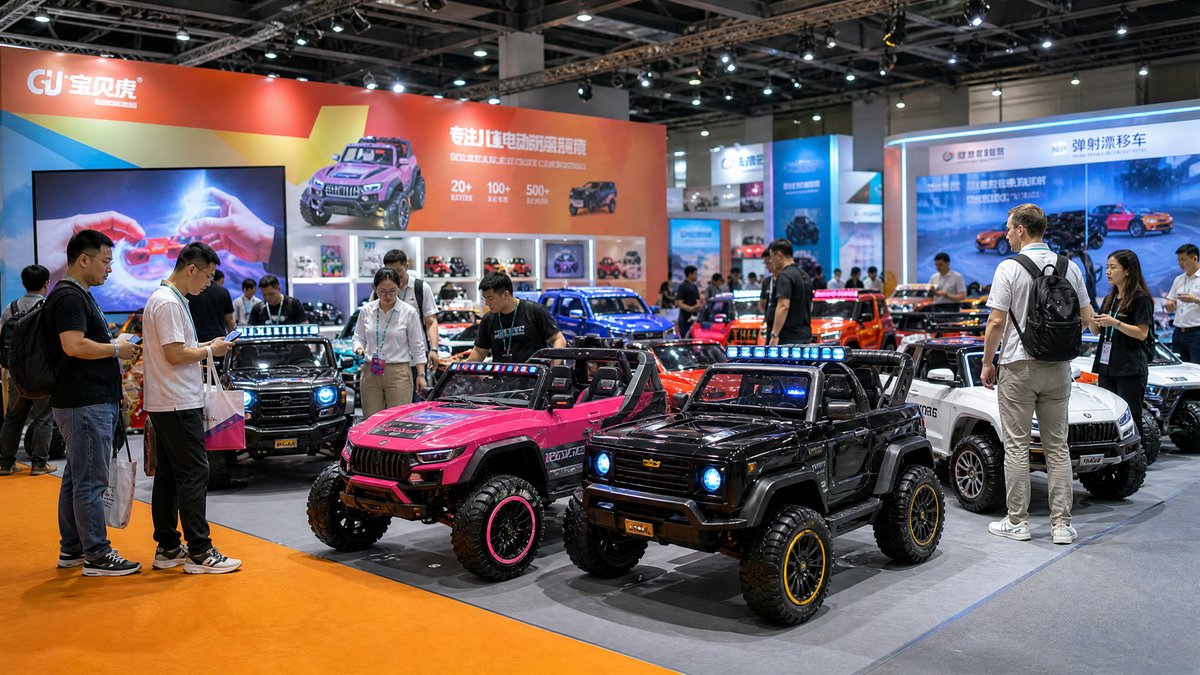
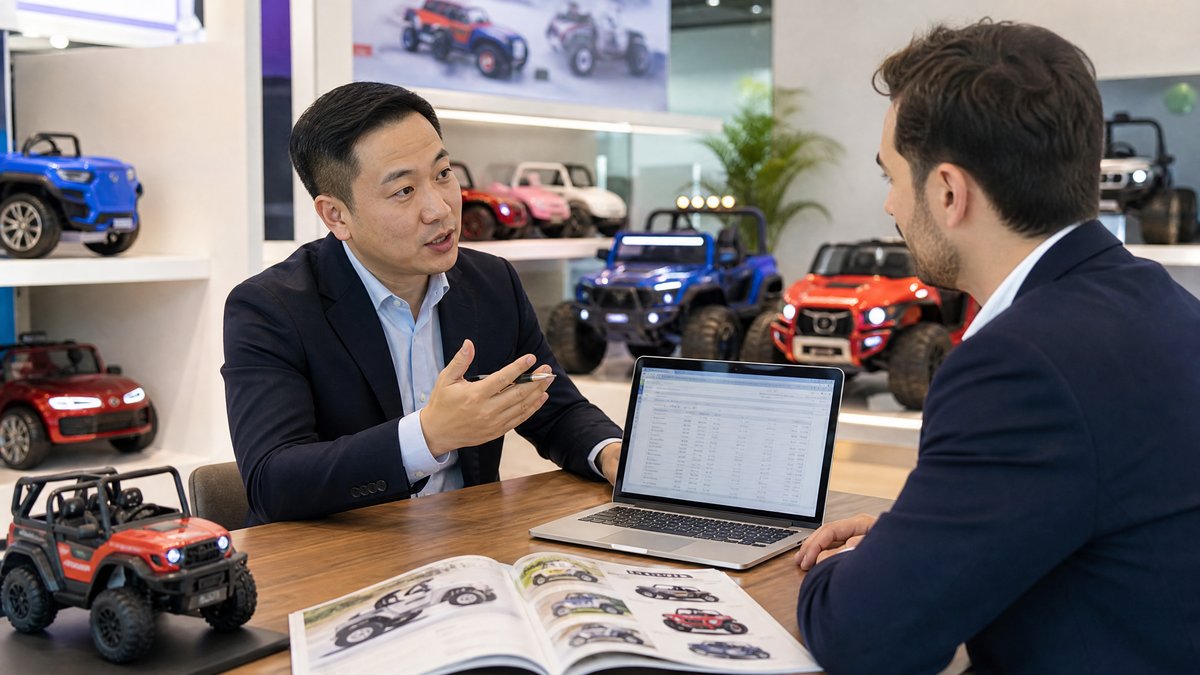
Indoor playground operators should ask kids ride-on car suppliers questions about the complete operating system—not just the vehicle’s appearance or unit price. Before ordering, confirm the car’s intended environment, dimensions, supervision controls, charging process, cleaning routine, replacement parts, documentation, commercial support, and configuration-specific compliance requirements.
The right buying decision depends on how the vehicle fits your floor plan, age policy, session model, staff workflow, and maintenance capacity. This guide gives indoor playground owners and B2B buyers a practical question list for supplier discussions.
Quick answer: the questions to ask first
Send suppliers a written brief and request clear, model-specific answers to these questions:
1. What operating environment is this model designed for, and what indoor surfaces are suitable?
2. What are the assembled dimensions, turning needs, product weight, and recommended user range?
3. Which supervision features are included, such as a parental remote, speed selection, emergency stop, or other controls?
4. How are charging, storage, daily inspection, cleaning, and battery handling managed?
5. What parts, manuals, troubleshooting guidance, and after-sales response process are available?
6. Which documents and market-specific compliance information apply to this exact configuration?
7. Can the supplier support a pilot order, replacement-parts plan, branding, packaging, and future replenishment?
Ask for answers tied to the exact model number and configuration. A general catalog statement is not a substitute for a product-specific specification sheet, sample inspection, or written commercial terms.
1. Will the ride-on car fit the playground layout?
Indoor playgrounds often have tighter lanes, queue areas, pillars, soft-play structures, and fixed barriers than outdoor venues. Ask the supplier for the assembled length, width, height, product weight, turning characteristics, and any recommended clearance around the car. Also ask whether the dimensions change with accessories, mirrors, bumpers, a remote-control receiver, or a different seat configuration.
Use your floor plan to mark the route, loading point, waiting area, charging or storage area, and staff observation positions. Ask the supplier to comment on the layout, but complete your own site risk assessment.
Useful follow-up questions include:
- Can the vehicle pass through our doors, gates, and storage openings when assembled?
- What is the practical turning space on our flooring?
- Are there low-clearance areas, ramps, thresholds, or transitions the model should avoid?
- Can two vehicles pass safely under our planned operating rules?
- What is the minimum area needed for a supervised start and stop zone?
For a new venue, compare the supplier’s technical drawing with your architect’s or operator’s layout. For an existing venue, measure the narrowest route rather than relying on the advertised overall footprint.
2. Is the model suitable for indoor commercial use?
“Indoor use” can mean a quiet home, a shopping-center play zone, a soft-play venue, or a high-turnover rental operation. These are different duty contexts. Ask the supplier what use assumptions apply to the model and which surfaces are recommended. Discuss smooth flooring, seams, ramps, dust, cleaning agents, and the possibility of frequent starts and stops.
Do not ask only, “Is it commercial grade?” Ask what that phrase means in the supplier’s documentation. Request a clear list of operating limitations and routine checks. If the supplier provides a usage schedule or inspection recommendation, have it reviewed by your operations team before adopting it.
For procurement comparison, create a table covering model, dimensions, user range, controls, charging, cleaning, parts, and limitations. This prevents photos from driving the decision.
3. Which age, size, and supervision assumptions apply?
A supplier should not choose your age policy for you. Ask for the intended user range and the conditions behind it, including seating position, user size, control reach, and any need for adult supervision. Your venue should then set its own operating rules based on the vehicle instructions, local requirements, insurance advice, staff capability, and the characteristics of the play area.
Ask:
- Is the model intended for one user or more than one user?
- Which restraints or seating features are supplied, if any?
- Can staff easily see the driver and access the vehicle?
- What supervision controls are available to staff or a responsible adult?
- Can the operating speed or driving mode be adjusted using the supplied controls?
- What happens if the remote control loses connection or the vehicle must be stopped?
Use model-neutral safety language in your purchasing documents: follow the supplier’s instructions, apply the venue’s risk assessment, train staff, and prevent use outside the stated limits. Do not assume that a remote control, seat belt, or other feature makes supervision unnecessary.
4. What safety features and operating controls are included?
Ask the supplier to identify each safety-related feature and explain how it works in normal operation. Depending on the configuration, topics may include parental remote control, selectable speed modes, braking behavior, seat restraints, guarded moving parts, rounded surfaces, audible or visual indicators, and controls accessible to staff.
Request photographs or a demonstration of the actual sample rather than relying on generic images. Confirm whether a feature is standard, optional, or available only on a particular version. Record the model number, revision, and included accessories in the quotation and purchase order.
Request the user manual before a large order. Review warnings, charging, cleaning, inspection, and storage instructions; resolve any catalog/manual inconsistency in writing.
5. How will charging, batteries, and storage work at the venue?
Charging is an operating process, not merely an accessory question. Ask which charger is supplied for the exact vehicle configuration, what input requirements apply, and where charging may safely take place according to the instructions. Confirm whether the supplier provides a charging procedure, storage guidance, and a method for identifying vehicles that are not ready for use.
Your operations team should define a controlled charging area, access rules, ventilation or environmental requirements stated by the manufacturer, and a sign-off process. Ask the supplier:
- How should staff identify a full, partially charged, or unavailable vehicle?
- What routine checks are required before and after use?
- What signs require the vehicle or charger to be removed from service?
- How should unused vehicles be stored?
- Which battery and charger replacement options are approved for this model?
Staff should follow the supplied instructions and use qualified service support where required. Never instruct venue personnel to bypass protections, rewire equipment, solder connections, open batteries, or perform internal repairs. Ask the supplier how to report a suspected fault and how replacement components are authorized.
6. What cleaning and hygiene process does the supplier support?
Indoor playgrounds need a repeatable cleaning routine because many children may use the same vehicle. Ask which surfaces can be cleaned, which products or methods must be avoided, and whether water exposure is restricted. Request a written cleaning and inspection checklist that staff can adapt to the venue.
Discuss cleaning for high-contact points such as the steering wheel, controls, seat, restraints, handles, and body panels. Ask whether removable parts can be cleaned safely and follow model-specific material guidance rather than assuming a household product is suitable.
7. What maintenance, parts, and after-sales support are available?
For a commercial fleet, after-sales support can matter more than a small price difference. Ask the supplier for a parts diagram or replacement-parts list, maintenance instructions, fault-reporting process, and support contact. Identify parts likely to experience wear or accidental damage, such as wheels, switches, chargers, remote controls, restraints, body panels, and battery-related components.
Clarify which parts are available separately and which require a service procedure. Ask how the supplier distinguishes a product defect, transit damage, operating error, and normal wear. Put the agreed process in writing, including required photographs, serial or batch information, response channel, and responsibility for shipping where applicable.
Wholesalers and distributors should request a customer support pack. Rental operators should build a spare-parts and out-of-service plan before the fleet arrives, with records linked to model numbers.
See the [KidsRideCar product range](/products/) and the related [after-sales guide](/blog/kids-electric-ride-on-car-after-sales-service-guide-distributors) when preparing a supplier comparison.
8. Which documents should the supplier provide?
Ask for a complete document set for the exact product and destination market. Depending on the destination, product configuration, age classification, battery type, transport method, and sales channel, requirements may vary. A supplier’s document list may include a specification sheet, user manual, packing details, battery and charger information, test or conformity documentation where applicable, inspection records, and commercial invoices.
Do not treat a logo or generic declaration as proof that every requirement has been met. Ask which product version each document covers, who issued it, when it was issued, and whether accessories or branding changes affect the scope. Requirements vary by destination market and configuration, so importers should confirm applicable obligations with qualified local advisers, testing bodies, customs professionals, or authorities.
Define which documents distributors or retailers need. Keep the approved set with the purchase order and sample approval instead of relying on an old email attachment.
9. Can the supplier support a pilot order and repeat supply?
A pilot order helps an indoor playground test layout, staff training, customer flow, charging routines, cleaning, and maintenance before committing to a broader fleet. Ask whether the pilot can use the same configuration, packaging, controls, and documentation intended for repeat orders.
Ask how changes will be communicated: even a change to a wheel, controller, charger, seat, body mold, or software may affect training and spare parts. Request product revisions on future quotations.
For OEM buyers, explain your brand, target market, packaging needs, manual language, artwork process, and approval stages. Avoid approving branding before confirming that the underlying vehicle, controls, and documents are suitable for the intended venue.
10. What should be written into the quotation and purchase order?
Your purchase documents should identify the model, configuration, accessories, quantities, packaging, labeling, documentation, inspection arrangements, and commercial terms. Include the approved sample or specification reference for shipment comparison.
A practical procurement file may contain:
- The venue brief and operating assumptions
- Final technical specification and drawings
- Approved sample photographs and model number
- User, charging, cleaning, and maintenance instructions
- Parts and after-sales contact details
- Destination-market document checklist
- Packaging, labeling, and shipping information
- Inspection criteria and nonconformity process
This record supports consistent replenishment and gives staff a reference when a product moves between locations.
Frequently Asked Questions (FAQ)
What is the most important question for an indoor playground to ask a ride-on car supplier?
Ask whether the exact model and configuration suit your indoor layout and operating method. Confirm dimensions, turning needs, surface limitations, supervision controls, charging process, and user assumptions rather than accepting a generic “indoor use” label.
Should an indoor playground buy a home-use or commercial ride-on car?
The answer depends on the venue’s traffic, supervision, cleaning, maintenance, and risk-management requirements. Ask the supplier what use assumptions support the model, then compare those assumptions with your site plan and operating procedures. Do not rely on the word “commercial” without supporting documentation.
What compliance documents should a playground request?
Request documents for the exact model and configuration, including relevant instructions, specifications, battery and charger information, and any applicable conformity or test documentation. Requirements vary by destination market and configuration, so confirm the final document needs with qualified local professionals or authorities.
How can an indoor playground reduce downtime?
Agree on routine inspections, charging and storage procedures, cleaning instructions, spare-parts availability, fault reporting, and escalation contacts before ordering. A pilot fleet can reveal workflow problems before a larger purchase. Never let unqualified staff attempt internal electrical or battery repairs.
Is a parental remote control enough to make a ride-on car safe?
No. A remote control is one supervision feature, not a replacement for trained staff, venue rules, suitable layout, user limits, inspections, and active oversight. Ask how the supplied control works and apply the complete operating procedure for the venue.
Conclusion: buy for the operating system, not just the vehicle
The best supplier conversation for an indoor playground goes beyond style, voltage, or unit cost. Ask how the ride-on car fits the route, how staff supervise it, how the venue charges and cleans it, which parts and documents are available, and how the supplier will support the product after delivery. Tie every answer to the exact model and configuration, test the proposed workflow with a pilot where practical, and record the approved details in your purchasing documents.
Ready to discuss a model for your indoor venue, distribution program, rental fleet, or OEM project? [Contact KidsRideCar through the inquiry page](/inquiry) or email info@kidsridecar.com with your floor-plan constraints, target market, quantity, and required operating features.
Official references
Explore these external resources for current regulatory and trade guidance. Confirm requirements with the relevant authority before placing an order.
Ready to Start?
Factory-Direct · CE & ASTM Certified · MOQ from 50 Units
Our export team works with buyers in 60+ countries. Get a quote within 24 hours.
KR
Written by KidsRideCar
China's leading kids electric ride-on car manufacturer. 500,000+ units shipped annually to 60+ countries. CE, ASTM & EN71 certified.