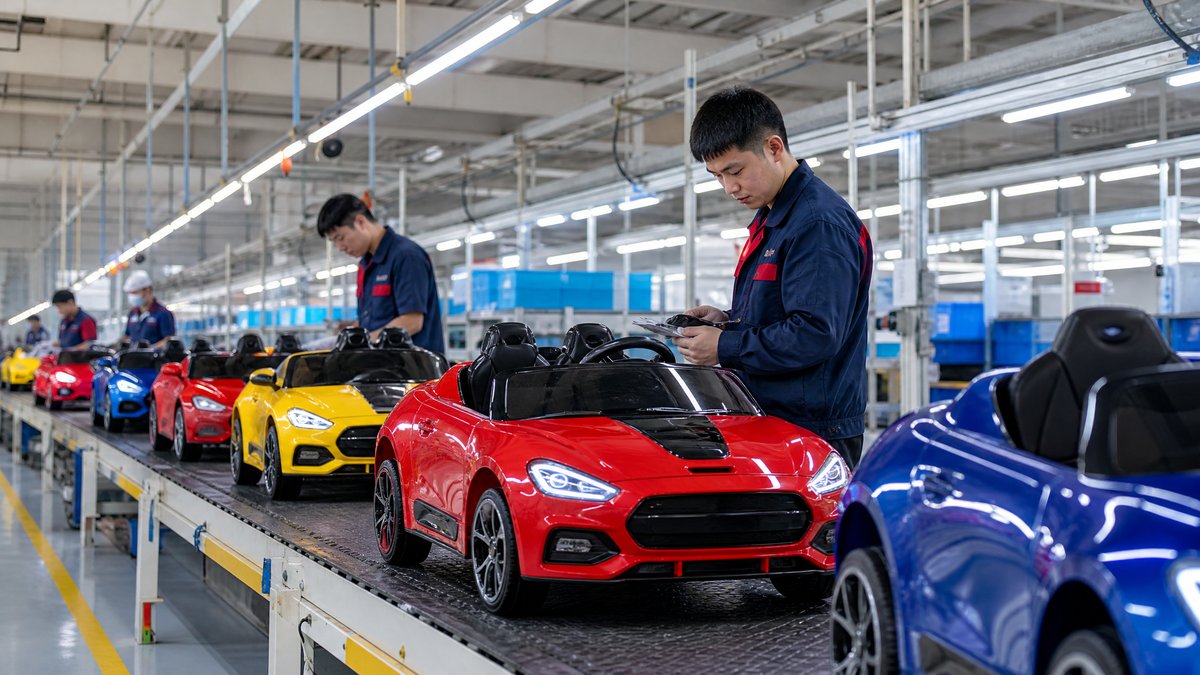
Retailers should compare kids ride-on car product bundles using a single, SKU-level comparison sheet—not a headline price or a broad claim that one offer is “complete.” List the vehicles, included equipment, packing, product records, service items, and conditions for every offer, then assess whether the package fits the intended customer, sales channel, storage capacity, and after-sales plan. The best bundle is the one whose scope is clear and commercially workable, rather than simply the one with the most models or lowest apparent unit price.
Build a normalized bundle comparison
Ask every supplier to quote against the same format. A meaningful comparison needs more than a catalogue image and a mixed-model total. Create a row for each sellable vehicle SKU and each non-vehicle support item, and use common columns across all offers.
Include the following information:
- Model name or internal SKU, color, and manufacturer-stated user guidance
- Quantity by SKU, units per carton, product/carton dimensions, and gross/net weights
- Included charger, remote control, seat, wheels, manual, labels, and approved accessories
- Stated battery type and electrical configuration, without assuming similar names mean identical specifications
- Assembly status, carton format, barcode location, artwork, and language needs- Available spare parts, part identifiers, ordering route, and supplier-stated lead-time assumptions
- Product information and documents offered for the intended market, including version and scope
Mark each line included, optional, not available, or to be confirmed. This simple discipline identifies omissions quickly. For example, a lower unit price may be tied to a different feature set, fewer product assets, or packaging work outside the quote. Resolve those differences before treating two bundles as comparable.
Check whether the SKU mix has a retail purpose
A useful bundle is an assortment plan, not a random group of body styles. Assign each proposed model a role: an entry option, a core volume model, or a differentiated choice. Then test whether quantities, product information, and expected shelf or listing space support that role.
Match the offer to the sales channel
A store-focused retailer may prioritize cartons suited to handling and display planning, straightforward comparison points, and staff-ready information. An online retailer may need accurate product dimensions, images, manuals, package data, and customer-service content before listings go live. These are procurement requirements, not assumptions to leave until after the order.
Review manufacturer-stated age guidance, dimensions, maximum-load guidance, features, and intended-use information against the target customer. Do not convert a feature list into unsupported safety, durability, range, or performance promises. Retailers should verify current destination-market requirements for product markings, instructions, warnings, and product records; a document available for one market may not satisfy requirements in another.
Remove unhelpful overlap
More SKUs can increase choice, but they can also complicate forecasting, listing maintenance, staff knowledge, and spare-parts holding. For every model, write a short factual reason it belongs in the assortment. If two models cannot be distinguished clearly, request better data or consider reducing duplication.
Compare the support built around the vehicles
The vehicle is only part of a wholesale bundle. Treat packaging, content, documents, and service materials as separate procurement lines with named deliverables.
Retail assets and packaging
Confirm whether the supplier provides product images, videos, manuals, assembly guidance, carton artwork, label layouts, and product-copy inputs. Ask for file format, dimensions, language coverage, revision control, and a proof-approval process. Also clarify permission to use any supplier media and the agreed use or ownership rights for retailer-specific artwork.
Parts and after-sales readiness
Request a parts list that links each item to the relevant model, supported configuration, and part number where available. Ask how buyers reorder chargers, remotes, wheels, seats, or other approved replacement items; record MOQ, packing, ordering contact, and stated availability assumptions. Do not substitute, alter, bypass, disassemble, or rewire electrical components. Service work should follow manufacturer-approved instructions and appropriate qualified support processes.
Also agree how missing items, defects, and transit damage will be recorded and handled. A useful bundle description states the evidence needed, responsible contacts, escalation path, and possible resolution route, such as parts supply, replacement, or commercial credit. An included starter allocation of parts can help, but it is not a substitute for a replenishment plan.
Compare total bundle value, not only the quote
Use the supplier’s price as one input, then model the retailer’s total planned cost consistently across offers. Depending on the chosen delivery terms and business model, this may include disclosed origin-side charges, freight assumptions, insurance where selected, import costs, warehousing, listing or store preparation, assembly-related labor, customer support, and parts stock. Classification, taxes, duties, and regulatory obligations should be verified for the actual shipment and destination using current appropriate sources.
Validate the bundle before purchase approval
Use a controlled approval process before issuing a purchase order. Request representative samples or product data for the intended configuration, then record the reviewed SKU, color, component list, packaging, labels, documents, and agreed revisions.
1. Screen: Remove offers that do not fit channel, product-data, or market-planning needs.
2. Clarify: Close every blank, condition, or version difference in the comparison sheet.
3. Validate: Review samples, packaging proofs, documents, and service arrangements against the agreed specification.
4. Approve: Include the SKU mix, quantities, permitted substitution policy, packaging, document deliverables, and claim process in purchase documentation.
5. Monitor: Log arrival and selling issues by SKU and part number for future sourcing decisions.
For help structuring a bundle request, contact KidsRideCar by email.
FAQ
Should retailers select the bundle with the lowest average unit price?
Not automatically. Compare equivalent SKU roles, equipment, packaging, service support, and total planned cost using the same assumptions. A lower average may reflect a different configuration or excluded support item. Select the offer that meets the documented retail plan with understood boundaries.
How can retailers compare bundles with different models?
First group models by their retail role: entry, core, or differentiated. Compare quantity, included equipment, carton profile, product data, and reorder support within each role. If a model has no direct equivalent, assess whether it fills a defined customer or channel need rather than forcing a false like-for-like match.
What should a bundle quote say about accessories and spare parts?
It should identify the item, compatible model, part number where available, quantity, version or color where relevant, packing, price status, MOQ, and reorder process. Specify whether an item is fitted, packed in the carton, supplied separately, or optional. Use manufacturer-approved components and procedures only.
Can a wholesale bundle be customized?
Suppliers may be able to discuss color ratios, labels, packaging, artwork, or selected accessories, subject to feasibility and MOQ. Obtain a written specification, price and timing implications, proof approvals, and rights to use custom files. Confirm the final product and materials against current requirements in each intended market.
What if details change before production?
Use written change control. Record the affected SKU, old and new specification, reason, price or timing effect, document revision, and required buyer approval. Do not assume an apparently cosmetic change has no impact on product information, packaging, instructions, or market requirements.
Conclusion
Retailers can compare kids ride-on car wholesale bundles reliably by turning every offer into a transparent, SKU-level plan. Evaluate the assortment’s role, exact configuration, packaging and content assets, available documents, parts support, and total operating implications alongside quoted price. Clear inclusion lists and a controlled approval record help retailers select a bundle that is easier to launch, support, and replenish.
To discuss a wholesale bundle matrix or request product information for your sales channel, email KidsRideCar.
Official references
Explore these external resources for current regulatory and trade guidance. Confirm requirements with the relevant authority before placing an order.
Ready to Start?
Factory-Direct · CE & ASTM Certified · MOQ from 50 Units
Our export team works with buyers in 60+ countries. Get a quote within 24 hours.
KR
Written by KidsRideCar
China's leading kids electric ride-on car manufacturer. 500,000+ units shipped annually to 60+ countries. CE, ASTM & EN71 certified.