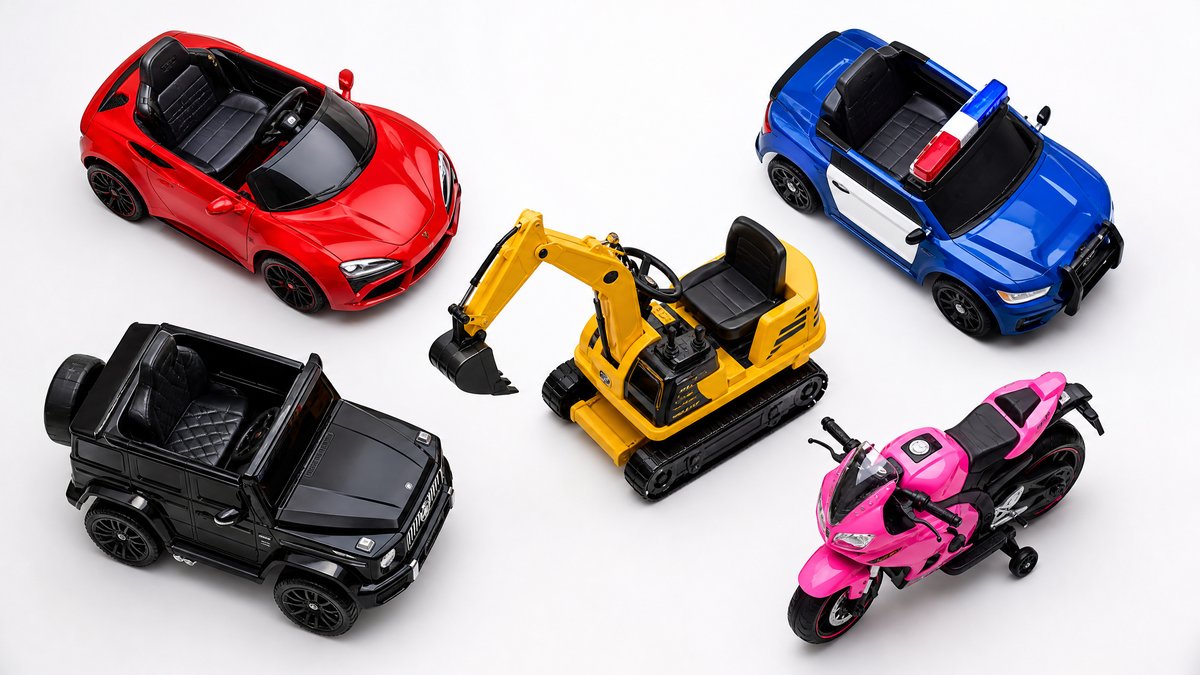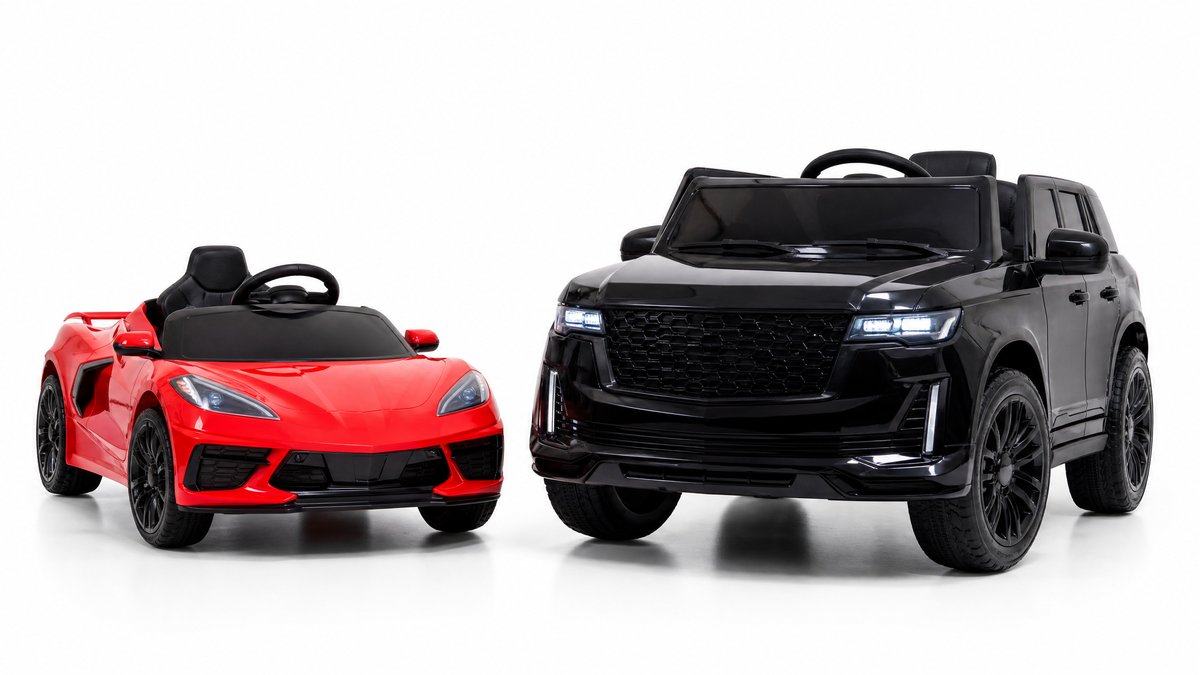
When wholesale buyers and distributors first approach us about building their kids electric ride-on car inventory, the voltage question comes up in almost every conversation. The choice between 12V and 24V has significant downstream implications: it determines which age groups you can serve, what price points you can reach, and ultimately which SKUs will move fastest in your specific market.
The Fundamental Difference: What Voltage Actually Controls
Voltage determines the power available to the motor system. Higher voltage means more torque, higher top speed, and better performance on uneven terrain. The table below summarizes the key differences across the most important dimensions for wholesale buyers:
| Specification | 12V Models | 24V Models |
|---|---|---|
| Typical Top Speed | 3–5 km/h | 6–8 km/h |
| Motor Configuration | Single motor (most models) | Dual motor (most models) |
| Battery Capacity | 7Ah–10Ah | 12Ah–18Ah |
| Runtime per Charge | 60–90 minutes | 90–120 minutes |
| Recommended Age | 2–5 years | 4–8 years |
| Max Weight Capacity | 25–35 kg | 35–50 kg |
| Terrain Suitability | Flat surfaces, smooth pavement | Grass, gravel, mild inclines |
| Typical FOB Price Range | $40–$70 | $80–$140 |
| Retail Price Range (EU/US) | $120–$250 | $250–$500 |
12V Kids Electric Cars — The Volume Tier
12V ride-on cars are the backbone of the kids electric vehicle market by unit volume. They serve the largest demographic segment — children aged 2–5 — which is also the segment with the highest gifting frequency. For wholesale buyers, this translates to faster inventory turnover and more predictable demand patterns, with peaks in Q4 (Christmas) and Q2 (spring/summer outdoor season).
In our factory testing, 12V models consistently deliver 3.5–4.5 km/h on flat pavement under typical load conditions. The parental remote control — standard on most 12V models — gives parents override capability, which is a key selling point for this age group.
24V Kids Electric Cars — The Premium Tier
24V ride-on cars serve children aged 4–8 and are positioned as premium products. They typically generate higher per-unit margin but slower inventory turnover compared to 12V. They are well-suited for specialty toy retailers, premium gift shops, and online sellers who can support a more detailed product description and customer education process.
"In our post-shipment surveys with European distributors, 'battery life' is the most frequently cited positive attribute for 24V models. Conversely, 'charge time' (10–14 hours) is the most common complaint." — KidsRideCar Export Team
Tell us your target market and price range — we'll send you a curated product selection with current FOB pricing.
Get Product Recommendations →Market Demand by Region
| Market | Dominant Volume Tier | Notes |
|---|---|---|
| United States | 12V (60%), 24V (40%) | Strong demand for licensed models in both tiers |
| United Kingdom | 12V (55%), 24V (45%) | Garden use drives 24V demand |
| Germany / DACH | 12V (65%), 24V (35%) | High EN71 compliance scrutiny |
| France / Benelux | 12V (70%), 24V (30%) | Price sensitivity is higher |
| Gulf / Middle East | 12V (50%), 24V (50%) | Premium positioning resonates well |
| Australia / NZ | 12V (45%), 24V (55%) | Outdoor terrain drives 24V preference |
Battery Technology — Lead-Acid vs. Lithium
Both 12V and 24V categories are available with either sealed lead-acid (SLA) or lithium iron phosphate (LiFePO4) batteries. SLA batteries are the standard choice for entry-level models — heavier but less expensive. LiFePO4 batteries are lighter, have a cycle life of 1,000–2,000 charge cycles, and add $8–$15 to the FOB price. We are seeing increasing demand for LiFePO4 options from buyers targeting premium retail channels in the UK, Germany, and Australia.
Recommended Stocking Strategy for New Wholesale Buyers
A balanced starting inventory should include 60–70% 12V models and 30–40% 24V models by unit count. For buyers targeting a single market, use the regional demand data above to adjust this ratio. Order a sample of each model before bulk production — the difference in quality between factories is significant in this category.
Frequently Asked Questions
Can I mix 12V and 24V models in the same container?
Yes. A standard 20-foot container holds approximately 150–200 units of 12V models or 100–140 units of 24V models. Mixed containers are common for buyers who want to test both tiers simultaneously.
Which voltage tier has better sell-through on Amazon?
Both tiers perform well on Amazon, but with different dynamics. 12V models benefit from higher search volume and impulse purchase behavior. 24V models have lower search volume but higher conversion rates among buyers who find them, and they generate fewer returns due to unmet performance expectations.
What is the warranty standard for kids electric ride-on cars?
The industry standard for wholesale orders is a 12-month warranty covering manufacturing defects. Battery warranty is typically 6 months. Confirm warranty terms in writing before placing your order.
The 12V vs. 24V decision is not a binary choice — most successful wholesale buyers stock both tiers. Start with 60–70% 12V, adjust for your specific market, sample before bulk ordering, and pay attention to battery technology. Our sales team can provide model-specific recommendations based on your target market and price point.
Official references
Explore these external resources for current regulatory and trade guidance. Confirm requirements with the relevant authority before placing an order.
Ready to Start?
Factory-Direct · CE & ASTM Certified · MOQ from 50 Units
Our export team works with buyers in 60+ countries. Get a quote within 24 hours.
China's leading kids electric ride-on car manufacturer. 500,000+ units shipped annually to 60+ countries. CE, ASTM & EN71 certified.