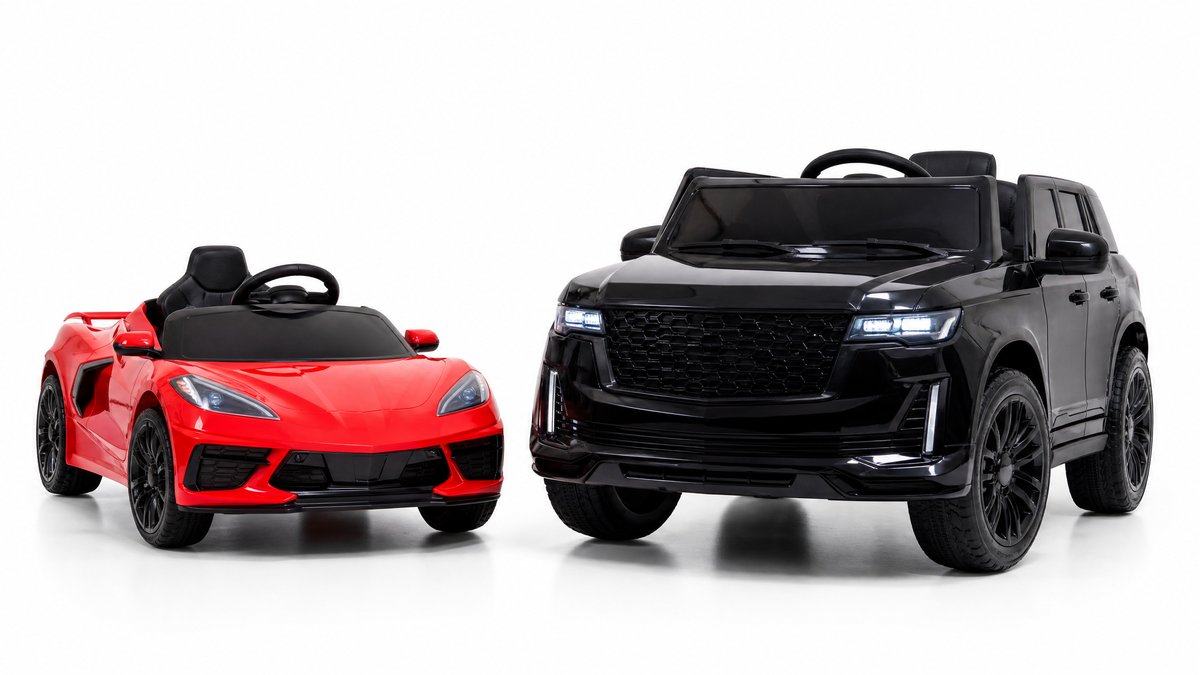
For global toy retailers, children's boutique owners, and wholesale distributors, safety is not merely a feature—it is the foundational pillar of brand reputation and legal compliance. When parents purchase a children's electric ride-on car, they are entrusting manufacturers and retailers with the physical well-being of their children. Consequently, vetting ride-on car inventory through rigorous safety test standards is an absolute necessity for B2B procurement professionals.
At KidsRideCar, safety compliance is integrated into every stage of manufacturing and distribution. This comprehensive review examines the vital safety tests, regulatory benchmarks, and mechanical evaluations that premium children's electric vehicles must undergo to pass all international safety checks.
1. Why Safety Compliance Matters for B2B Importers
Importing children's toys across international borders involves navigating a complex web of regulatory frameworks. Retailers who source substandard or uncertified ride-on cars face severe liabilities, including customs seizures, costly product recalls, and irreparable damage to their brand reputation.
When B2B buyers evaluate suppliers, requesting comprehensive test reports is standard operating procedure. Key international safety standards ensure that every electrical circuit, mechanical joint, and plastic compound meets strict thresholds for durability and toxicity.
Major International Safety Standards for Ride-On Cars
| Standard Region | Governing Body | Core Focus Area | Key Testing Parameters |
|---|---|---|---|
| United States | CPSC / ASTM International | ASTM F963-17 | Mechanical hazards, flammability, heavy metal limits in surface coatings |
| European Union | CEN / European Commission | EN 71 (Part 1, 2, 3, 9) | Structural integrity, electrical safety, chemical migration limits |
| International | ISO | ISO 8124 | General safety requirements for toys |
| Electronics | CE / RoHS / FCC | Electromagnetic Compatibility | Battery stability, charger safety, EMF radiation limits |
2. Core Components of a Comprehensive Ride-On Car Safety Test
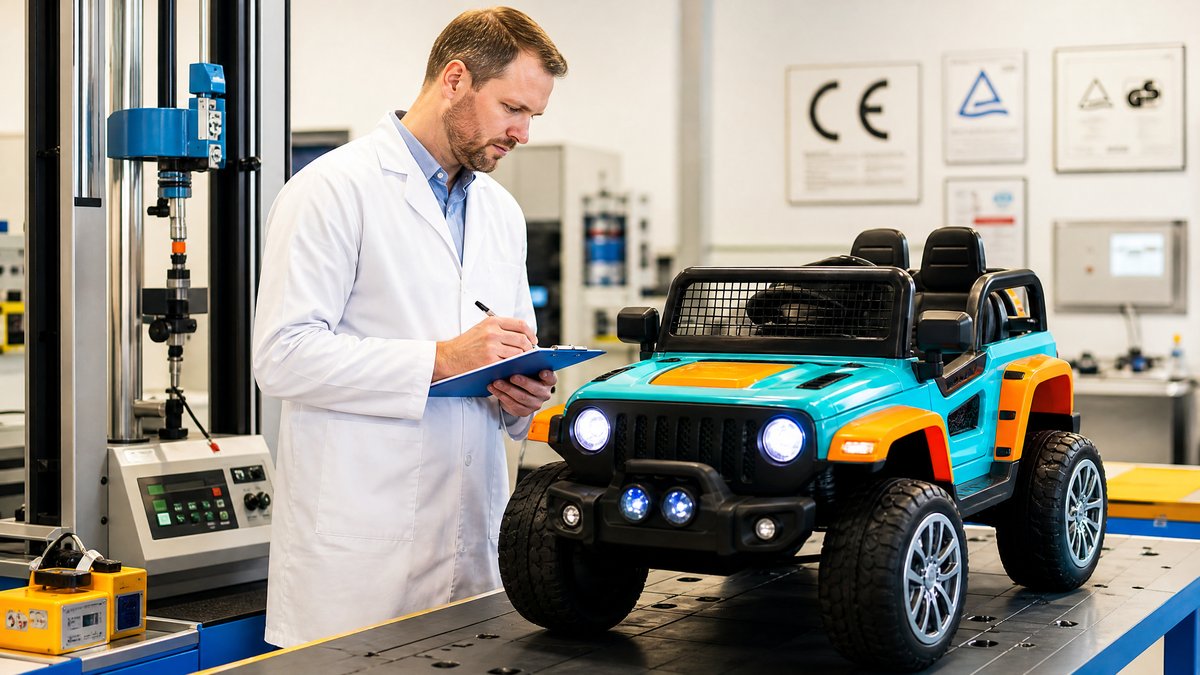
A thorough safety evaluation encompasses multiple engineering disciplines, ranging from electrical engineering to material science. Below are the primary testing modules executed by certified third-party laboratories.
Electrical System and Battery Safety
Electric ride-on cars rely on rechargeable battery packs (typically 12V or 24V systems) coupled with electric motors. Electrical failures can lead to thermal runaway, short circuits, or battery overheating.
* Overcharge and Short-Circuit Protection: Chargers must feature automatic shut-off mechanisms to prevent overcharging. Circuit breakers or inline fuses must instantly cut power during a short circuit.
* Wiring Insulation and Routing: Wires must be securely anchored away from moving parts (such as steering linkages and drive gears) and shielded with flame-retardant sleeving.
* Voltage Thresholds: Operating voltages must not exceed safe extra-low voltage (SELV) limits (typically under 24V DC) to eliminate the risk of electric shock during use.
Mechanical Integrity and Structural Stability
Children's ride-on cars must withstand rough handling, uneven outdoor terrains, and impact loads. Mechanical testing simulates years of aggressive child play in a matter of days.
* Drop and Impact Tests: Vehicles are subjected to drop tests from standardized heights to verify that chassis frames and plastic body panels do not shatter into sharp fragments.
* Stability and Anti-Tip Evaluation: Ride-on cars undergo lateral and longitudinal tilt table testing to ensure they maintain stability on inclines up to 10-15 degrees, minimizing the risk of tip-overs.
* Pinch and Shear Point Analysis: Gaps and hinges around doors, hoods, and seating areas are inspected using specialized probe gauges to ensure small fingers cannot be pinched or trapped.
Chemical Composition and Material Safety
Children frequently touch, lean against, and occasionally mouth the surfaces of ride-on vehicles. Material safety protocols ensure that plastics and paints are entirely non-toxic.
* Phthalate and Heavy Metal Screening: Laboratory spectroscopy verifies that PVC plastics, rubber tires, and paints contain zero detectable levels of banned phthalates, lead, cadmium, or barium.
* UV Degradation Resistance: Exterior body panels undergo accelerated weathering tests to ensure prolonged sun exposure does not cause the plastic to become brittle or release harmful chemical residues.
3. Real-World Performance and Stress Testing
Beyond laboratory compliance, field testing provides critical insights into how ride-on cars perform under realistic operating conditions. At KidsRideCar, our quality assurance team conducts rigorous stress tests before approving any batch for wholesale export.
Load Capacity and Motor Stress Analysis
A standard 12V two-seater ride-on car is typically rated for a maximum load of 30kg to 50kg. During stress testing, vehicles are loaded to 125% of their rated capacity and operated continuously on rough surfaces (gravel, grass, and asphalt) for 50 operational hours. Motor temperature, gearbox wear, and wheel traction are monitored in real-time to detect any premature mechanical degradation.
Braking System Responsiveness
Electric ride-on cars generally utilize spring-loaded foot accelerators that engage automatic electromagnetic braking when the pedal is released (often referred to as "fail-safe braking"). Testing protocols measure stopping distance on various inclines and surface textures to ensure the vehicle halts smoothly without throwing the young driver forward.
4. Frequently Asked Questions (FAQ)
Q1: What certifications should I check for when importing ride-on cars into the EU?
A: For the European market, you must ensure the products comply with the EN 71 standard (covering mechanical, physical, and chemical properties), EN 62115 (safety of electric toys), and carry the CE mark. Additionally, verify that the batteries comply with RoHS and WEEE directives.
Q2: How do I verify if a supplier's safety test reports are authentic?
A: Always request full-form test reports issued by internationally recognized laboratories such as SGS, TÜV Rheinland, or Intertek. Cross-check the report number and QR code directly on the issuing laboratory's online verification portal to confirm validity.
Q3: Are parental remote control features mandatory for safety?
A: While not legally mandated in all jurisdictions, 2.4G parental remote controls are considered an essential safety feature for younger children (ages 1–4). They allow supervising adults to override steering and engage emergency stop functions instantly, significantly reducing accident risks.
Q4: What are the common failure points in low-quality ride-on cars?
A: Common failure points include substandard plastic gearboxes that strip under load, uncertified chargers lacking thermal cut-offs, and thin wiring harnesses that melt under high current draws. Sourcing from established manufacturers prevents these costly defects.
5. Conclusion and B2B Sourcing Recommendation
Ensuring that children's electric ride-on cars pass all stringent safety checks is non-negotiable for modern retail success. By partnering with experienced manufacturers who adhere strictly to ASTM F963 and EN71 standards, B2B importers can protect their customers, eliminate regulatory risks, and build a trusted, high-retention retail business.
To request full compliance documentation, product specification sheets, or wholesale sample testing for our certified ride-on car lineup, contact our international export team today at info@kidsridecar.com.
Official references
Explore these external resources for current regulatory and trade guidance. Confirm requirements with the relevant authority before placing an order.
Ready to Start?
Factory-Direct · CE & ASTM Certified · MOQ from 50 Units
Our export team works with buyers in 60+ countries. Get a quote within 24 hours.
KR
Written by KidsRideCar
China's leading kids electric ride-on car manufacturer. 500,000+ units shipped annually to 60+ countries. CE, ASTM & EN71 certified.