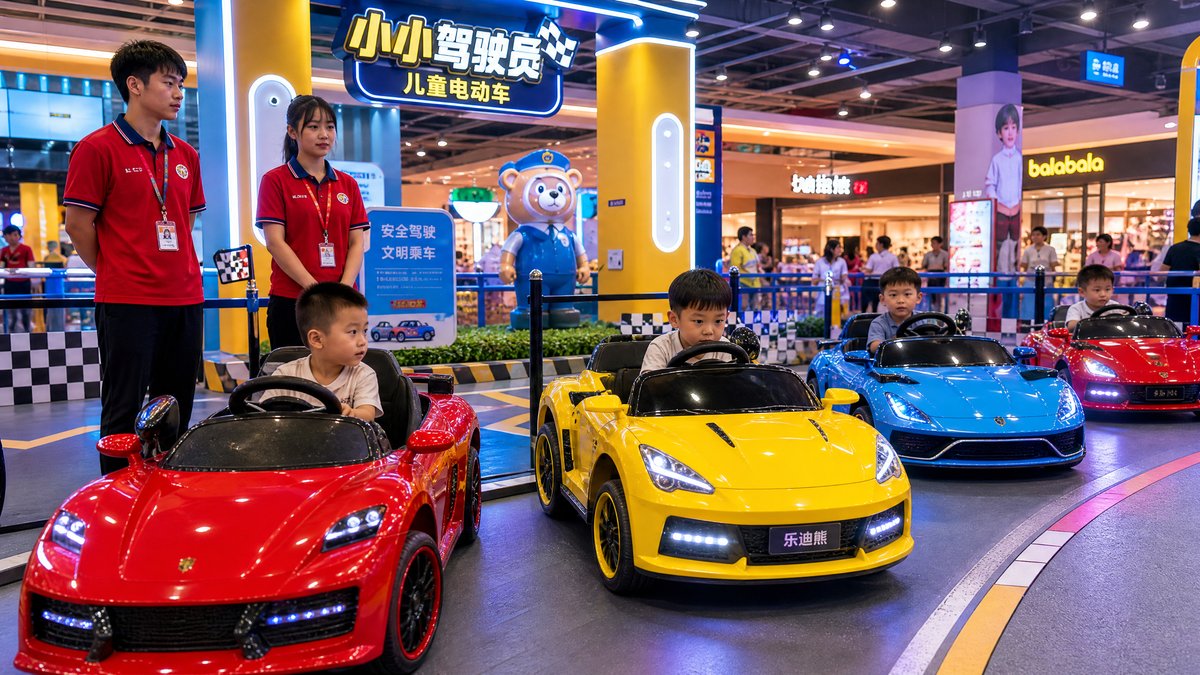
Amusement parks should choose rental cars as a fleet system, not as individual toys. The right decision balances route suitability, child and operator safety, ease of cleaning, service access, battery routines, parts availability, and the supplier’s ability to document the agreed configuration. A model that looks attractive in a showroom may be a poor rental asset if it is difficult to supervise, awkward to move between sessions, or hard to maintain.
For overseas importers, wholesalers, distributors, rental operators, and OEM buyers, the practical method is to define the operating environment first, shortlist models against a written scorecard, verify samples, and place an order only when the product, spare parts, documents, packaging, and support plan are clear. This guide explains that process without assuming one voltage, battery chemistry, drive layout, or control system is suitable for every park.
Start with the park’s operating brief
Before comparing product pages, write a one-page brief for the actual attraction. It should describe where the vehicles will run, who will supervise them, and how the fleet will be handled between rentals.
Map the riding environment
Record whether the route is indoors, outdoors, or mixed. Note the floor or surface, turning space, gradients, drainage, shade, exposure to dust, and proximity to water. Measure the narrowest gate, loading point, storage doorway, and charging-area access. A compact vehicle may be useful on a crowded indoor route, while an outdoor family area may allow a different footprint. Do not assume a vehicle marketed for outdoor use is automatically suitable for wet, uneven, or contaminated surfaces; ask the supplier to state the intended use and operating limits for the agreed model.
Also define the route’s traffic pattern. A car used on a one-way track with staff at entry and exit has different control needs from one used in an open play zone. Identify stopping areas, blind corners, queue barriers, pedestrian crossings, and places where an attendant can safely intervene.
Define the rental session
Estimate how the car is issued, returned, inspected, cleaned, and made ready for the next customer. You do not need invented utilization figures to make a sound decision. Instead, document the sequence: customer briefing, fitting or checking restraints, handover, supervised ride, return, visible-damage check, charging or battery rotation, and release.
This workflow reveals which design details matter. Easy-to-wipe surfaces, accessible charging connections, clear controls, and a visible identification label can be more valuable to a rental operator than decorative functions that add inspection steps. If parents operate the car, decide how staff confirm that the adult understands the controls. If a staff member controls the activity, specify how the operator can stop or isolate a vehicle in accordance with the manufacturer’s instructions.
Select the vehicle by operational fit
A strong shortlist compares the complete user experience rather than one headline specification. Ask the supplier to provide the exact model configuration, including dimensions, permitted users, control method, battery and charger pairing, included restraints, and any optional equipment.
Match size and seating to the route
Single-seat and two-seat formats create different loading, supervision, and space requirements. Consider the user age and size range stated for the model, how easily a child can enter and exit, and whether an attendant can see the occupant clearly. Check seat width, footwell access, restraint adjustment, door or side-entry behavior, and the distance between cars on the route.
For two-seat cars, clarify the intended seating arrangement and whether both occupants can be secured as specified by the manufacturer. Do not turn an informal capacity assumption into a marketing claim. The final operating rule should come from the product instructions, risk assessment, and destination-market requirements.
Prioritize predictable controls
Rental users may have no experience with ride-on cars. Controls should be understandable, and the car should respond consistently within the supplier’s stated operating conditions. Ask about selectable speed modes, start behavior, reverse control, acceleration characteristics, and how the vehicle behaves when the control input is released. If a parental remote is included, confirm its range in the intended environment, pairing procedure, battery needs, and the operator’s actions if the connection is interrupted.
A remote is not a substitute for supervision or a site procedure. Staff should know who has authority to intervene, how vehicles are stopped, and how a customer is assisted if the car becomes stationary. Request the operating manual and train staff using the production configuration, not a visually similar sample.
Examine durability where rental wear occurs
Rental fleets experience repeated entry and exit, steering inputs, low-speed contact, cleaning, storage, and movement by staff. Inspect high-contact areas such as steering controls, seats, restraints, doors, handles, wheel assemblies, connectors, and body edges. Ask which components are replaceable and whether the supplier can identify them by part name or reference in a spare-parts list.
Avoid relying on vague claims such as “heavy duty.” Ask for the intended operating conditions, maintenance intervals, cleaning limitations, and exclusions. A supplier should be able to explain how the delivered configuration is assembled and supported without promising a lifespan that has not been demonstrated for your park.
Build a rental-fleet safety checklist
Safety decisions must be model-neutral and destination-aware. The park remains responsible for its operating procedures, supervision, site design, and local obligations, while the supplier should provide accurate instructions and product information.
Check that the vehicle includes the restraints, guards, covers, speed controls, warning labels, and other protective features specified for the selected configuration. Verify that moving parts are shielded as designed and that access points cannot be casually altered during daily operation. Confirm that the manual explains charging, storage, inspection, cleaning, fault handling, and user limits in language the operating team can follow.
Create a pre-rental check that staff can complete consistently. It can cover visible damage, restraint condition, wheels and steering, control response, charger or battery status, unusual noise, loose trim, and cleanliness. Create a separate process for removing a vehicle from service. Staff should not improvise electrical or mechanical repairs: isolate the unit and use the supplier’s approved service route or a qualified technician following applicable instructions.
For compliance, do not copy a certificate or label from one configuration to another. Requirements vary by destination market, product classification, battery and charger configuration, age grading, and intended use. Ask the supplier which documents are available for the exact model and configuration, then confirm obligations with the importer, competent local adviser, or relevant authority before import and operation. Compliance paperwork does not replace a site risk assessment or staff training.
Compare batteries, charging, and daily readiness
Battery selection is an operating decision, not only a specification comparison. Ask the supplier to identify the battery type, charger pairing, charging environment, storage instructions, expected indicators, and handling requirements for the exact unit. Confirm whether the battery is user-accessible, what staff may inspect, and which tasks require authorized service support.
Plan the charging area around ventilation, access control, fire-safety procedures, manufacturer instructions, and the applicable site rules. Keep chargers and batteries away from water and unauthorized handling. Use only the specified charger and follow the supplied charging procedure. Never advise staff to open batteries, bypass protections, rewire, solder, or attempt internal repairs.
A useful fleet plan includes a unit ID, charging record, inspection record, fault log, and spare-parts record. It also defines what happens when a car is returned with a low charge, abnormal behavior, visible impact damage, or a missing accessory.
Evaluate the supplier, not only the product
A rental fleet needs support after delivery. During supplier evaluation, ask for:
- A configuration sheet showing the exact model, included features, battery, charger, and accessories.
- The user manual, assembly or pre-delivery instructions, inspection guidance, and cleaning limitations.
- A parts diagram or spare-parts list with clear names and reference information.
- A process for reporting faults, identifying a vehicle, and requesting technical assistance.
- Packaging details that protect the cars and spare parts during the planned shipment.
- A written explanation of customization, labels, colors, branding, and any change-control process.
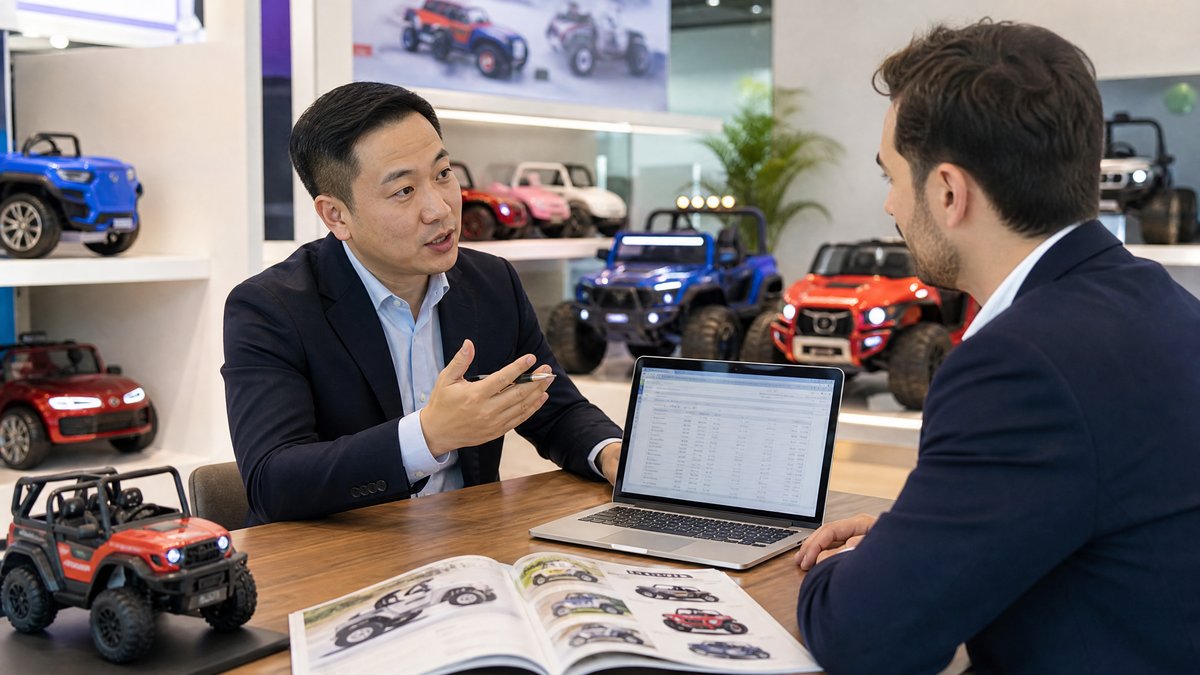
Use a sample or pre-production unit to validate what matters on site. Ask staff to simulate the complete customer journey: queue entry, briefing, loading, driving, stopping, return, cleaning, and storage. Record observations instead of relying on a sales presentation. If you are a distributor, turn the park’s checklist into a repeatable specification for your own buyers and after-sales team.
For OEM projects, separate cosmetic customization from safety-critical changes. Branding, color, seat graphics, and fleet identification may be handled differently from changes to controls, batteries, restraints, or structure. Require written approval for the final configuration and keep the approved version with the purchase order and inspection records. See the [KidsRideCar OEM and customization options](/products/) page for a starting point, then confirm the model-specific scope with the supplier.
Write a procurement specification that can be inspected
A clear purchase specification reduces disputes. Include the intended market and use, model or approved sample reference, dimensions, seating arrangement, user limits, control method, safety equipment, battery and charger configuration, labeling language, accessories, packaging, spare-parts package, manuals, and inspection criteria.
Specify what happens if a delivered unit differs from the approved configuration. Define how serial or fleet identification will be applied, how missing parts are reported, and which documents must accompany the shipment. Avoid inserting unverified performance numbers, delivery promises, or certification statements. If a commercial term, shipping term, or import document is important, write it explicitly and have the responsible parties review it.
A procurement example might be a distributor supplying a coastal indoor-outdoor family park. The distributor could specify a cleanable body finish, a compact turning envelope confirmed by site measurement, adult remote control if required by the operating plan, a documented charging routine, replacement restraints, and a labeled spare-parts kit. It should not claim that the cars are waterproof or suitable for every surface unless the supplier’s documentation and the park’s assessment support that use.
Another example is an OEM buyer creating a branded fleet for several venues. The buyer can request consistent fleet IDs, approved artwork, a common manual set, and a replacement-parts reference. The buyer should still validate each destination market and avoid assuming that one label, control setting, or document package satisfies every country.
Manage the fleet after launch
Selection is only successful when the cars remain serviceable and consistently operated. Assign responsibility for opening checks, cleaning, charging, weekly or periodic reviews, incident reporting, and supplier communication. Keep records by vehicle rather than only by shipment. A simple log can capture date, operator, condition, action taken, and release decision.
Review recurring faults with the supplier and ask whether a revised part, instruction, or staff process is appropriate. Do not make unapproved modifications to solve a recurring problem. When a component needs replacement, identify the exact model and configuration before ordering. Store critical consumables and approved replacement parts according to the supplier’s instructions, while avoiding an oversized stock commitment before the fleet’s actual needs are known.
Use customer feedback carefully. Complaints about confusing controls, difficult entry, or uncomfortable waiting may indicate a training, layout, or product issue. Combine feedback with inspection records and staff observations before changing the fleet specification.
Frequently Asked Questions
What is the most important feature in a kids electric car rental fleet?
Operational predictability is usually the starting point: a vehicle that fits the route, is understandable to users, can be supervised, and can be inspected and serviced consistently. The priority order depends on the park’s layout, customer group, staffing, and destination-market requirements.
Should an amusement park choose single-seat or two-seat electric cars?
Choose based on the intended users, route width, loading process, supervision plan, and the manufacturer’s stated capacity and restraint instructions. Single-seat cars may simplify space and occupant management; two-seat cars may suit a defined family-use concept but need careful confirmation of seating and control arrangements.
How can a park compare suppliers without relying on price alone?
Compare the complete delivered system: exact configuration, manuals, spare parts, packaging, inspection support, response process, customization control, and documentation. Test the sample through the real rental workflow and record any unresolved questions before placing an order. A lower quoted unit cost is not meaningful if the fleet is difficult to operate or support.
What compliance documents should an importer request?
Request documents applicable to the exact model and configuration, including relevant manuals, labels, test or conformity documentation where available, and battery or charger information. Requirements vary by destination market and configuration, so the importer should verify the final obligations with qualified local resources rather than treating a generic document as universal approval.
Conclusion: choose a fleet that staff can run every day
The best kids electric cars for an amusement park are not simply the fastest-looking or most heavily decorated models. They are vehicles whose size, controls, protective features, charging routine, inspection process, parts support, and documentation fit the park’s real operation. Define the route, simulate the rental workflow, verify the exact configuration, and put the support plan into the purchase specification.
For model recommendations, OEM questions, fleet identification, or a quotation based on your operating brief, contact [KidsRideCar](/inquiry) or email info@kidsridecar.com. Share the destination market, route conditions, seating needs, supervision method, and expected workflow so the discussion starts with an accurate commercial requirement.
Official references
Explore these external resources for current regulatory and trade guidance. Confirm requirements with the relevant authority before placing an order.
Ready to Start?
Factory-Direct · CE & ASTM Certified · MOQ from 50 Units
Our export team works with buyers in 60+ countries. Get a quote within 24 hours.
KR
Written by KidsRideCar
China's leading kids electric ride-on car manufacturer. 500,000+ units shipped annually to 60+ countries. CE, ASTM & EN71 certified.