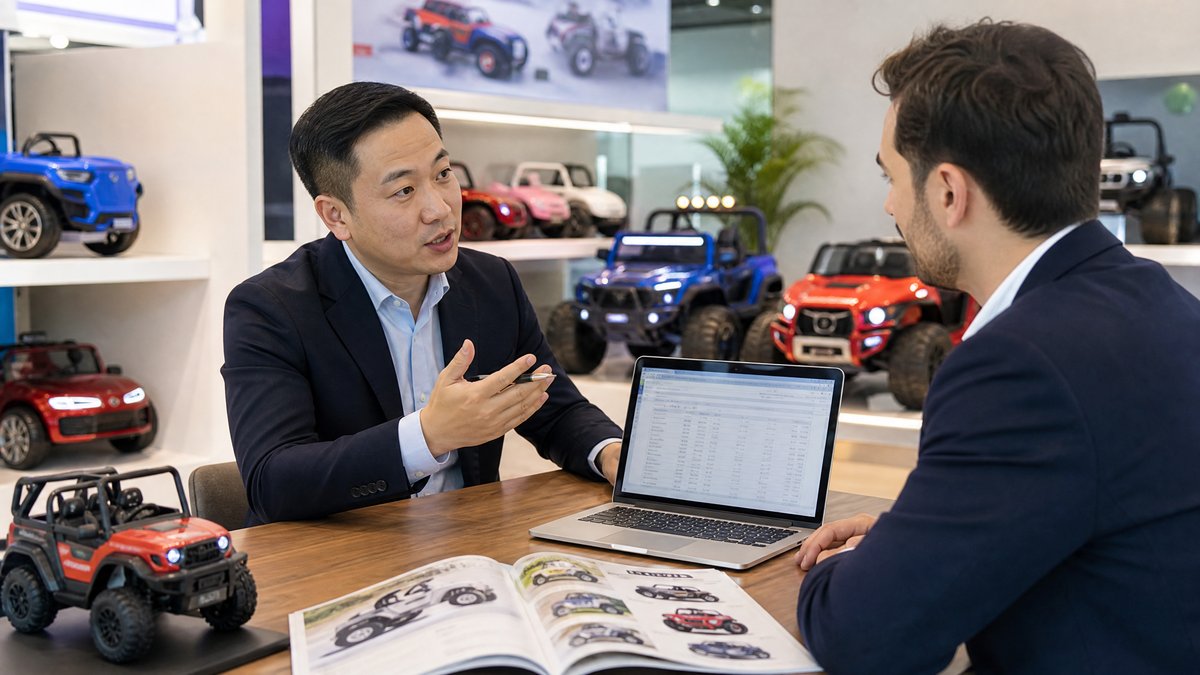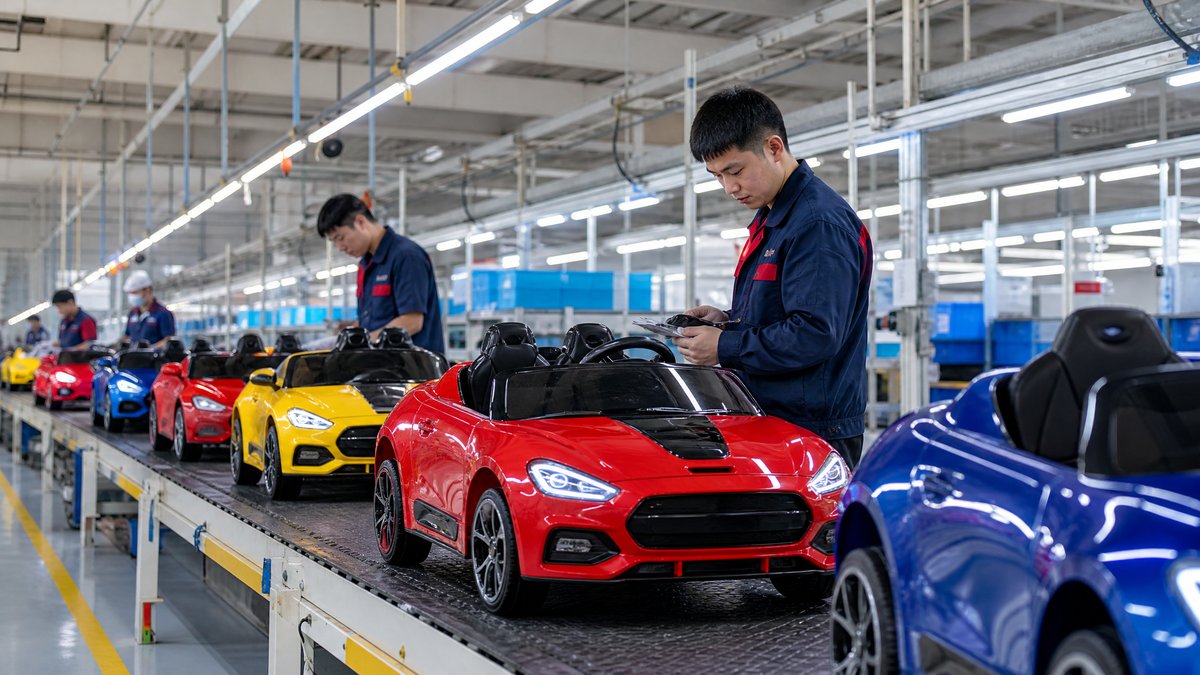
Approving a pre-production sample is more than confirming that a ride-on car looks attractive. It is the importer’s last practical opportunity to align the factory, product file, packaging team, and quality controls before a larger production run begins. A sample can appear acceptable while still containing unresolved differences in dimensions, components, labeling, software, color, or packing method.
For importers, wholesalers, distributors, retailers, and OEM buyers, the goal is to turn one physical sample into a clear production standard. Ask precise questions and record every change. The same discipline applies when reviewing a standard model such as the [KR-S900](/products/kr-s900), [KR-L700](/products/kr-l700), or [KR-T600](/products/kr-t600), provided the approved configuration is documented for the specific order.
This guide explains what to ask before signing off, how to communicate changes, and when approval should remain conditional.
1. What exactly is included in the approved sample?
Start with identity and scope. Ask the factory to state the model number, revision, color, battery, motor, charger, remote, accessories, and packaging version represented by the sample. For OEM or private-label products, identify the artwork revision and any customer-supplied elements.
Useful questions include:
- Is this sample built from the same bill of materials proposed for mass production?
- Which parts are production-intent parts, and which are temporary or hand-finished substitutes?
- Does the sample include the final charger, remote, wheels, seat belt, decals, lights, music module, and instruction materials?
- Are any components borrowed from another model or sourced only for demonstration?
- What revision number should appear on the drawing, specification sheet, and purchase order?
Request a sample cover sheet with photographs and a component list. Record traceability details where available. If the factory sends a replacement sample, compare it against the agreed specification rather than assuming it has the same configuration.
For multi-SKU orders, clarify whether one approval applies to all variants; differences may require separate approvals.
2. Which physical and functional details must match the specification?
A visual review should be supported by measurable checks. Ask the factory to confirm product dimensions, carton dimensions, net and gross weight, wheel and seat configuration, ground clearance, and stated user or load information against the latest technical sheet. Use agreed tolerances rather than “approximately the same.”
Check the parts that affect customer experience and returns:
- Body panels, doors, hinges, handles, mirrors, and trim fit consistently.
- Steering movement is clear and controls respond as described in the user instructions.
- The accelerator, forward/reverse selector, speed modes, and parental remote function as specified.
- The seat, restraint components, footwell, and accessible edges are finished as agreed.
- Wheels, tires, drive components, and suspension parts are installed in the correct configuration.
- Lights, horn, sound, Bluetooth or other advertised features match the product data sheet.
- The charger label, connector, input information, and charging instructions correspond to the approved electrical configuration.
Ask the factory to demonstrate the operating sequence and provide a written functional checklist. Do not approve based only on a short video: a demonstration does not prove consistency, durability, or compliance. Ask what checks will be repeated during production and what records will be retained.
Do not request or perform unsafe modifications to battery wiring, charging circuits, protection devices, or internal components. Escalate electrical issues to the supplier’s qualified engineering team through an approved change process.
3. What changes are still open, and how will the factory implement them?
Many sample disagreements happen because comments are exchanged in chat without a controlled revision. Before approval, ask the factory for a numbered change list. Each item should identify the sample location, required change, reference image or drawing, responsible party, due date, and method of verification.
For example, “change the red trim” is incomplete. A stronger instruction identifies the color reference or swatch, affected parts, finish, acceptable variation, and who will confirm the next sample. Similarly, “improve the packaging” should specify artwork, inserts, protective materials, assembly bags, labels, and packing orientation.
Ask these communication questions:
- Which comments are accepted, rejected, or awaiting technical review?
- Will the factory issue a revised drawing, bill of materials, artwork file, or instruction manual?
- Does a change affect tooling, price, MOQ, lead time, carton volume, or compliance documentation?
- Who has authority to approve substitutions or deviations during production?
- What evidence will close each change: a photograph, revised file, physical sample, inspection record, or test report?
Use a single approval log rather than scattered messages. The final approval should reference the exact files and sample revision. If changes remain open, label the status “conditional approval” and define the conditions before production authorization.
4. What compliance and market information must be confirmed?
Market compliance must be confirmed for the destination market and the specific model, configuration, age grading, battery system, and intended use. A sample approval is not a legal conclusion and does not replace the importer’s responsibility to establish the applicable requirements.
Ask the supplier for the product compliance file or the documents needed for review, such as applicable test reports, declarations, component information, labels, warnings, manuals, battery and charger documentation, and traceability information. Confirm that documents identify the actual model and revision rather than a similar product. If a component, battery, charger, material, or control system changes after testing, ask whether additional evaluation is required.
Clarify:
- Which destination market and sales channels are covered?
- What age grading, warnings, supervision language, and instructions will appear on the product and packaging?
- Which labels must be placed on the unit, carton, manual, or accessory packaging?
- Are local-language translations complete and technically accurate?
- Does the final packaging match the configuration represented in the documentation?
- Who will review claims such as speed, runtime, load, terrain suitability, or safety features before publication?
Do not accept a general statement that a product is “CE,” “ASTM,” or otherwise compliant without checking the applicable market framework and the underlying documents. Ask a compliance adviser, testing laboratory, or customs specialist to review the file where appropriate.
5. How will packaging, accessories, and after-sales support be controlled?
A pre-production sample is also a chance to verify what reaches the warehouse and the customer. Ask the factory to show the complete packing method, including protective films, foam, hardware bags, cables, charger placement, manuals, warning labels, and assembly tools. Confirm whether the approved carton artwork and product images match the actual model.
Ask for a packing diagram or photo standard that shows orientation and protection of vulnerable areas. Confirm carton marks, SKU identifiers, shipping labels, pallet or container requirements, and whether mixed models require separate identification. If retail packaging is important, review the print proof and color reference separately from the physical product.
Answer after-sales questions before approval. Ask:
- Which spare parts are service items, and how are they identified?
- Will the factory provide exploded diagrams, part numbers, troubleshooting guidance, and assembly information?
- What evidence is required for a warranty or damage claim?
- How are recurring defects escalated and tracked by batch or production date?
- Are replacement batteries, chargers, remote controls, wheels, and cosmetic parts handled through a defined process?
Link the approved sample to the service documentation so the distributor’s team can identify the correct version. A useful retailer or dealer resource can later be organized through the [blog](/blog), while commercial questions and model-specific requests can be routed through the [inquiry page](/inquiry).
6. What is the final approval and production-control plan?
Before signing off, compare the sample with the purchase order, specification, artwork, compliance file, and change log. Ask the factory to confirm in writing that mass production will follow the approved revision and that substitutions require written authorization.
Define the inspection plan at the same time. It may include material, first-piece, in-process functional, packaging, and pre-shipment checks. Agree what happens if a critical deviation is found: hold, rework, replacement, additional inspection, or written concession. Avoid vague acceptance language; use clear defect definitions and sampling or inspection criteria agreed by both parties.
A practical approval record should contain:
1. Model, revision, SKU, and sample identification.
2. Approved photos, drawings, bill of materials, and artwork references.
3. Functional and dimensional observations with agreed tolerances.
4. Open changes and their closure evidence.
5. Destination-market compliance responsibilities and document status.
6. Packaging, accessory, labeling, and manual approvals.
7. Inspection checkpoints and nonconformance handling.
8. Names, dates, and written approvals from authorized buyer and supplier contacts.
Approve only when remaining differences are understood, assigned, and documented. “Looks good” is not a production standard.
FAQ: Ride-On Car Pre-Production Sample Approval
Should an importer approve a sample if minor changes are still pending?
Use conditional approval only when every pending change is documented, low risk, assigned to an owner, and tied to objective closure evidence. Do not authorize mass production when an open item affects safety, compliance, electrical configuration, core function, labeling, or the product identity.
Is a factory video enough to approve a pre-production sample?
No. A video can support communication, but it cannot replace review of the physical sample, final documents, and agreed inspection plan. Ask for close-up evidence of relevant features and verify the actual sample or an independently inspected production-intent unit.
What if the factory proposes a component substitution after approval?
Require written notice before the substitution. Ask why it is needed, whether dimensions, function, compliance, price, lead time, or documentation change, and what evidence supports equivalence. Update the bill of materials and approval record before accepting the change.
How can an OEM buyer prevent color or artwork disputes?
Use numbered artwork files, approved physical color references where practical, clear finish descriptions, and photographs linked to the sample revision. Specify which surfaces and accessories are included, and require a revised proof or sample when the change is material.
Does sample approval guarantee mass-production quality?
No. Approval establishes the target configuration; it does not guarantee every unit will conform. Production controls, documented inspections, traceability, and a process for handling deviations are still necessary.
Conclusion
A ride-on car pre-production sample should be approved as a controlled specification, not as a casual visual demonstration. Ask what is included, what is measurable, which changes remain open, how destination-market compliance will be confirmed, and how the factory will control production and after-sales support. A clear revision log and written approval reduce misunderstandings between importer and factory while giving quality inspectors a practical reference.
For model selection, OEM questions, sample coordination, or a quotation request, contact KidsRideCar at info@kidsridecar.com.
Official references
Explore these external resources for current regulatory and trade guidance. Confirm requirements with the relevant authority before placing an order.
Ready to Start?
Factory-Direct · CE & ASTM Certified · MOQ from 50 Units
Our export team works with buyers in 60+ countries. Get a quote within 24 hours.
KR
Written by KidsRideCar
China's leading kids electric ride-on car manufacturer. 500,000+ units shipped annually to 60+ countries. CE, ASTM & EN71 certified.