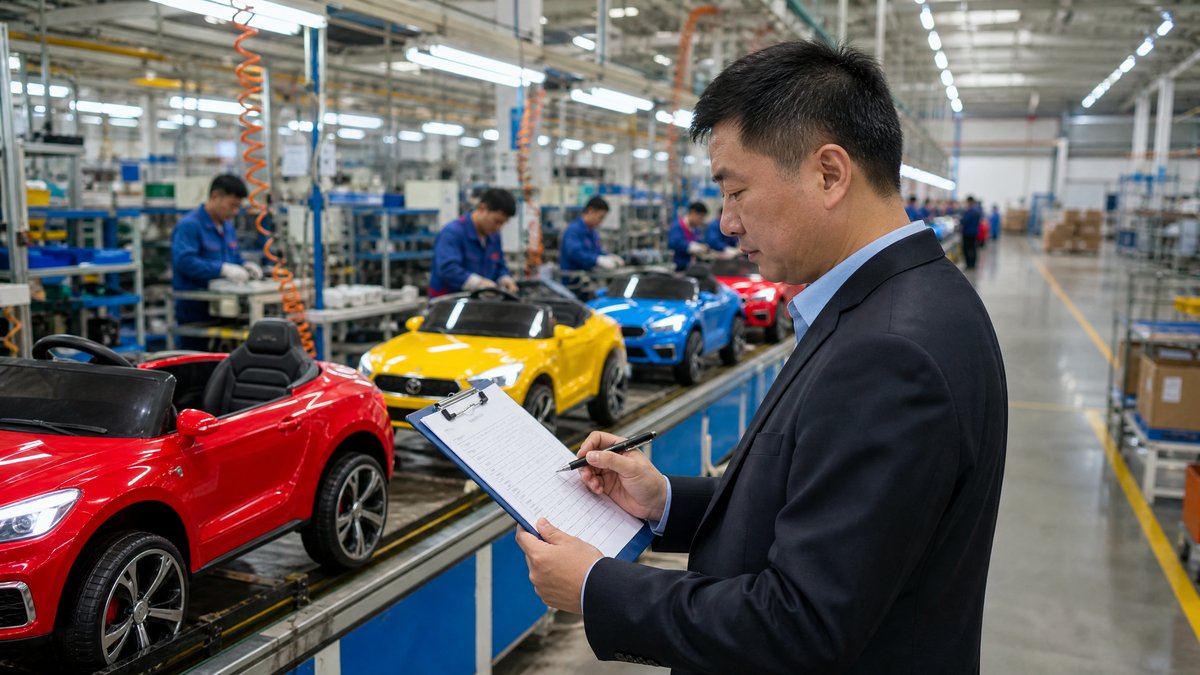
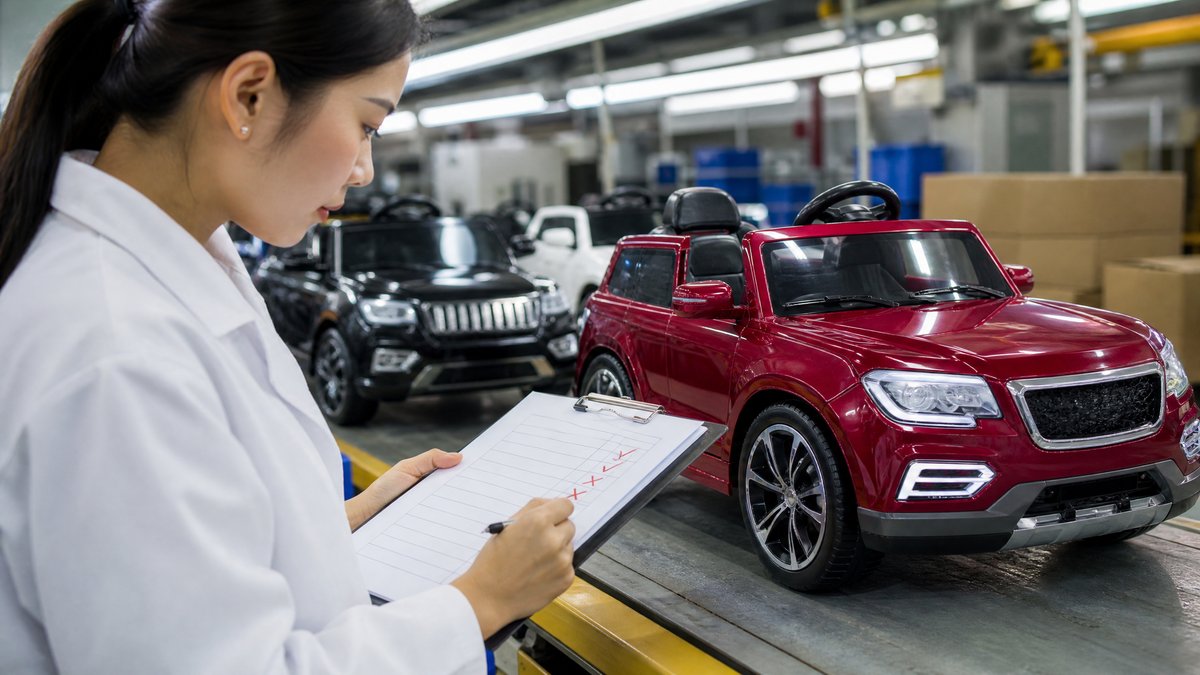
Choosing the wrong OEM factory is one of the most expensive mistakes a wholesale buyer can make. Unlike a standard wholesale order where you are buying existing products, an OEM order involves custom tooling, custom packaging, and often a significant upfront investment in samples and mold development. If the factory fails to deliver — through quality failures, production delays, or financial instability — recovering that investment is extremely difficult.
This guide provides a systematic framework for evaluating kids electric car OEM factories before committing to a production order. It covers the key assessment criteria, how to conduct a remote or in-person factory audit, the documentation you should request, and the warning signs that indicate a factory is not ready for OEM production.
Why OEM Evaluation Requires a Different Approach
Standard wholesale sourcing and OEM sourcing require different evaluation frameworks. When buying standard wholesale products, your primary concerns are price, certification, and delivery reliability. When placing an OEM order, you are also evaluating the factory's design capability, tooling infrastructure, quality control systems, and financial stability — because you are entering a production partnership, not just a transaction.
The kids electric ride-on car industry has a wide range of factory types, from large integrated manufacturers with in-house tooling and R&D teams to smaller assembly operations that source components externally and have limited customization capability. Understanding which type of factory you are dealing with — and whether their capabilities match your OEM requirements — is the foundation of effective supplier evaluation.
Understanding the Factory Landscape
| Factory Type | Typical Scale | OEM Capability | Best For |
|---|---|---|---|
| Integrated manufacturer | 500+ employees, own tooling shop | Full ODM/OEM including mold development | Large orders, unique designs, long-term partnerships |
| Assembly manufacturer | 100-500 employees, outsourced tooling | Logo/color/packaging customization | Mid-size orders, proven models, faster lead times |
| Trading company with factory | Mixed — office + contract factory | Limited — depends on partner factory | Small orders, market testing, flexible MOQ |
| Pure trading company | Office only, no production | None — resells others' products | Avoid for OEM; no production control |
Most factories in the kids electric car industry are assembly manufacturers — they purchase motors, batteries, plastic bodies, and electronic components from specialized suppliers and assemble them into finished products. True integrated manufacturers with in-house plastic molding, motor winding, and battery pack assembly are less common but offer superior OEM capability and quality consistency. When evaluating a factory for OEM, understanding their level of vertical integration is essential.
The Factory Audit Framework: 6 Key Assessment Areas
1. Production Capacity and Infrastructure
Assess whether the factory has the physical capacity to produce your order volume within your required timeline. Key metrics to evaluate: annual production capacity (units per year for your product category), current order backlog (factories running at 90%+ capacity may not accommodate your order without compromising quality), production line configuration (dedicated lines vs. shared lines for multiple products), and warehouse capacity for raw materials and finished goods.
For a first OEM order of 500-1,000 units, you need a factory with annual capacity of at least 10,000 units in your product category — this ensures your order represents a manageable proportion of their production and receives appropriate attention. Factories where your order would represent more than 20% of their annual capacity may struggle to deliver consistently.
2. Quality Management System
A credible OEM factory should have documented quality management procedures, not just verbal assurances. Request documentation of their incoming material inspection process (how they verify components from their own suppliers), in-process quality control checkpoints (what is checked during assembly and at what frequency), final inspection procedures (what tests are performed on finished products before shipment), and defect tracking and corrective action processes.
ISO 9001 certification is a positive indicator of a systematic quality management approach, but it is not a guarantee of product quality — it certifies that the factory has documented processes, not that those processes produce good results. More meaningful than the certificate itself is the factory's ability to provide actual quality data: defect rates by product model, corrective action records, and customer complaint history.
3. Tooling and Design Capability
For OEM orders that require any level of customization beyond logo and packaging, assess the factory's tooling and design infrastructure. Key questions: Do they have in-house mold design and manufacturing capability, or do they outsource tooling? What CAD/CAM software do they use, and can they provide 3D design files? What is their typical tooling lead time for a new mold? Who owns the molds — factory or buyer? How are mold maintenance and replacement costs handled?
Mold ownership is a critical OEM term. In most Chinese OEM arrangements, the buyer pays for mold development and owns the molds — but the molds remain physically at the factory. Establishing clear contractual terms about mold ownership, the right to transfer molds to another factory, and mold maintenance responsibilities is essential before committing to tooling investment.
4. Component Sourcing and Supply Chain
The quality of a kids electric ride-on car is largely determined by the quality of its key components: the battery, motor, electronic speed controller (ESC), and remote control system. A factory that sources these components from reputable, traceable suppliers produces more consistent quality than one that buys from the cheapest available source each production run.
Request information about the factory's key component suppliers, particularly for batteries and motors. Reputable battery suppliers include CATL, BYD, and named domestic Chinese brands with traceable production. Ask whether the factory has fixed-supplier agreements or buys on the spot market — spot market purchasing introduces quality variability that is difficult to control. For OEM orders, consider specifying component brands or minimum specifications in your purchase order.
5. Certification and Compliance Infrastructure
An OEM-capable factory should have established relationships with accredited testing laboratories and experience managing the certification process for their products. Assess: Which testing laboratories do they work with (SGS, Bureau Veritas, Intertek, TUV are the most recognized)? Do they have current CE, ASTM F963, and other relevant certifications for their existing product range? Can they support certification for new OEM products, and who bears the testing cost? Do they have a dedicated compliance or documentation team?
A factory that cannot clearly explain their certification process or that relies on a single, outdated test report for all products is a compliance risk for OEM buyers. For your OEM product, you will need fresh test reports in your brand name — ensure the factory has the capability and willingness to support this process.
6. Financial Stability and Business Continuity
Financial instability is a significant risk in OEM sourcing because you may have paid deposits for tooling and production before goods are shipped. Assess financial stability through: years in operation (factories with 5+ years of continuous operation are lower risk), major customer references (factories supplying recognized international brands have demonstrated reliability), export volume and market diversity (factories with multiple export markets are less vulnerable to single-market downturns), and payment terms flexibility (financially stable factories can offer 30% deposit / 70% before shipment terms; factories requiring 50%+ upfront may have cash flow issues).
KidsRideCar has been manufacturing kids electric ride-on cars for over 15 years, with ISO 9001 certification, in-house tooling capability, and complete CE/ASTM documentation support. Request a factory profile and capability assessment.
Request Factory Profile →Conducting a Remote Factory Audit
Not every buyer can visit China for an in-person factory audit, particularly for initial supplier evaluation. A well-structured remote audit can provide substantial information about a factory's capabilities and reliability. The remote audit process should include: a video call factory tour (request a live walkthrough of the production floor, quality control area, and warehouse — not a pre-recorded video), documentation review (request all quality and compliance documents in advance and review them before the call), reference checks (request contact information for 2-3 existing international customers and conduct independent reference calls), and sample evaluation (request production samples before placing an order — evaluate quality, finish, and compliance with your specifications).
For orders above $50,000, consider commissioning a third-party factory audit through a service provider such as QIMA, Bureau Veritas, or SGS. These audits cost $300-$600 and provide a standardized assessment of the factory's quality systems, production capacity, and compliance infrastructure. The audit report provides an objective basis for supplier selection and can be used as leverage in contract negotiations.
Red Flags: When to Walk Away
Certain behaviors and conditions during the supplier evaluation process are reliable indicators of future problems. The following red flags should prompt serious reconsideration of a supplier relationship.
- Inability to provide original test reports: A factory that cannot provide original test reports from accredited laboratories (only copies or screenshots) may be using falsified documentation.
- Resistance to factory visits or video calls: A legitimate factory welcomes buyer visits. Resistance to showing the production facility suggests something to hide.
- Unusually low pricing: If a factory's pricing is 20%+ below market rates for equivalent specifications, they are almost certainly cutting corners on components, quality control, or compliance.
- Vague answers about component sourcing: If a factory cannot name their battery or motor suppliers, they are likely buying on the spot market with no quality consistency.
- Pressure to pay large deposits before samples: Requesting 50%+ deposit before providing production samples is a significant financial risk indicator.
- No dedicated export or compliance team: Factories without staff experienced in international compliance and documentation will struggle to support your CE or ASTM requirements.
- Inconsistent communication: Long response delays, changing contact persons, and inconsistent information about production capacity or lead times indicate organizational instability.
Essential OEM Contract Terms
Before placing an OEM order, establish clear contractual terms covering the key risk areas. A well-structured OEM purchase order or supply agreement should address: product specifications (detailed technical specification with approved sample as reference), quality standards (acceptable defect rate, inspection method, and consequences of non-conformance), tooling ownership (who owns molds, where they are stored, and conditions for transfer), intellectual property (who owns designs, logos, and packaging artwork), delivery terms (Incoterms, lead time, and penalties for delay), payment terms (deposit, balance, and payment conditions), and warranty terms (defect rate guarantee and replacement/credit process).
Frequently Asked Questions
How long does a factory audit typically take?
An in-person factory audit for a kids electric car manufacturer typically takes one full day (6-8 hours). This includes a production floor walkthrough, quality control area review, documentation review, and management interview. A third-party audit by QIMA or similar providers follows a standardized protocol and typically takes 4-6 hours. Remote video audits are less comprehensive but can be completed in 2-3 hours.
Should I visit the factory before placing my first OEM order?
For first OEM orders above $30,000, an in-person factory visit is strongly recommended. The cost of a trip to China ($1,500-$3,000 for flights and accommodation) is negligible compared to the risk of a failed OEM order. For smaller first orders, a combination of third-party audit, video call tour, and sample evaluation provides reasonable due diligence without the travel cost.
Can I work with multiple OEM factories simultaneously?
Yes, and for buyers with multiple product lines or large order volumes, working with 2-3 factories provides supply chain resilience. However, splitting orders across too many factories reduces your leverage with each supplier and makes quality consistency harder to maintain. Most successful importers in this category work with 1-2 primary OEM factories and maintain 1 backup supplier for key products.
Effective OEM factory evaluation is an investment that pays for itself many times over. The buyers who take the time to conduct proper due diligence — verifying capabilities, reviewing documentation, and establishing clear contractual terms — build supplier relationships that deliver consistent quality and reliable supply. Those who skip this process often learn the hard way that the cheapest factory is rarely the most cost-effective one.
Official references
Explore these external resources for current regulatory and trade guidance. Confirm requirements with the relevant authority before placing an order.
Ready to Start?
Factory-Direct · CE & ASTM Certified · MOQ from 50 Units
Our export team works with buyers in 60+ countries. Get a quote within 24 hours.
China's leading kids electric ride-on car manufacturer. 500,000+ units shipped annually to 60+ countries. CE, ASTM & EN71 certified.