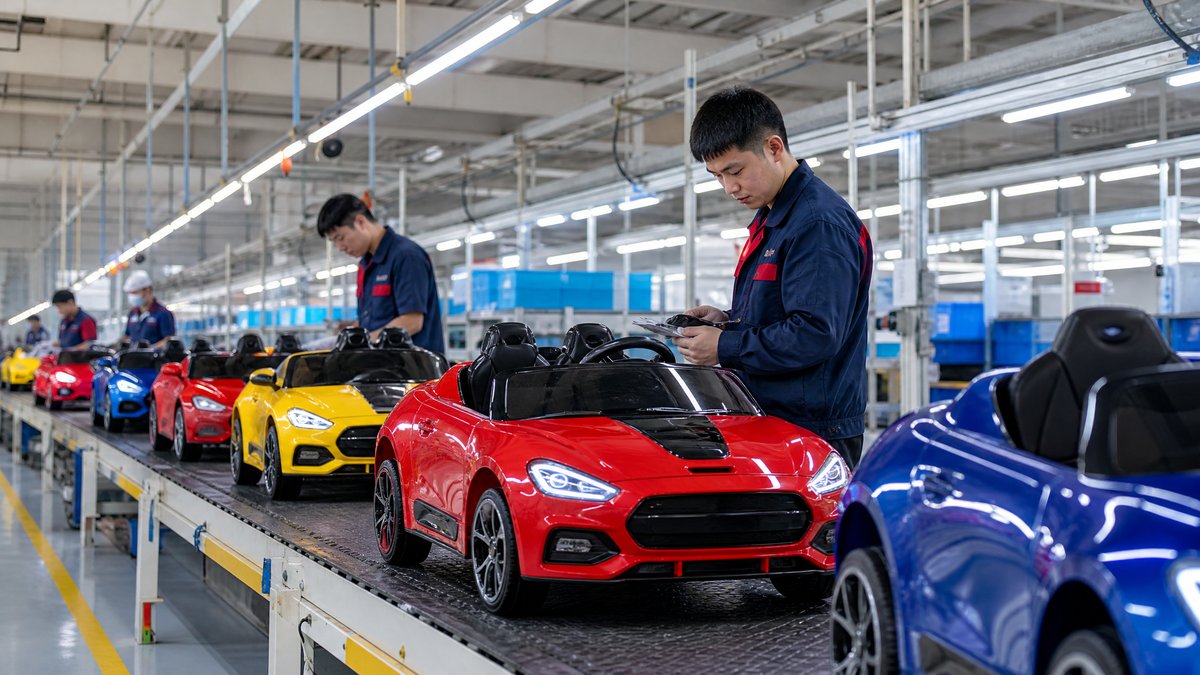
A demonstration unit is more than a sample that looks attractive on a showroom floor. It is a sales tool, training reference, and practical way to expose fit, finish, controls, packaging, and customer questions before a larger order.
Separate what the unit is designed to demonstrate from what it can prove. One vehicle cannot establish long-term reliability, every destination-market requirement, or an entire production run. It can reveal whether the specification is understandable, presentable, serviceable, and suitable for retail.
1. Define the job of the demonstration unit first
Before requesting a sample, write down where and how it will be used. A unit for a specialty toy store may need to support supervised customer demonstrations, while a unit for a trade show may prioritize transport, quick setup, and visual impact. A dealer training unit may need to remain available for repeated staff practice rather than customer driving.
Clarify the intended audience and selling environment:
- Customer profile: age range, approximate child size, parent concerns, and whether the buyer is purchasing for home, a gift, a venue, or a rental program.
- Display format: floor display, end-cap, showroom, trade-show booth, or appointment-only demonstration.
- Demonstration limits: whether customers may sit in the vehicle, whether movement is permitted, and who supervises operation.
- Commercial purpose: approve a SKU, compare a price tier, gather retailer feedback, create content, or train sales staff.
- Transport and storage: doorway width, elevator access, floor protection, charging location, and secure overnight storage.
This brief prevents choosing a visually impressive model that cannot be safely or practically demonstrated in the target store.
2. Match the unit to the planned retail assortment
Evaluate the demo as part of a range, not as an isolated product. Compare its proposed price tier, body style, seat configuration, colors, feature set, and target customer with the rest of the assortment. The unit should make a clear commercial point: for example, it may represent an entry model, a premium licensed look, a two-seat option, or a feature-led upgrade.
Ask the supplier which details are standard and which are sample-only. Record model code, electrical configuration, accessories, packaging, branding, and OEM changes. Keep a written sample approval record with dated photographs, a feature checklist, and agreed deviations.
For model-specific context, a distributor can link a shopper or dealer from the article to relevant product pages such as [/products/kr-s900](/products/kr-s900), [/products/kr-l700](/products/kr-l700), or [/products/kr-t600](/products/kr-t600), provided those pages accurately describe the current configuration. Do not use a demonstration unit to imply that every model in a range has the same controls, dimensions, battery arrangement, or accessories.
3. Inspect presentation, ergonomics, and retail readiness
A customer often forms an opinion before the vehicle moves. Inspect panel alignment, visible fasteners, surface finish, graphics, seat materials, wheel appearance, door or bonnet operation where fitted, and the overall consistency of the product. Look at it from a child’s eye level and from an adult’s distance. A display unit should be clean, stable, free of avoidable cosmetic damage, and easy for staff to explain.
Then review the user experience:
- Are the steering wheel, foot pedal, switches, charging port, and remote-control controls identifiable?
- Can staff explain the operating sequence from the supplied instructions?
- Is the seat and restraint arrangement clear to an adult shopper?
- Are the recommended age range, maximum load information, warnings, and operating limits presented consistently?
- Can the unit be moved into position without lifting hazards or damage to the display area?
- Does the product data sheet show dimensions, net and carton weight, power system, accessories, and assembly requirements?
Check the unit in both display and sales-demo modes. Some buyers need a non-moving explanation of features; others may ask to see steering, start-up, lighting, audio, or parental control functions. The store should use only the operating procedure supplied for that model. Staff should never improvise electrical modifications, bypass protective features, or open battery and control compartments during a customer demonstration.
4. Use a repeatable functional evaluation
A useful demo inspection is structured, documented, and limited to normal operation. Start with a visual and packaging check, then assemble according to the manufacturer’s instructions. Record missing hardware, unclear steps, damage, or differences between the instructions and sample.
For normal function, verify the basics that customers and sales staff will ask about:
1. Power-up and shut-down sequence.
2. Forward, reverse, steering, and available speed-mode controls as described by the supplier.
3. Pedal, switch, remote, lighting, sound, and connection functions included in the quoted specification.
4. Seat, door, restraint, wheel, and body-panel fit where applicable.
5. Charger connection and the supplied charging instructions.
6. Labels, warnings, manuals, and model identification.
Use a checklist with pass, fail, not applicable, and comments fields. Capture photos or short videos for each issue, including a scale or reference point where dimensions matter. Do not describe a single sample’s runtime, range, speed, load behavior, or durability as a guaranteed production result. Those claims require controlled testing, a defined configuration, and evidence that applies to the destination market and model.
If a defect or ambiguity appears, stop and classify it: cosmetic, assembly, functional, documentation, packaging, or compliance-file question. Send the record to the supplier and ask for a written disposition. Safety-related concerns should be resolved before customer use, not explained away as a sample difference.
5. Plan the display around safety, access, and maintenance
A retail demonstration area needs its own operating rules. Keep the unit away from stairs, traffic lanes, wet areas, heat sources, and unsecured edges. Use a visible boundary or floor marker where movement is permitted. Require adult supervision, follow the model’s instructions, and prevent children from accessing controls when the unit is unattended. A static display still needs stable positioning and protection from tipping, collisions, and unauthorized use.
Create a simple opening and closing routine. Staff can inspect visible fasteners and damage, confirm safe charger storage, wipe high-touch surfaces appropriately, and record issues. Charging should follow the supplied charger and instructions, with suitable ventilation and no unapproved adapter or modification. Do not let customers handle batteries, connectors, or internal components.
Plan for serviceability as well as appearance. Ask whether replacement wheels, remotes, chargers, body parts, restraints, and other relevant parts can be identified by model and supplied through the distributor’s after-sales process. A display unit that cannot be supported after a minor incident can become an expensive distraction. Link naturally to [/inquiry](/inquiry) when a dealer needs a configuration-specific quotation or support discussion, and use [/blog](/blog) for related buyer education rather than inventing an article URL.
6. Confirm documentation, compliance, and commercial evidence
A demonstration unit should arrive with a document pack that matches the proposed commercial specification. Request the model identification, product data sheet, assembly and operating instructions, charging information, packaging details, warranty or service terms, spare-parts information, and available test or compliance documents. Review whether the documents identify the same model, battery or charger configuration, markings, and accessories as the physical unit.
Market compliance must be confirmed for the destination market and the specific model. A supplier statement, a test report, or a marking on a sample is not automatically sufficient for every country, sales channel, age grade, or later configuration. Have the importer or an appropriately qualified compliance professional verify the applicable requirements, documentation, labeling, warnings, language, electrical and battery obligations, and retailer policies before launch. Keep the demo evaluation separate from a legal conclusion.
Finally, score visual quality, customer clarity, function, documentation, display practicality, serviceability, and unresolved risk. Approve for demonstration only, approve as the production reference, request changes and a replacement, or reject it. Put the decision and acceptance criteria in the purchase order or quality agreement.
FAQ: Ride-On Car Demonstration Units for Distributors
Should a distributor buy one demo unit or several?
Start with one unit per materially different configuration or price tier. Add units when store formats, markets, seat layouts, power systems, or controls differ enough that one sample would mislead staff or buyers. A multi-location rollout should also consider where the units will be stored, maintained, and replaced.
Can a demonstration unit be used to approve mass production?
It can serve as a reference, but approval should cover the exact specification and agreed tolerances. Record model code, components, artwork, packaging, instructions, and approved changes. Where practical, compare a production-line or pre-shipment sample with the approved reference rather than relying on memory or photographs alone.
What should staff demonstrate to shoppers?
Staff should explain the intended age range, supervision expectations, controls, charging process, included accessories, assembly needs, and relevant limitations using the supplied documentation. Demonstrate only normal functions permitted by the instructions. Avoid promising a particular speed, runtime, terrain capability, or lifespan unless the claim is supported for that exact model and market.
How often should a retail demo unit be inspected?
Inspect it before opening, after any customer use or relocation, and at a documented periodic interval suitable for traffic and usage. Immediately remove it from customer operation if there is visible damage, an unusual smell or sound, loose hardware, damaged charging equipment, or an unexplained functional issue. Escalate through the supplier’s service process.
Does a demo unit need the same compliance review as saleable stock?
The obligations depend on the destination market, intended use, and model, so the responsible importer should confirm them before display or sale. Even when a unit is not sold, its labels, instructions, charger, battery, and configuration should be tracked accurately; a demonstration should never be used to sidestep applicable requirements.
Conclusion
Distributors should evaluate a ride-on car demonstration unit as a controlled retail asset: define its purpose, match it to the assortment, inspect the customer experience, test normal functions with a checklist, plan safe display operations, and verify the supporting documents. The goal is not to make one sample prove everything. It is to expose practical risks early, create a clear production reference, and give retailers accurate material for responsible selling. A disciplined demo program can improve product selection while reducing avoidable confusion, damage, and unsupported claims.
For model-specific specifications, demonstration-unit questions, OEM requirements, or distributor purchasing support, contact KidsRideCar at info@kidsridecar.com.
Official references
Explore these external resources for current regulatory and trade guidance. Confirm requirements with the relevant authority before placing an order.
Ready to Start?
Factory-Direct · CE & ASTM Certified · MOQ from 50 Units
Our export team works with buyers in 60+ countries. Get a quote within 24 hours.
KR
Written by KidsRideCar
China's leading kids electric ride-on car manufacturer. 500,000+ units shipped annually to 60+ countries. CE, ASTM & EN71 certified.