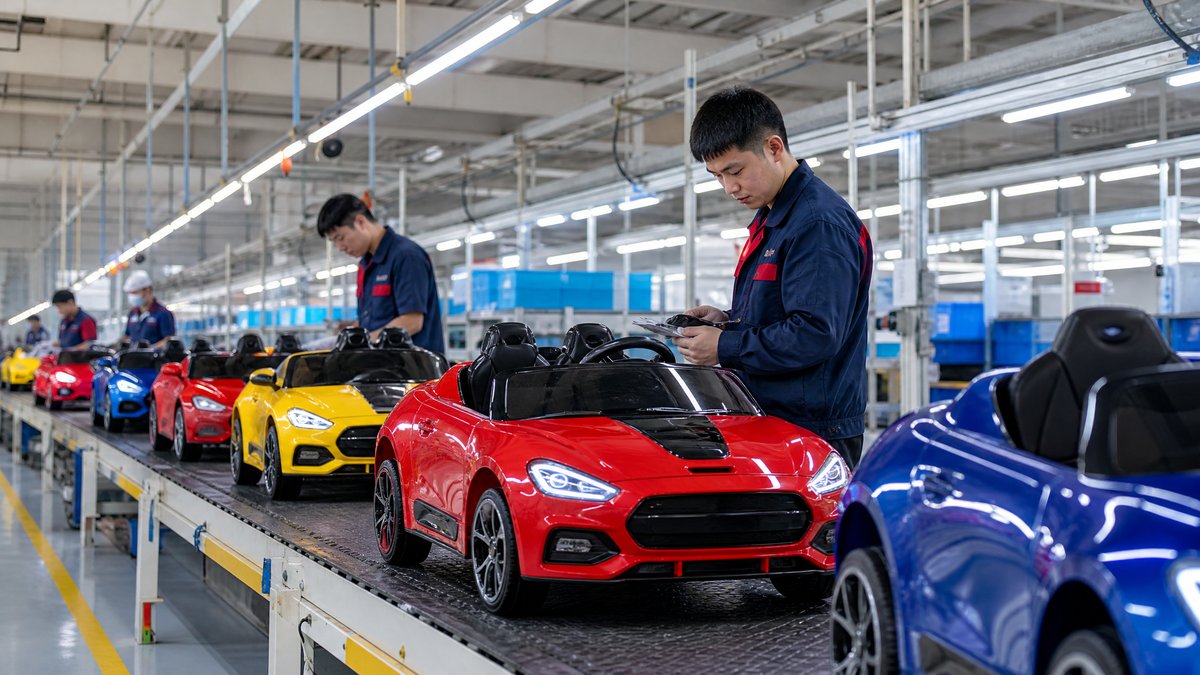
Before listing a licensed kids ride-on car, retailers should verify in writing that the supplier is authorized to offer that exact brand, model, and sales route. They should also confirm the product file, claims, approved assets, support plan, and destination-market requirements. A familiar brand on a product is not proof that a retailer may market it. Licensing, safety, and listing accuracy all need a clear answer before the SKU goes live.
These questions work in an RFQ, sample review, supplier approval meeting, and final launch gate.
Is the license documented for this exact product and sales route?
The first question is not simply, “Is this a licensed car?” Ask: who is authorized, for which SKU, territory, and channels? Arrangements may be limited by product category, term, distribution route, artwork, or permitted sellers.
Ask the supplier to explain and document, as appropriate:
- The authorized legal entity, product name or SKU, brand marks, and artwork.
- Destination market, retail-channel scope, effective period, and conditions affecting supply.
- Whether the retailer may use approved brand names, logos, images, and copy.
Do not infer permission from a carton logo, verbal assurance, or general brand claim. Request documentation for internal records and involve your legal or compliance advisers where appropriate. Do not describe your business as a brand-authorized dealer unless your agreement supports it.
What product information supports a truthful, complete listing?
A licensed appearance does not remove the need for product-data review. Build the listing from an approved data sheet, not a marketplace or competitor page. Features, accessories, battery configuration, remote-control function, and packaging can differ by run or market.
Request a current specification and confirm these fields before publication:
- Age range, maximum user weight, product and carton dimensions, and weights.
- Battery and charger information, charging guidance, and relevant transport information.
- Included accessories and manufacturer-provided safety, supervision, use, and assembly guidance.
- Current manuals, warning labels, packaging artwork, and SKU or barcode identifiers.
Use cautious wording. Confirm any optional feature for the offered SKU. Do not add unsubstantiated claims about terrain, runtime, or performance. Photos, color names, and accessories should match the approved sample or production specification.
Which compliance questions remain open for the destination market?
Ask for a current, market-specific compliance file and determine which obligations apply where the product will be sold. Requirements vary by destination, channel, configuration, and supply-chain role. A document for one market may not establish suitability in another.
A practical review asks:
1. Which declarations, reports, labels, warnings, and traceability information cover this model?
2. Are documents current, legible, consistent with the SKU, and available for the destination?
3. Who manages labels, importer details, language versions, manuals, and records?
4. Have relevant battery, charger, remote-control, packaging, or chemical requirements been considered?
5. What happens if documents change or an issue is identified?
Do not call a product certified, compliant, or approved unless the claim is accurate for the market and supported. Verify current destination-market requirements with qualified local advisers, testing providers, authorities, or other specialists. Tie the review record to the SKU, supplier, and version date for replenishment checks.
Are brand assets and marketing claims approved for retail use?
A retailer needs permission not only to sell the product, but also to display brand identifiers. Ask which files are approved for web stores, marketplaces, print, social posts, and advertising. This can include names, logos, images, badges, videos, and brand-related statements.
Store each approved file with usage guidance, SKU link, date, and expiry or channel limit. Do not edit logos, remove notices, combine artwork with unrelated promotions, or reuse images for another model without approval.
Separate objective specifications from promotional language. Avoid implying that a full-size vehicle manufacturer designed, endorses, or warrants the children’s product unless expressly supported. Review marketplace titles and search terms too; a keyword can create an unsupported affiliation claim.
Can the supplier support the listing after launch?
An authorized product that cannot be replenished, serviced, or described consistently can create customer-service pressure and stranded inventory. Discuss:
- MOQ, lead-time assumptions, allocation rules, and notice of discontinuation or licensing changes.
- Product revision notices, approved replacement parts and chargers, and ordering arrangements.
- Warranty boundaries, claim contacts, missing-component handling, and discrepancy escalation.
Do not promise warranty duration, spare-parts availability, dispatch time, or restock dates until supplier terms support it. Use one approved answer library for product pages, sales chat, and post-sale guidance.
For a supplier-facing checklist tailored to your retail channel and target market, contact KidsRideCar.
Create a documented launch gate
Turn these questions into a launch gate owned by procurement, compliance, merchandising, and customer service. Before a SKU changes from “draft” to “live,” a named reviewer should confirm that license-scope evidence was reviewed, the data and assets match the offered version, required market checks are complete, service contacts are established, and a change-notification route exists.
A shared checklist with document links, version dates, reviewer names, and open issues can provide useful control without making the process cumbersome. Recheck the file before a replenishment, a seasonal campaign, or expansion into a new country or marketplace. The aim is to make changes visible before they reach a customer-facing page.
FAQ
What is the most important document to request for a licensed ride-on car?
Request written evidence that connects the supplier’s authority to the specific product, brand elements, territory, and intended sales route. The appropriate form varies by arrangement, so buyers should assess it with their own advisers and keep it with the SKU file. General brand claims or carton imagery are not substitutes for verification.
Can a retailer list the product in another country after buying it from a distributor?
Not automatically. Licensing scope, product requirements, labels, manuals, tax and import responsibilities, and marketplace rules can change across borders. Confirm the permitted territory and current destination-market requirements before publishing or shipping an international listing.
May a retailer use the supplier’s logo images and lifestyle photos?
Only use assets the supplier has confirmed may be used for the proposed channel and purpose. Retain the source files and usage guidance, and do not assume a product photo grants permission to reuse a logo, video, or brand campaign image in every format.
How should a retailer describe features that differ by SKU or production run?
Use the approved specification for the exact SKU and state only features verified for that version. Where variation is possible, obtain written clarification before listing. Update the page, images, and customer-service guidance together if the production specification changes.
What if a supplier cannot provide current licensing or compliance information?
Pause the listing and document the gap. Ask for current, SKU-specific information and escalate internally for a sourcing or compliance decision. Do not fill the gap with assumptions, older files, or claims copied from other sellers.
Conclusion
Licensed kids ride-on cars can be compelling retail products, but a license-themed design is only one part of a responsible launch. Retailers should confirm product-specific authorization, validate current market requirements, control brand assets, publish only supportable claims, and agree on post-sale support before inventory is promoted. A documented launch gate makes those questions repeatable and helps protect the customer experience and the retailer’s product records.
Ready to review a licensed ride-on car opportunity with a structured B2B checklist? Email KidsRideCar at info@kidsridecar.com.
Official references
Explore these external resources for current regulatory and trade guidance. Confirm requirements with the relevant authority before placing an order.
Ready to Start?
Factory-Direct · CE & ASTM Certified · MOQ from 50 Units
Our export team works with buyers in 60+ countries. Get a quote within 24 hours.
KR
Written by KidsRideCar
China's leading kids electric ride-on car manufacturer. 500,000+ units shipped annually to 60+ countries. CE, ASTM & EN71 certified.