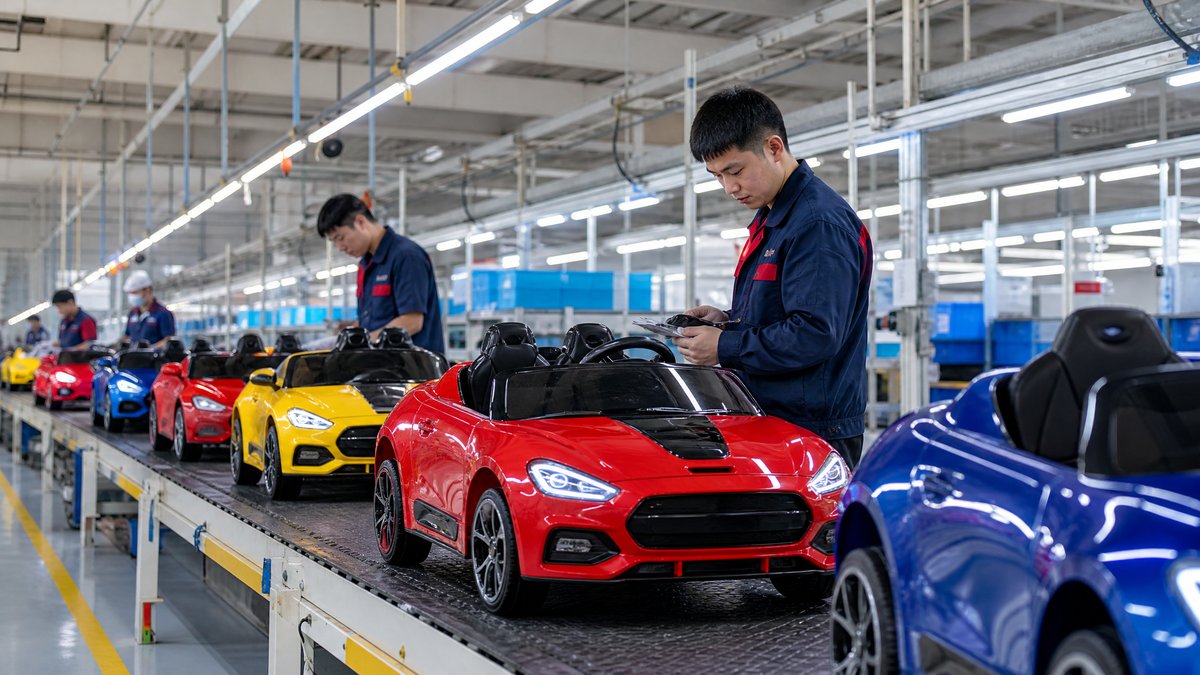
A ride-on car distributor should train dealers to explain the exact product, demonstrate safe operation, emphasize adult supervision, answer routine questions, route service correctly, and sell only to suitable customers. The goal is not a feature recital. It is a repeatable customer conversation that supports the end user and the dealer relationship.
For importers, wholesalers, distributors, retailers, and OEM buyers, training connects manufacturer information with the advice a family hears in a showroom, product listing, or live chat. It should prevent improvisation while allowing for the exact model, market, and approved documentation.
Make Training a Product-and-Process Program
Do not treat a dealer session as a quick feature presentation. A dealer who can repeat “remote control,” “lights,” or “battery powered” may still be unable to guide a buyer through suitability, charging, or an after-sales question. The session should pair what the product is with what the dealer should say and do next.
Start with the current model list, manufacturer-approved user materials, carton markings, warranty terms, and relevant local sales requirements. A named product owner should confirm that they match the stock on offer. This prevents dealers from applying an old sheet or another model’s instructions.
Give each model a dated, one-page dealer card: model/SKU, intended-use and age guidance, occupancy if stated, approved charging equipment, controls, assembly status, included accessories, and customer-support route. It is a practical source for a live customer conversation.
In the United States, CPSC guidance notes that certain battery-operated toys and certain ride-on toys require instructional literature and that some toys have specific labeling requirements. It also addresses producer and tracking markings. These points are market-specific, but they show why dealers should preserve and pass on the exact documentation rather than replace it with casual advice. [1]
Teach the Difference Between a Feature and a Claim
A feature is documented or observable: a parent-control function, seat configuration, supplied charger, or listed setting. A claim predicts an outcome or expands the feature beyond its approved purpose. “Safe without supervision,” “maintenance-free,” and “works on any terrain” are claims dealers should not make.
Teach one rule: if a statement is not in current manufacturer-approved material or verified for the market, do not promise it. Staff can say, “Let me check the current documentation for this model.” This applies to age guidance, load limits, range, surface suitability, charging time, weather exposure, and compatibility.
Give Sales Teams a Short Product Demonstration Sequence
Use a display unit checked according to the supplied instructions. Have staff show the manual, labels, product identification, and support information; demonstrate the primary controls and any parent-control function; and explain the approved purpose without suggesting that adult oversight is eliminated.
They should also show where adults find pre-use, assembly, and charging instructions, then close with the supervision message and contact route. Do not let staff improvise a repair demonstration or bypass a protective feature. Changes, parts, and non-routine service need manufacturer approval or the responsible service provider.
Turn Safe Operation Into a Consistent Customer Message
Safety wording should be brief and repeated across the shelf talker, listing, handover, and support response. Train staff to begin with the current manual and labels for the exact product. Adults should follow the stated age, size, occupancy, use-area, assembly, charging, and maintenance instructions. CPSC similarly advises families to follow package safety information and select toys that match a child’s interests and abilities. [2]
The verbal handover should reinforce these model-neutral basics:
- An adult reads the supplied instructions and supervises use.
- Use is in a suitable, controlled area chosen under the manufacturer’s directions—not on public roads or near traffic, stairs, pools, or other hazards.
- No extra passenger or cargo is carried unless the documentation permits it.
- If damage, missing hardware, a loose connection, or unexpected behavior is found, stop use and contact approved support.
- Use only the specified charger, battery, accessories, and parts unless an alternative has written manufacturer approval.
Role-play this as helpful advice, not a disclaimer: “Read this model’s manual, select a clear, level area away from vehicles, steps, and water, and stay involved while your child uses it.”
Explain Battery and Charging Messages Without Overreaching
Dealers should prevent unsafe improvisation, not diagnose battery packs or promise a transport classification. They need to identify the specified battery and charger, find approved charging instructions, and refer uncertain questions.
The sales-floor message is simple: use the equipment specified for this model; have an adult follow the instructions; and do not charge or use a damaged, swollen, leaking, unusually hot, or otherwise abnormal battery or charger. Seek approved support. Do not advise opening an enclosure, altering wiring, substituting a charger, or attempting a battery repair.
IATA notes that air carriage of lithium batteries depends on configuration and watt-hour rating and offers guidance on identification, packing, marking, labeling, and documentation. [3] For returns, cross-border orders, or air freight, verify current destination-market and battery-transport requirements with responsible authorities, carriers, freight forwarders, and approved documentation before shipping.
Make Adult Supervision a Core Selling Message
Adult supervision belongs in the product introduction, listing, handover, FAQ, and service replies. In practical terms, an adult is present, chooses a suitable area, checks readiness, follows the instructions, and intervenes when conditions are unsuitable.
If a model has a parent-control function, describe it as a control feature only. It is not a substitute for supervision, a reason to leave a child unattended, or a guarantee against incidents. A low-speed setting also does not make every route, surface, or child suitable. Dealers should never imply otherwise. A useful response is: “Let’s check this model’s instructions and consider the intended user and play area.”
Train Dealers to Handle Common Buyer Questions
A FAQs module aligns answers and turns uncertainty into a service opportunity. Staff should confirm the SKU, consult the documentation, state only what is verified, and route technical or compliance questions.
FAQ
How do I know whether this ride-on car is right for a child?
Start with the exact model’s age and suitability guidance. Consider the child’s ability, play area, and adult supervision; do not recommend based on age alone or exceed manufacturer guidance.
Can a parent-control function replace adult supervision?
No. Explain the function as described in the instructions. An adult still supervises, selects a suitable area, and stops use when conditions are inappropriate.
Can we use another charger, battery, or accessory?
Use only equipment and parts specified or approved for the exact model. Do not guess from a connector shape or a similar product; record the model and route a compatibility question to approved support.
What should a customer do if the car does not work as expected?
For a safety concern, stop use, follow the supplied troubleshooting guidance, and contact the designated service channel with the identifier, purchase record, requested photos or video, and issue description. Do not advise an unapproved modification or dismantling.
Can a customer take the product or its battery on an aircraft or ship it by air?
Do not give a blanket answer. Conditions can depend on configuration, rating, route, packaging, and carrier rules. Verify current requirements with the carrier and responsible authorities, and use the approved logistics process for returns. [3]
What documents should the customer keep?
Keep the receipt, current manual, product identifiers where practical, and supplied warranty or support information. They help verify the product and route service.
Establish a Clear Service-Routing Workflow
A dealer needs one visible pathway from first report to final response, built around documentation, triage, and escalation. Collect consistent intake information: contact details, purchase date, model/SKU, product or tracking identifier, issue description, operating conditions, and requested photos or video. Record only what support needs and follow the business’s privacy process.
An instruction-location question can be answered with the current approved document. Basic setup may be handled only within approved guidance. A suspected safety issue, damaged electrical component, battery concern, missing critical part, injury report, repeated malfunction, or possible recall goes promptly to the designated distributor, manufacturer, or safety contact. Preserve evidence; do not make a causation finding.
Dealers should know the correct email or portal, warranty and parts process, response expectations, and escalation contact. For a return, use the approved process and verify current destination-market and battery-transport requirements with the appropriate carrier or authority. Do not devise a battery shipping method. A useful script is: “Please stop using the product if you have a safety concern. I will log the model and issue and send it through our approved support route.”
Responsible Selling Protects the Whole Channel
Responsible selling matches the product and message to the customer’s intended use. Dealers should sell the actual model in stock with its actual documentation, not an imagined version.
Keep age guidance and warnings visible; use current approved images and specifications; and avoid claims about compliance, certifications, performance, weather resistance, or delivery timing unless verified for the SKU and destination. Do not suggest that a safety feature removes the need for supervision. Refer legal or regulatory questions to the responsible local authority or qualified adviser rather than offering legal conclusions.
For B2B buyers, confirm who owns manuals, translation and labeling review, parts data, claims intake, escalation, and recall communications. Confirm what the manufacturer approves and what must be verified locally. This structure can support private-label programs without altering safety guidance or obscuring product identity.
Use a Repeatable Dealer Training Agenda
Run an initial workshop followed by a short knowledge check. Cover product cards and documents, a live model walk-through, customer handover, charging boundaries, supervision scenarios, FAQs, and service routing. Ask each participant to demonstrate a compliant conversation and locate the escalation contact.
Use real scenarios: an unverified spare charger, an outdated age statement, a remote-control supervision question, or a battery complaint. The best answer is often the correct documented message and support route, not a technical fix. Refresh training for model or instruction changes, new staff, recurring questions, or support trends. Keep an attendance record, training version, model list, and FAQ revision date.
Conclusion: Train for the Moment After the Sale
A dealer training session for ride-on cars should leave every participant able to identify the exact product, deliver a safe-operation and supervision message, answer only verified questions, recognize when to stop and escalate, and sell responsibly. That capability supports better customer conversations and a more resilient distribution channel.
The most useful test is consistency. A customer should hear the same responsible guidance whether they meet a dealer in person, read a marketplace listing, contact a retailer after purchase, or request a part. Give dealers current documents, short approved scripts, a real escalation route, and permission to say “I will verify that” rather than guess. Revisit the materials after model updates and service trends so each sales touchpoint remains accurate.
If you are planning a dealer rollout, private-label program, or wholesale training pack, contact KidsRideCar by email to discuss your product-information and service-routing needs. For a model-specific dealer briefing or OEM buyer discussion, email info@kidsridecar.com with your target market, sales channel, and current documentation.
References
[1]: https://www.cpsc.gov/Business--Manufacturing/Business-Education/Toy-Safety "CPSC Toy Safety Business Guidance"
[2]: https://www.cpsc.gov/Safety-Education/Safety-Education-Centers/Toys "CPSC Toy Safety Guidance"
[3]: https://www.iata.org/en/programs/cargo/dangerous-goods/lithium-batteries/ "IATA Batteries and Air Transport Guidance"
Official references
Explore these external resources for current regulatory and trade guidance. Confirm requirements with the relevant authority before placing an order.
Ready to Start?
Factory-Direct · CE & ASTM Certified · MOQ from 50 Units
Our export team works with buyers in 60+ countries. Get a quote within 24 hours.
KR
Written by KidsRideCar
China's leading kids electric ride-on car manufacturer. 500,000+ units shipped annually to 60+ countries. CE, ASTM & EN71 certified.