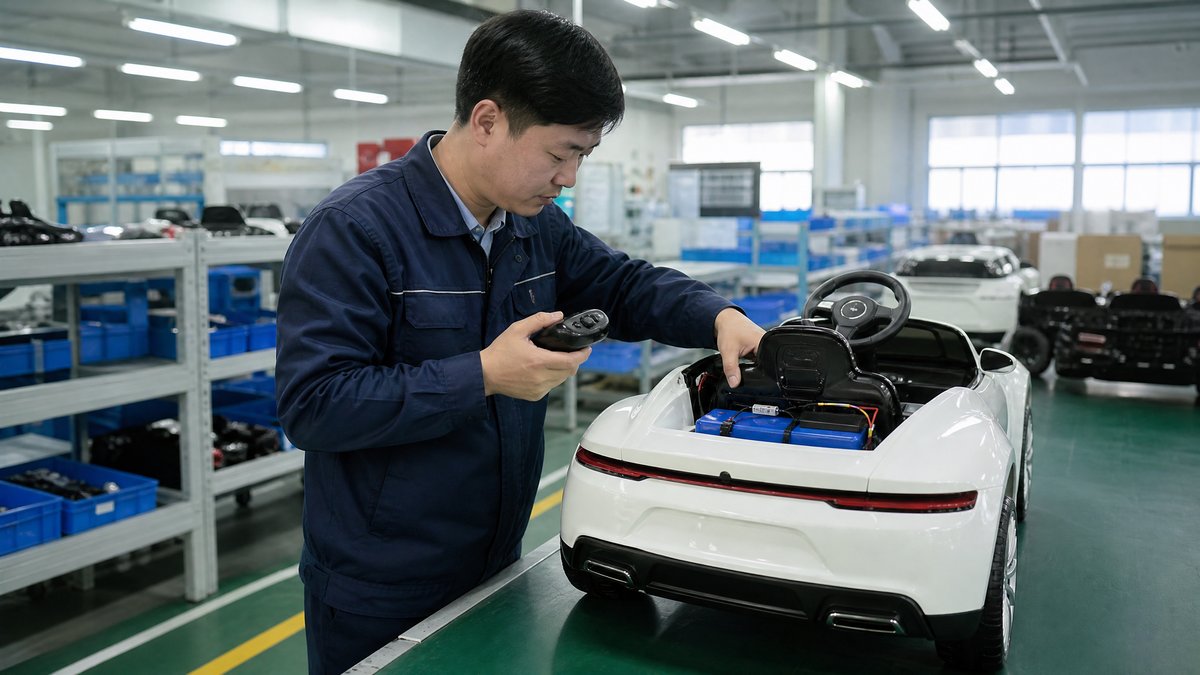
The Strategic Role of After-Sales in B2B Ride-On Toy Distribution
In the global marketplace for children's electric ride-on vehicles, the completion of a wholesale transaction represents only the initial phase of a long-term commercial partnership. For importers, distributors, and large-scale retailers, the complexity inherent in motorized toy products—incorporating integrated power systems, electronic control units, and specialized assembly—demands a sophisticated and professional after-sales workflow. A robust service infrastructure is a proactive strategy to protect brand equity, minimize logistical friction, and ensure long-term profitability. This guide outlines the essential B2B framework for developing a scalable and safe after-sales department, focusing on the collaboration between manufacturers and their global partners.
Establishing a Professional After-Sales Framework
A professional after-sales department begins with a clear definition of roles and responsibilities between the manufacturer and the distribution partner. In the international B2B context, this relationship is typically governed by a service level agreement that outlines the technical support provided by the factory and the frontline service expectations for the retailer.
The Foundation of Manufacturer-Partner Collaboration
The manufacturer serves as the primary source of technical intelligence and specialized components. Their role includes the provision of comprehensive technical documentation, exploded view diagrams, and wiring schematics that allow the distribution partner to understand the product's architecture without compromising safety boundaries. Furthermore, the manufacturer provides a negotiated allocation of spare parts based on the volume of the primary order, ensuring that the distributor has immediate access to essential components for local fulfillment.
The distribution partner, in turn, acts as the localized hub for technical support and consumer education. Their responsibilities include the management of regional spare parts inventory, the translation of technical manuals into local languages, and the implementation of intake protocols that filter out user errors from genuine component issues. This division of labor ensures that technical challenges are addressed at the most efficient level, reducing the need for costly international returns and streamlining the resolution process for the end-user.
Building a Technical Knowledge Base
A key component of a professional after-sales department is the maintenance of a comprehensive technical library. This library should include all relevant manufacturer-provided documentation, including assembly instructions, maintenance schedules, and safety protocols. By centralizing this information, support staff can provide accurate and consistent advice that adheres to the safety boundaries established by the manufacturer.
Staff training is equally critical. Service personnel must be trained to recognize the specific characteristics of different product models as detailed in the official documentation. This training should emphasize the importance of following the manufacturer's guidelines and strictly adhering to safety warnings regarding internal components. A well-trained team can effectively triage technical issues, identifying those that can be resolved through external assembly adjustments and those that require the involvement of authorized technical support.
Designing the Customer Support Intake and Triage System
The efficiency of an after-sales workflow is largely determined by the quality of the information gathered during the initial customer contact. A standardized intake protocol is essential for collecting the data necessary to diagnose technical issues accurately and to facilitate warranty claims with the manufacturer.
Standardized Intake Protocols
A professional intake form should be designed to capture all essential details regarding the product and the nature of the reported issue. This includes verifying the proof of purchase to confirm warranty eligibility and identifying the specific product through batch or serial numbers located on the chassis or packaging. These identifiers allow for precise traceability, enabling the manufacturer to cross-reference the report with specific production records and component specifications.
Furthermore, the intake process should require comprehensive documentation of the issue, which may include visual evidence of the product's current state. This documentation should focus on external observations, such as the behavior of indicator lights or the physical condition of the assembly. By gathering this information upfront, support agents can effectively triage the case, distinguishing between common usage questions and potential technical failures that require further action.
The Triage and Resolution Process
Once the intake data has been collected, the case enters the triage phase. The goal of this phase is to identify the most appropriate resolution path while maintaining strict adherence to safety protocols. Support agents should first verify that all external assembly steps have been completed according to the manufacturer's instruction manual. Many reported issues can be resolved by ensuring that external connections are secure and that the product has been assembled correctly.
If the issue persists after verifying the assembly, the agent should consult the technical documentation to identify the next steps. This may involve providing the customer with additional usage guidance or identifying a specific component that requires replacement. Throughout this process, agents must emphasize that users should not attempt to access internal components or perform any modifications that fall outside the scope of the official assembly instructions.
| Support Phase | Objective | Key Actions |
|---|---|---|
| Intake | Data Collection | Verify purchase, identify batch, collect visual evidence of external state. |
| Triage | Diagnostic Analysis | Compare observations with technical manuals, verify external assembly. |
| Resolution | Case Closure | Provide usage guidance, facilitate part replacement, or refer to authorized support. |
| Documentation | Data Aggregation | Record resolution in CRM, update manufacturer reports for continuous improvement. |
Spare Parts Inventory and Logistics Management
Effective after-sales service requires a strategic approach to spare parts management. For international distributors, maintaining a local inventory of essential components is crucial for providing timely support and minimizing the downtime for the end-user.
Inventory Optimization and Planning
The composition of a local spare parts inventory should be based on a combination of manufacturer recommendations and historical service data. Rather than maintaining a uniform stock of all components, distributors should prioritize items based on their frequency of replacement and their impact on the product's functionality. This approach optimizes warehouse space and ensures that the most commonly needed parts are always available for immediate dispatch.
Manufacturer-provided spare parts kits, often included with large-scale orders, serve as the initial foundation for this inventory. As the distribution network grows, the distributor should develop a more sophisticated procurement strategy, ordering additional components based on projected service needs. This planning should take into account the lead times for international shipping and the specific requirements for importing electronic or mechanical components.
Logistics and Regulatory Compliance in Parts Distribution
The international shipment of spare parts involves navigating a complex landscape of customs regulations and safety standards. Distributors must ensure that all replacement components comply with the specific requirements of their target market and that all necessary documentation is provided for customs clearance. This includes the use of appropriate classifications for electronic components and adherence to regulations governing the transport of specialized power sources.
When shipping replacement parts to end-users, distributors should provide clear instructions for their installation, emphasizing that these tasks must be performed in accordance with the manufacturer's safety guidelines. For components that involve the product's power system or electronic controls, the distributor should verify that the replacement process does not require unauthorized access to sealed internal areas. If a repair exceeds the scope of user-level assembly, the product should be referred to an authorized service center.
For after-sales workflow design
Plan support around documented product models
Use the current manual, parts information and manufacturer support route for each selected model when building a retailer after-sales process.
Discuss after-sales support planning →

Battery Maintenance and Safety Protocols
The power system is a critical component of any electric ride-on vehicle, and its proper maintenance is essential for the product's performance and longevity. A significant portion of technical inquiries can be traced back to maintenance practices that do not align with the manufacturer's specifications.
Adherence to Manufacturer Maintenance Schedules
Professional distributors and retailers have a responsibility to educate consumers on the importance of following the maintenance schedules provided in the product documentation. This includes adherence to the recommended charging protocols, which are designed to optimize the lifespan of the power source. Users should be instructed to follow the specific charging durations and frequencies detailed in the manual, avoiding both undercharging and prolonged connection to the power supply beyond the specified limits.
Furthermore, the storage conditions of the product and its power system can significantly impact its long-term health. The documentation will typically specify the ideal temperature ranges and environmental conditions for storage. Educating users on these requirements helps prevent common issues related to environmental degradation and ensures that the product remains in optimal condition when not in use.
Safety Boundaries and Support Escalation
Safety communication should make a clear distinction between ordinary user guidance and technical service. The manufacturer’s documentation defines the user-accessible steps for a specific model; retailers should not add improvised technical instructions. If a product appears damaged, unusually hot, or otherwise abnormal, the user should stop using it and contact the retailer or the manufacturer’s documented support route for model-specific guidance.
This approach keeps customer communication focused on the supplied instructions, adult supervision, and authorized support rather than on diagnostic detail.
Troubleshooting Hierarchy and Safety Boundaries
A structured approach to troubleshooting ensures that technical issues are addressed efficiently and safely. This hierarchy begins with the most basic external checks and proceeds to more detailed analysis, always remaining within the scope of authorized actions.
External Verification and Assembly Checks
The first step in any troubleshooting process is to verify the external state of the product. This includes ensuring that all user-accessible connections are secure and that the product has been assembled according to the official instructions. Many issues that appear to be technical failures are actually the result of incomplete assembly or simple usage errors.
Support agents should guide users through a series of external checks, such as verifying the placement of the power connector and the status of the control switches. These checks should be performed without disassembling the product or accessing internal electronic components. If the product's behavior indicates an issue with the external charging system, the user should be advised to consult the technical documentation to verify the correct operation of the charger and its indicators.
Authorized Technical Support and Component Replacement
If external checks do not resolve the issue, the next step is to identify whether a component replacement is necessary. This determination should be made based on the diagnostic criteria provided by the manufacturer. When a replacement part is issued, it must be an authorized component that matches the specifications of the original product.
For any technical challenge that cannot be resolved through the model’s documented user-accessible steps, the product should be referred through the manufacturer’s documented support route. Retailers and distributors should avoid providing instructions beyond the product documentation.
Warranty Policy and Regulatory Compliance
A clear and transparent warranty policy is a fundamental component of a professional B2B relationship. This policy should be defined in the sales contract and should align with the regulatory requirements of the target market.
Contractual Warranty Structures
In the B2B context, warranty terms are typically structured to reflect the different components of the product and their expected lifespans under normal use. These terms should be clearly communicated to the distribution partner and should include specific windows for reporting manufacturing defects and for the provision of replacement parts. A tiered structure, where different components are covered for different durations, allows for a balanced approach to risk management.
The warranty policy should also clearly define the conditions under which the warranty remains valid. This includes adherence to the manufacturer's maintenance guidelines and the avoidance of any unauthorized modifications or repairs. By establishing these clear terms, both the manufacturer and the distributor can manage customer expectations and address technical issues in a consistent and fair manner.
Regulatory Verification and Market Access
Compliance with safety standards and certifications is a critical requirement for any product entering the global toy market. However, the specific requirements can vary significantly between different regions and jurisdictions. Therefore, it is essential that distributors and retailers verify the compliance of each product against the latest official requirements of their specific target market.
This verification process should include a review of the technical reports and certifications provided by the manufacturer, as well as an assessment of any additional local regulations that may apply. Importers must ensure that all products and replacement parts meet the necessary safety, environmental, and electromagnetic compatibility standards for their region. Relying on a framework of continuous verification and professional legal counsel ensures that the business remains compliant with the evolving regulatory landscape.
Frequently Asked Questions
Q: How should a distributor manage the initial inspection of a large-scale shipment?
A: Upon receipt of a container shipment, the distributor should implement a standardized inspection protocol as defined in the written agreement with the manufacturer. This involves verifying the external condition of the packaging and conducting a sample-based check of the products against the provided technical specifications. Any discrepancies or manufacturing defects should be documented with photographic evidence and reported to the manufacturer within the contractually agreed-upon timeframe to facilitate the provision of replacement components or credits.
Q: What is the recommended approach for handling technical inquiries from end-users?
A: Retailers should establish a professional intake process that requires users to provide proof of purchase and a detailed description of the issue, supported by visual evidence of the product's external state. Support staff should first verify that the user has followed all assembly and maintenance instructions provided in the manufacturer's manual. If the issue remains unresolved, the retailer should consult the technical library to identify authorized resolution steps, ensuring that no internal modifications or unauthorized repairs are suggested or performed.
Q: How can a distributor ensure that replacement parts remain compliant with local safety standards?
A: Distributors must verify that all replacement components are authorized by the manufacturer and meet the specific technical requirements of the product model. Furthermore, the distributor should confirm that these parts comply with the latest regulatory standards of the target market, including any requirements for electronic components or specialized power sources. This verification should be based on the technical documentation provided by the manufacturer and the latest official guidelines from local regulatory authorities.
Q: How should retailers handle an electrical issue reported by a customer?
A: Ask the customer to stop using the product if there is any safety concern, then refer to the model’s official manual and documented support route. Retailers should limit their guidance to user-accessible steps explicitly stated in the product documentation and obtain manufacturer direction before recommending anything further.
Request a wholesale quote
Official references
Explore these external resources for current regulatory and trade guidance. Confirm requirements with the relevant authority before placing an order.
Ready to Start?
Factory-Direct · CE & ASTM Certified · MOQ from 50 Units
Our export team works with buyers in 60+ countries. Get a quote within 24 hours.
KR
Written by KidsRideCar
China's leading kids electric ride-on car manufacturer. 500,000+ units shipped annually to 60+ countries. CE, ASTM & EN71 certified.