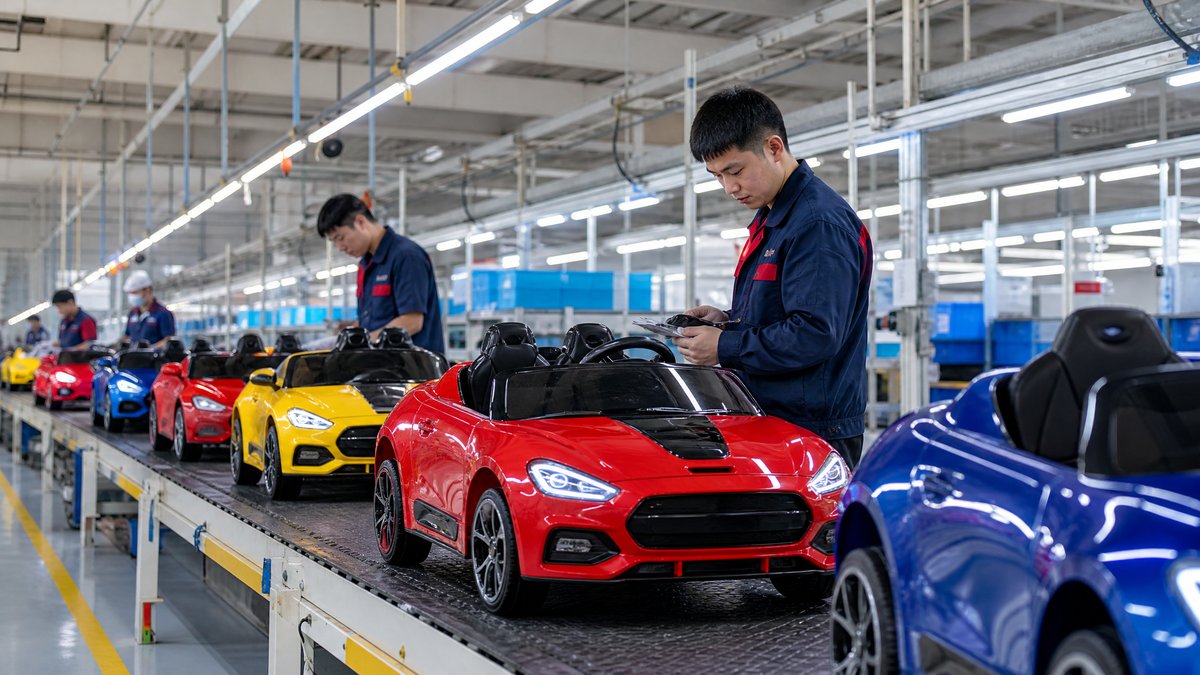
Distributors can build a useful kids electric ride-on car dealer FAQ library by converting verified supplier documents, approved product data, commercial policies, and repeat dealer questions into short, searchable answers. Each answer should have a scope, evidence source, named owner, and review date. The purpose is not a lengthy brochure; it is a dependable tool dealers can use before ordering, when publishing listings, and while supporting end customers.
Map content to the dealer journey
Start with the moments when dealers need information. This makes the library practical for sales, e-commerce, purchasing, and service teams.
A strong first version usually includes five groups:
1. Range and fit: intended age guidance, seat configuration, dimensions, stated maximum load, recommended surfaces, available colors, and options.
2. Ordering and supply: SKU status, MOQ, samples, lead-time discussion points, carton configuration, artwork approvals, and parts ordering.
3. Product information: included accessories, assembly scope, approved descriptions, images, manuals, charging information, and remote-control information where applicable.
4. Safety and compliance: documented warnings, adult-supervision guidance, supplied records, labeling topics, and the process for confirming market requirements.
5. After-sales: warranty terms, evidence required for a claim, parts identification, carton-damage reporting, and escalation contacts.
Build the first question list from dealer emails, call notes, listing reviews, return records, and supplier pre-sale questions. Consolidate similar wording under one canonical question. For example, different forms of “Can it be used on grass?” should lead to one carefully qualified product-use answer rather than several inconsistent replies.
Separate process answers from product answers
General process answers can explain quotes, claims, or manuals. Product answers must be tied to a model, revision, market, and configuration. Show a model identifier, document revision, and last-reviewed date. Where a feature varies by order or option pack, state that clearly and require confirmation before publication.
Build an evidence base before writing
An FAQ library is only as reliable as its source material. Create a controlled folder or product-information system holding the approved version of relevant files. Inputs may include data sheets, manuals, packaging details, approved photographs, spare-parts lists, warranty terms, and market-specific records supplied by the manufacturer.
Do not turn an unverified sales statement into a published answer. For claims about compliance, testing, declarations, labels, age grading, or capability, record the exact model and destination market covered by the evidence. Dealers and importers should verify current destination-market requirements, labels, documentation, and sales obligations with qualified compliance support and the relevant manufacturer or importer.
Battery and charger entries should remain safety-focused and non-technical. Repeat only approved charging, storage, replacement, and service guidance from the applicable manual. Do not advise dealers or consumers to open battery packs, rewire electrical components, bypass protections, modify chargers, or make unapproved repairs. Direct requests outside the supplied instructions to a manufacturer-approved service route.
Use a repeatable answer card
A shared answer template makes content easier to approve, update, translate, and reuse in a dealer portal. Include:
- Dealer question: the wording commonly used in enquiries.
- Direct answer: a short, clear response with necessary conditions.
- Applies to: a general policy or named model/SKU and configuration.
- Evidence source: a link or reference to the approved file, policy, or supplier confirmation.
- Owner and review date: who is accountable and when the entry must be rechecked.
- Escalation rule: when the dealer must request current confirmation.
Write for a real dealer conversation
Lead with the fact a dealer needs, then state the next action. Avoid absolute phrases such as “works everywhere,” “fits all children,” or “meets every standard.” Define terms that can be misunderstood, including included versus optional accessories and assembled versus carton dimensions.
An answer about documentation, for example, can identify which records are available for review while explaining that the dealer must confirm the current language, label, and market obligations. An answer about parts can explain the identification process and request a product label or photos when required for correct matching.
Use a status label on every entry: approved for dealer use, needs supplier confirmation, or internal only. Internal-only content should never be copied into a public listing or customer response. It may include matters under investigation, incomplete data, or negotiating positions.
> Need help converting product files into a dealer-ready knowledge base? Request a B2B FAQ planning review.
Link the FAQ to procurement and launch control
Begin collecting FAQ inputs before a purchase order is finalized and review them again before launch. Add an FAQ checkpoint to the new-SKU workflow.
Before approval, ask the supplier to identify the configuration, carton contents, included charger and accessories, manual version, available spare parts, labeling information, and approved claims. Record which details can vary by order. If images display an optional feature, make that distinction explicit.
Assign one owner for trade terms and another for technical or quality content. Require review after a product revision, supplier or packaging change, manual update, policy change, repeated confusion, or move into a new market. Archive superseded entries to help correct older listings.
Improve the source, not merely the answer
Review searches that return no result, supplier escalations, and questions that reappear after an answer is published. Prioritize gaps affecting safe use, product representation, ordering accuracy, labeling, or warranty cost. Repeated questions may show that a data sheet, carton mark, onboarding pack, or listing template needs improvement. Fix that underlying source as well as the FAQ.
FAQ
What belongs in the first dealer FAQ release?
Begin with questions that block listing, ordering, or safe customer guidance: model identification, dimensions, included items, approved age and load information, assembly scope, manual-based charging information, documentation process, ordering terms, and claims escalation. Start with verified answers and expand according to actual dealer demand.
Can one answer cover every ride-on car model?
Usually only process questions can be universal. Product features, accessories, dimensions, warnings, and records can differ by model or configuration. Use model-specific entries or clear applicability notes, and require dealers to check the latest approved data before publishing a listing.
Who should approve safety and compliance content?
The responsible product-quality or compliance coordination team should approve it using current manufacturer-supplied documentation and internal review procedures. A general FAQ is not a legal determination. Dealers should confirm current requirements for each destination market before import or sale.
How should dealers answer battery replacement or fault questions?
They should follow the model’s approved manual and the distributor’s documented service process. Collect the product identifier and required claim evidence, then route the issue to an authorized contact. Do not provide instructions to open, modify, rewire, or bypass batteries, chargers, or electrical protections.
How frequently should the library be reviewed?
Review affected entries before each launch and whenever specifications, suppliers, manuals, packaging, policies, or market requirements change. For unchanged content, use a scheduled review date and confirm that linked documents remain current.
Conclusion
A dealer FAQ library becomes a valuable B2B resource when it is built from approved evidence, organized around dealer tasks, and managed as controlled product data. Start with high-impact questions, make model boundaries visible, and give every answer an owner, evidence reference, and review date. This supports consistent dealer communication while preserving the need to confirm changing specifications and destination-market requirements.
Ready to align product information, dealer onboarding, and after-sales answers for your ride-on car range? Contact KidsRideCar’s B2B team.
Official references
Explore these external resources for current regulatory and trade guidance. Confirm requirements with the relevant authority before placing an order.
Ready to Start?
Factory-Direct · CE & ASTM Certified · MOQ from 50 Units
Our export team works with buyers in 60+ countries. Get a quote within 24 hours.
KR
Written by KidsRideCar
China's leading kids electric ride-on car manufacturer. 500,000+ units shipped annually to 60+ countries. CE, ASTM & EN71 certified.