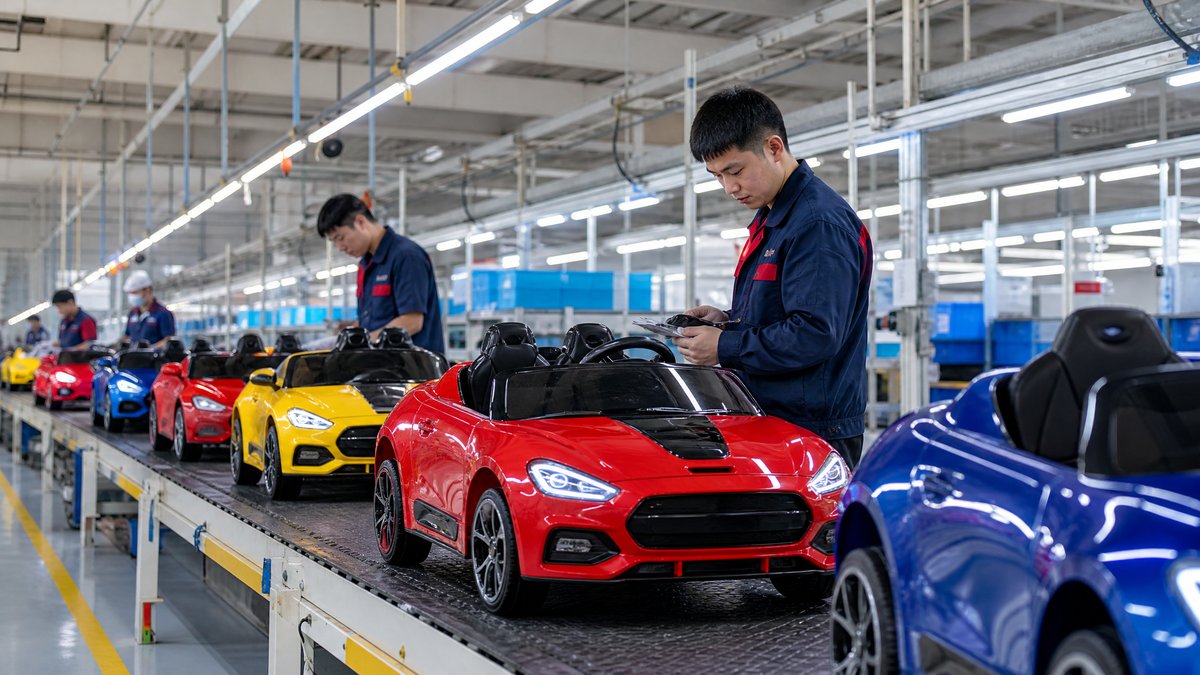
A distributor can improve kids ride-on car trade show follow-up by sorting every contact by buying readiness, sending a useful recap, and moving qualified suppliers through a documented sequence: information review, sample discussion, commercial comparison, and next-step ownership. The goal is to turn promising conversations into comparable procurement records while preserving product configuration, safety information, packaging, service support, and agreed actions.
For overseas importers, wholesalers, retailers, and OEM buyers, the days after a show can determine whether a busy booth visit becomes a reliable sourcing relationship or an unread email thread. This guide focuses on the post-show process.
Why trade show follow-up needs a procurement workflow
The common problem is that distributors file leads by business card or messaging app rather than by buying decision. Weeks later, teams cannot tell which supplier discussed which configuration, what documents were requested, or who was meant to respond. That creates avoidable rework when the retail season, product launch, or purchasing meeting approaches.
A disciplined workflow gives each lead a clear status and next action, rather than treating a booth conversation or sales claim as an approved production specification.
> Practical rule: Record what was observed, what was stated, what was requested, and what still needs confirmation as four separate fields.
Build a single post-show lead register
Create one shared register before the team begins emailing suppliers. A spreadsheet, CRM, or procurement platform can work, provided it is accessible to the commercial, product, and quality stakeholders who need it. Do not rely on personal notes alone.
For each kids ride-on car supplier, capture the following:
- Supplier name, primary contact, communication channel, and show location
- Models discussed, catalog references, photos taken with permission, and stated configuration
- Your target channel: wholesale, specialty retail, e-commerce, rental, promotional, or OEM
- Lead source and attendees from both sides
- Product fit, such as single-seat or two-seat format, appearance direction, and intended customer group
- Requested information: quotation, product specification, packaging details, sample options, manuals, or service materials
- Any documentation the supplier says is available, marked as to be reviewed rather than assumed valid for your market
- Commercial topics discussed, including any MOQ or customization conversation, without turning verbal discussion into a purchase term
- Risks, unanswered questions, internal owner, supplier owner, and next follow-up date
Use standardized status labels. For example: new contact, information requested, under technical review, sample discussion, commercial comparison, paused, or not proceeding. These labels make a pipeline meeting useful because the team can see what is actually blocked.
Separate potential from priority
Rank leads by the actual buying program, not by booth appeal. A private-label retailer may prioritize artwork control and packaging, while a distributor replenishing proven products may prioritize consistent specifications and parts support. Ask: *If this supplier sent complete, acceptable information tomorrow, would we advance?* If not, use a nurture list rather than request a full quotation package.
Send a concise, tailored first follow-up
The first message should refresh the supplier’s memory and make the required response easy to understand. Generic requests such as “send your best price” usually produce generic replies that are hard to compare. Instead, reference the exact booth discussion and list the next materials needed.
A useful first follow-up has five parts:
1. Context: name the show, date, your company type, and the models or category discussed.
2. Buying objective: explain your intended market or channel at an appropriate level, without making unsupported commitments.
3. Information request: ask for model-specific materials rather than a broad catalog alone.
4. Decision process: say who will review product, commercial, and document items, and what clarification is needed next.
5. Action request: ask the supplier to confirm receipt, identify the responsible contact, and propose a response plan.
For example, an importer that met a supplier about a two-seat ride-on vehicle could ask for the current specification sheet, assembly and user materials, carton information, available color options, spare-parts list, sample route, and any product documentation relevant to the intended destination. The importer should not state that a feature, claim, or document is acceptable before the responsible internal review is complete.
Link the conversation to your sourcing goal where helpful. A supplier can also review the buyer-facing expectations in a [ride-on car product inquiry](/inquiry) rather than relying only on fragmented chat messages.
Use a follow-up brief, not a scattered email chain
Attach or paste a short requirement brief when the opportunity is serious. Include the model references, desired market, sales channel, expected product positioning, packaging needs, branding scope, requested documents, sample questions, and the next review meeting. Version and date the brief.
This gives both parties one reference point. If the supplier responds with alternatives, log whether they are an exact match, a substitute, or a concept requiring a new approval. This distinction is especially important when comparing products in the broader [kids electric ride-on car range](/products/kids-electric-ride-on-cars).
Qualify supplier responses before requesting deeper work
Fast replies are useful, but speed alone is not a qualification criterion. Look for completeness, traceability, and an ability to answer the question asked. A supplier that sends a catalog may be helpful, but the catalog does not replace a response tied to a specific model.
Review responses through four practical lenses.
1. Product and configuration clarity
Confirm the supplier identifies the exact model, variation, included accessories, and available options. Ask what is standard and what requires separate confirmation. Avoid combining features from different catalog pages into one assumed specification.
If the business needs product images or listing support, request the source, permitted usage scope, and the version that matches the proposed model. For preparation of retail listings, see [what buyers should ask about product photography and listing content](/blog/ride-on-car-product-photography-listing-content).
2. Safety and information readiness
Ask for the product information and supporting records appropriate to the planned market, then have the appropriate people review them. Do not rely on logos printed on packaging, verbal assurances, or documents attached without model identification. Requirements vary by destination, product configuration, sales channel, and buyer role; obtain professional guidance where needed.
Keep safety communication model-neutral. Ask suppliers to provide the correct instructions, warnings, labeling information, and available supporting documents for the exact product under discussion. If a product is intended for children, reinforce that the seller’s customer materials should direct adults to follow the supplied instructions, use active supervision, observe the stated age and weight guidance, and use the product only as intended.
Do not promise retail customers outcomes that have not been substantiated. Likewise, distributors should not alter electrical systems, safety features, batteries, or instructions to solve a post-show commercial problem. Any issue should be referred through the supplier’s authorized process and the product documentation.
3. Commercial comparability
Make sure quotations share a common basis before comparing them. A quote should identify the model, configuration, quantity basis, what is included, packaging assumption, currency, trade terms if offered, payment discussion, quotation validity if stated, and exclusions or open items. A low-looking figure with an unclear product scope is not a usable comparison.
For a detailed comparison framework, buyers can use this guide on [what a ride-on car wholesale quote should include](/blog/ride-on-car-wholesale-quote-include). Record changes in a dated quote log rather than overwriting earlier versions.
4. Service and communication fit
Post-show communication is an early signal, not conclusive proof, of future service. Notice whether the supplier answers model-specific questions, names an owner, identifies unknowns clearly, and follows through on the next action. Ask how spare parts, product questions, and quality concerns are normally documented and routed. The answer can help a distributor plan a service model before committing inventory.
Move from interest to a controlled sample discussion
A sample request should confirm a defined learning objective, not simply create a pile of products. Before asking for one, write down what the team needs to review: physical appearance, configuration consistency, assembly materials, packaging presentation, supplied accessories, fit with the planned assortment, or a feature relevant to the channel.
Clarify these points in writing:
- Exact sample model and variation
- Whether the item is a current production unit, pre-production item, or another status identified by the supplier
- Included components and documents
- What can and cannot be inferred from the sample
- Shipping arrangement and the recipient responsible for inspection
- Internal reviewers and their decision criteria
- How findings will be documented and how product changes will be handled
Procurement example: A regional wholesaler meets several suppliers at a show and wants a compact group of products for independent toy stores. Rather than ordering every display item, the team first asks its shortlisted suppliers for model-specific files. It compares the proposed configurations against its shelf, carton, service, and customer-information needs. Only then does it select the samples that can answer open questions. The team records observations by sample and sends consolidated clarification requests, avoiding unsupported assumptions about production availability.
Use a written sample feedback form. Mark each point as accepted for the purpose reviewed, needs clarification, needs change discussion, or not suitable. A sample review does not replace broader quality planning or any required compliance assessment.
Run an internal post-show review meeting
Schedule a short cross-functional meeting after the first supplier responses arrive. Bring procurement, merchandising, quality or product, operations, e-commerce, and customer-service perspectives as relevant. The objective is to decide the next action for each priority lead—not to re-tell every booth conversation.
Use the lead register to answer these questions:
- Which models fit the planned assortment and why?
- Which proposals are not comparable yet, and what is missing?
- What must be checked before a sample or commercial negotiation proceeds?
- Are product claims, images, manuals, and packaging assumptions consistent with the exact model?
- Who owns each supplier request and internal decision?
- What could prevent the product from being responsibly offered through the intended channel?
A scorecard can support this conversation, but avoid a false sense of precision. Use it to structure discussion around product fit, information completeness, commercial clarity, packaging, service readiness, and communication—not to create a fictional performance ranking.
Keep momentum without pressuring the wrong outcome
A good follow-up cadence is predictable and useful. Send a reminder only when it adds clarity—such as a missing model reference, review outcome, or scheduled meeting. When a supplier is not selected, close the loop and retain the record without implying an order.
For leads that stay active, send a recap after each meaningful discussion. Include the exact model reference, decisions made, open questions, documents promised, owners, and target date for the next conversation. This is particularly important for OEM buyers, where artwork, packaging, components, and customer information can each have separate approval paths.
Frequently Asked Questions
How soon should distributors follow up after a kids ride-on car trade show?
Follow up once your notes are organized enough to make a specific request. A short, accurate message is more valuable than a fast generic one. Prioritize contacts whose products fit a live sourcing need, then send the same structured request process across the shortlisted group so responses can be compared fairly.
What should be in a trade show follow-up email to a ride-on car supplier?
Include the show context, model references, your channel or sourcing purpose, requested materials, unanswered points, and a clear next action. Ask for model-specific specifications, quote scope, packaging and service information, and relevant documentation where appropriate. Keep claims and acceptance decisions pending until your review is complete.
How can a distributor avoid losing details from booth conversations?
Centralize notes in a lead register on the same day or as soon as practical. Attach business cards, catalog pages, photos, and messages to the supplier record. Separate observations from supplier statements and identify every unverified item. After the first follow-up, send a written recap so both sides can correct misunderstandings early.
Should a buyer request a sample from every supplier met at a trade show?
Usually, no. First qualify the suppliers against the active product requirement and request information that narrows the field. Request samples when there is a defined review purpose and the team knows what decision the sample will inform. This protects time and makes feedback more actionable.
What safety questions belong in the follow-up process?
Ask for the exact product’s instructions, warnings, labeling information, and supporting records that are relevant to the destination and channel. Verify which model and configuration each item covers. Do not assume that a generic report, packaging mark, or sales statement applies to the product you will sell. Seek appropriate expert guidance for your obligations.
Conclusion: turn show conversations into accountable sourcing decisions
The best kids ride-on car trade show follow-up is structured, specific, and decision-led. Capture the conversation while it is fresh, rank suppliers against a real purchasing need, request model-specific information, and keep every sample, commercial, safety, and service question traceable. That process helps distributors spend attention on leads that can genuinely support their assortment and customer experience.
If you are building a post-show sourcing plan or want to discuss product options for your market, contact KidsRideCar by email or submit your requirements through our [inquiry page](/inquiry).
Official references
Explore these external resources for current regulatory and trade guidance. Confirm requirements with the relevant authority before placing an order.
Ready to Start?
Factory-Direct · CE & ASTM Certified · MOQ from 50 Units
Our export team works with buyers in 60+ countries. Get a quote within 24 hours.
KR
Written by KidsRideCar
China's leading kids electric ride-on car manufacturer. 500,000+ units shipped annually to 60+ countries. CE, ASTM & EN71 certified.