Introduction
For global toy wholesalers, importers, and brand owners, sourcing kids electric ride-on cars from China presents massive profit opportunities alongside distinct quality control challenges. Because ride-on vehicles are electro-mechanical toys carrying young children, product failure is not just an inconvenience—it poses severe safety risks, potential liability issues, and costly product recalls.
Evaluating a Chinese manufacturer goes far beyond reviewing polished digital catalogs or receiving a pristine golden sample. True quality evaluation requires a systematic, factory-floor-level understanding of raw materials, electronics integration, motor durability, battery safety systems, and compliance testing standards.
In this practical checklist guide, we break down the exact evaluation framework professional B2B buyers use to audit Chinese ride-on car manufacturers, ensuring your imported inventory meets stringent international standards and delights your retail customers.
1. Regulatory Compliance & Certification Audits
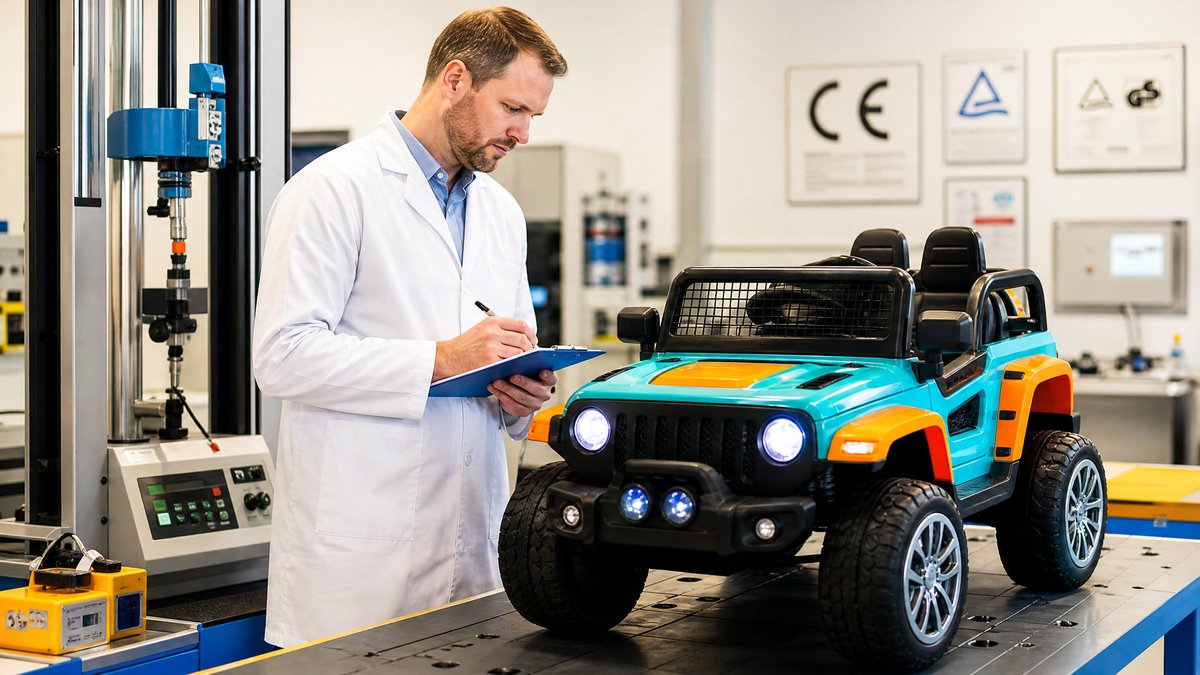
Before inspecting physical prototypes, every B2B sourcing evaluation must begin with verifiable compliance documentation. Different target markets enforce strict mandatory safety standards. Without legitimate test reports issued by accredited third-party laboratories (such as SGS, TÜV, or Intertek), your goods risk seizure at customs and severe legal liabilities.
Key International Certifications to Verify:
* North America: ASTM F963 (Standard Consumer Safety Specification for Toy Safety), CPSIA (Lead and Phthalates limits), and FCC (for remote control and Bluetooth modules).
* European Union: EN71 (Parts 1, 2, 3, and 9 for mechanical, flammability, and chemical safety), EN62115 (Safety of Electric Toys), EMC, and RoHS directives.
* UK: UKCA marking conforming to equivalent British standards.
Pro Tip: Do not accept scanned PDF certificates blindly. Always request the report number and directly verify the authenticity with the issuing testing laboratory. Ensure that the factory's quality management system is backed by ISO 9001 certification.
2. Core Mechanical & Structural Integrity Checklist
The physical foundation of a kids ride-on car dictates its longevity and safety under rough outdoor usage. When inspecting factory production lines or sample units, pay meticulous attention to the following structural components:
Frame Material & Chassis Design
* Steel vs. Plastic: High-quality ride-on cars utilize reinforced steel frames welded with precision robotics to support weight capacities of 30kg to 50kg+. Inspect weld joints for smoothness, uniform penetration, and absence of slag or cracks.
* Body Shell Plastic (PP vs. ABS): Premium models use virgin High-Impact Polypropylene (PP) or Acrylonitrile Butadiene Styrene (ABS) plastics. Recycled plastics are brittle, prone to fading under UV sunlight, and crack easily upon impact. Press against molded panels; high-grade plastic exhibits slight elastic recovery rather than rigid snapping.
Wheels & Suspension Systems
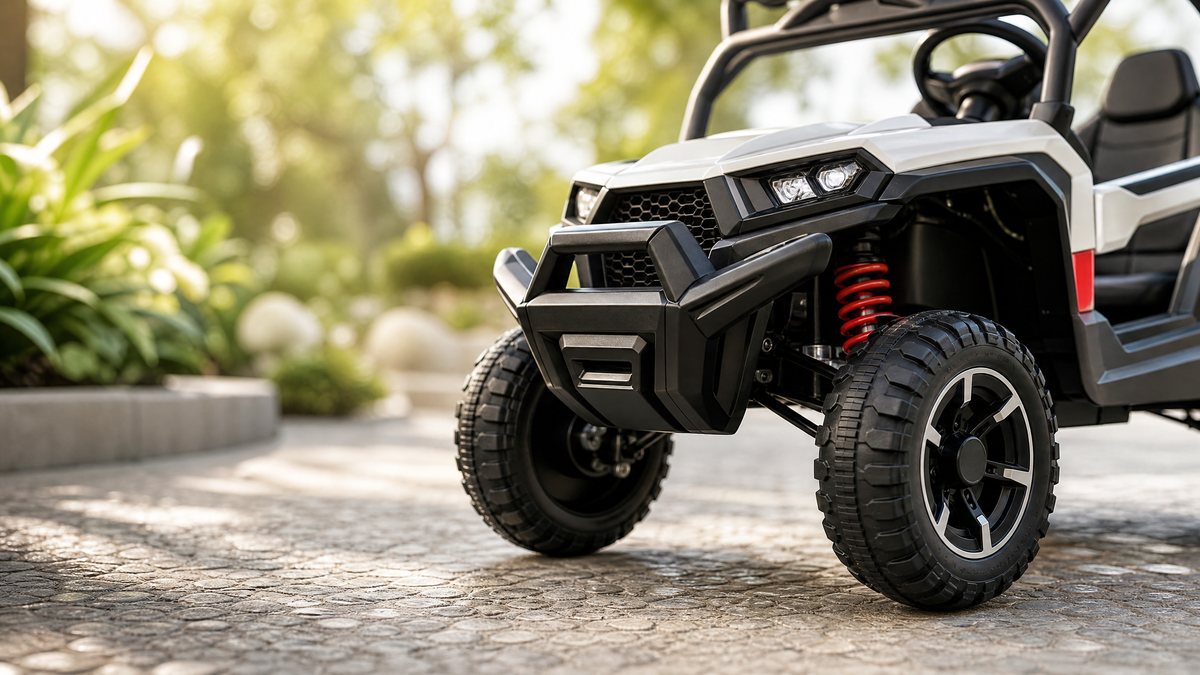
* EVA Foam Wheels vs. Hard Plastic Wheels: Modern high-end ride-on cars must feature EVA (Ethylene-Vinyl Acetate) polymer tires. They provide superior traction, shock absorption, and quiet operation compared to noisy, slippery hard plastic wheels.
* Suspension: Check for functional spring suspension on all four wheels or rear axles. Inspect the suspension travel range and spring tension to ensure it adequately absorbs bumps on uneven terrain.
3. Electrical System & Drivetrain Evaluation
The electrical architecture is the heart of an electric ride-on car. Poorly soldered connections, substandard wiring harnesses, and cheap motor gearboxes account for over 70% of post-sale customer returns.
Motors & Gearboxes (GB)
* Voltage Classes: Evaluate whether the factory specializes in 12V single/dual drive systems or high-performance 24V/48V brushless drift systems.
* Gearbox Housing: Inspect the gearbox casing material. Inferior factories use thin recycled plastic housings that crack under torque stress. Reputable manufacturers use thick, heat-resistant nylon composite gears and sealed gearboxes to keep dust and moisture out.
Battery Safety & Charging Protocols
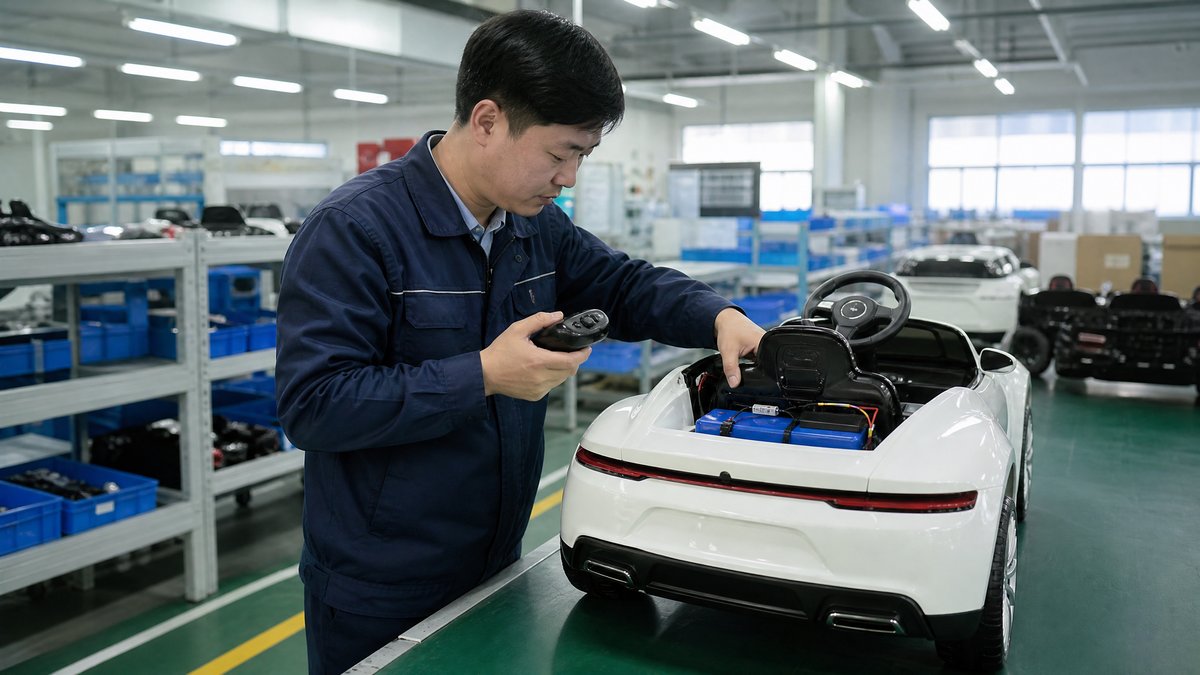
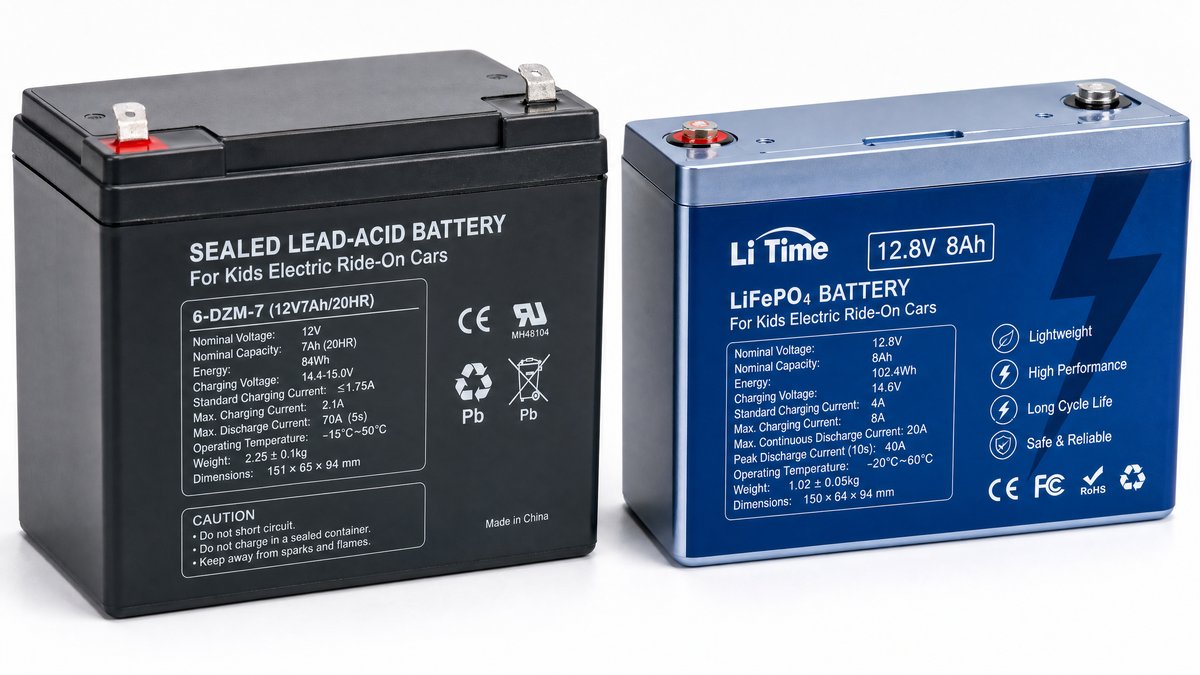
* Battery Chemistry: Verify whether the factory uses Sealed Lead-Acid (SLA) batteries or Lithium-ion packs. SLA batteries are cost-effective and reliable for standard 12V models, while Lithium-ion packs offer higher energy density for 24V+ premium drift cars.
* BMS (Battery Management System): For lithium setups, a robust BMS with over-charge, over-discharge, short-circuit, and thermal protection is non-negotiable.
* Charger Certification: Ensure chargers feature UL, CE, or SAA certifications with automatic trickle-charge shutoff to prevent overheating.
4. Safety Features & Control Systems
Parents prioritize safety above all else. When auditing a supplier, test the responsiveness and fail-safe mechanisms of the control electronics:
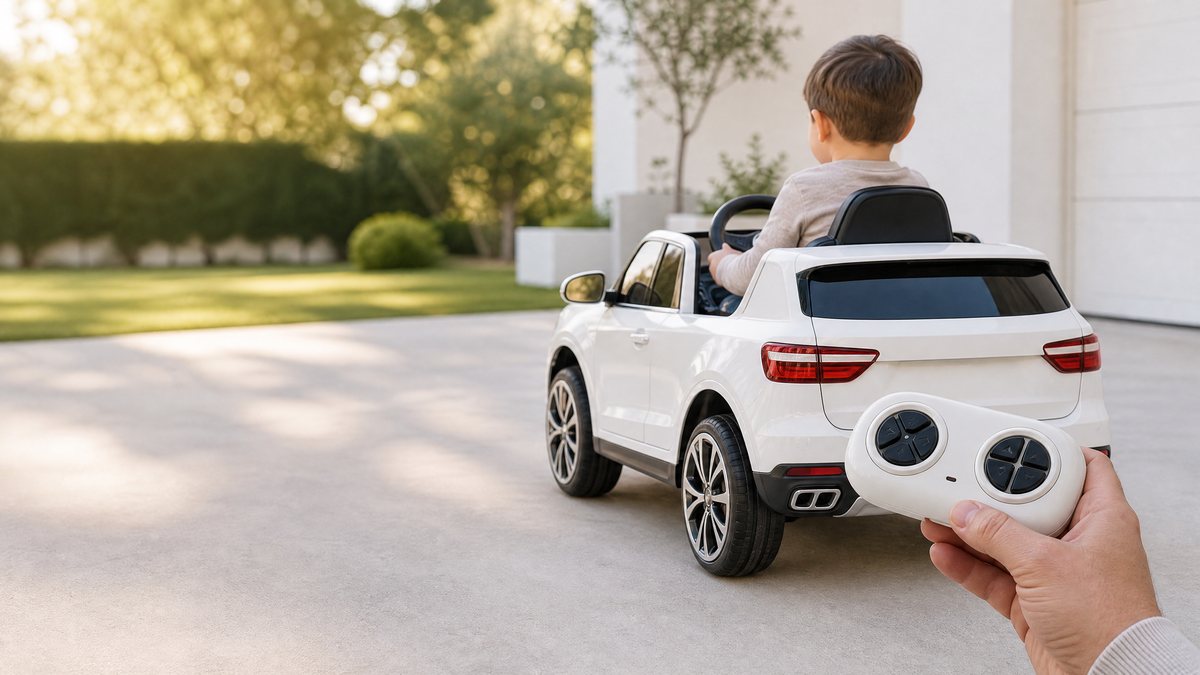
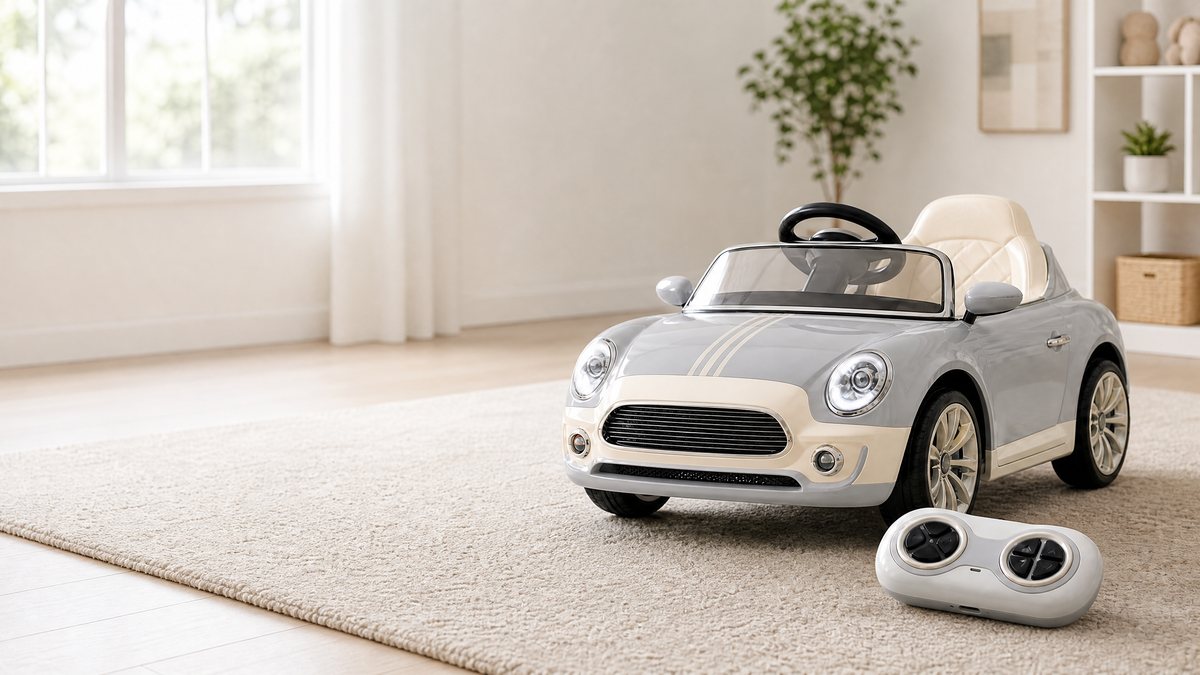
* Parental Remote Control Override: 2.4G Bluetooth remote controls must feature a dedicated emergency brake (stop) button that instantly overrides manual pedal input from the child.
* Soft Start Technology: Check if the Electronic Speed Controller (ESC) implements linear acceleration ("soft start"). Jerky sudden starts frighten young children and strip plastic gears.
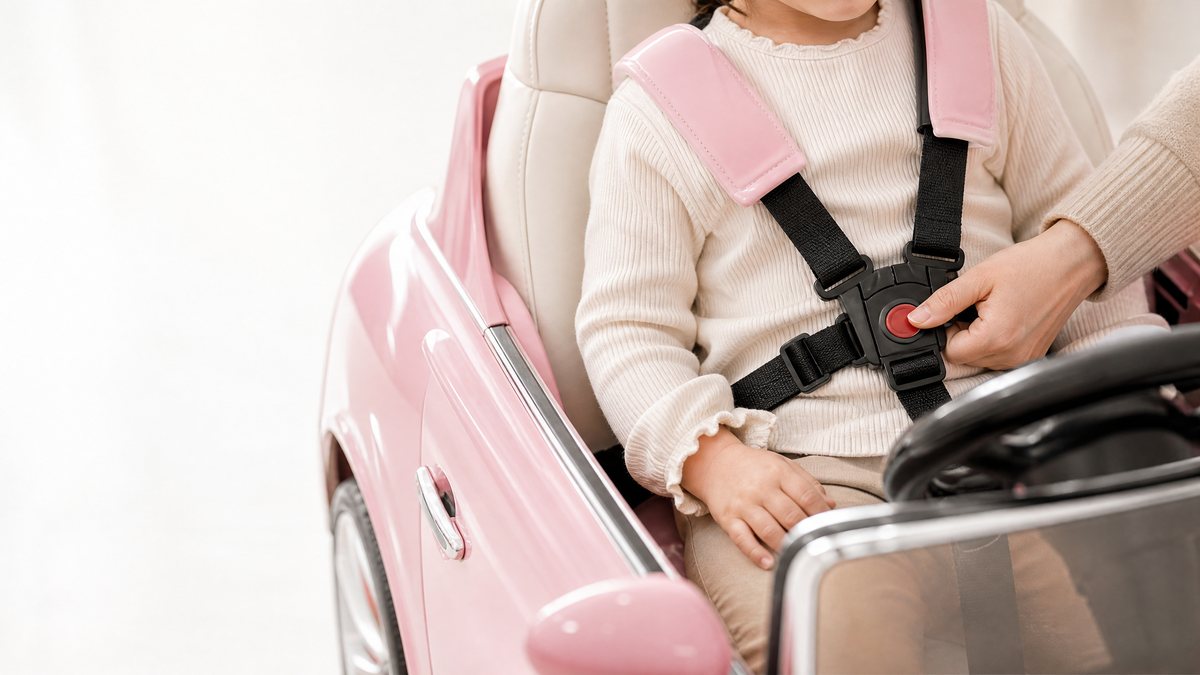
* Harness & Seating: Inspect 3-point or 5-point safety harnesses, locking mechanism security on doors, and non-toxic leather-padded seat options.
5. Comparative Evaluation Framework
To help procurement teams score competing Chinese manufacturing partners objectively, use the following weighted evaluation matrix during factory audits or sample reviews:
| Evaluation Category | Key Inspection Parameters | Minimum Acceptable Standard | Premium Factory Benchmark |
|---|---|---|---|
| Material & Shell | Plastic resin type, wall thickness, UV resistance | Virgin PP, uniform wall thickness | ABS/PP blend, reinforced chassis, high gloss finish |
| Drivetrain | Motor wattage, RPM, gearbox material, noise level | 350W-550W equivalent, sealed plastic gears | Precision wound copper motors, metal-reinforced gears |
| Electrical & Battery | Battery capacity (Ah), wiring gauge, charger safety | CE/UL certified charger, standard SLA battery | Smart BMS, branded cells, flame-retardant wiring |
| Compliance | EN71, ASTM F963, CE, ROHS test reports | Valid lab reports for current production batch | ISO 9001 factory + full third-party batch testing |
| Packaging & Drop Test | Carton burst strength, EPE foam padding, drop test | 5-layer corrugated carton with basic corner guards | 7-layer double-wall export carton, molded EPE cushioning |
6. Factory Production Line & QC Process Audit
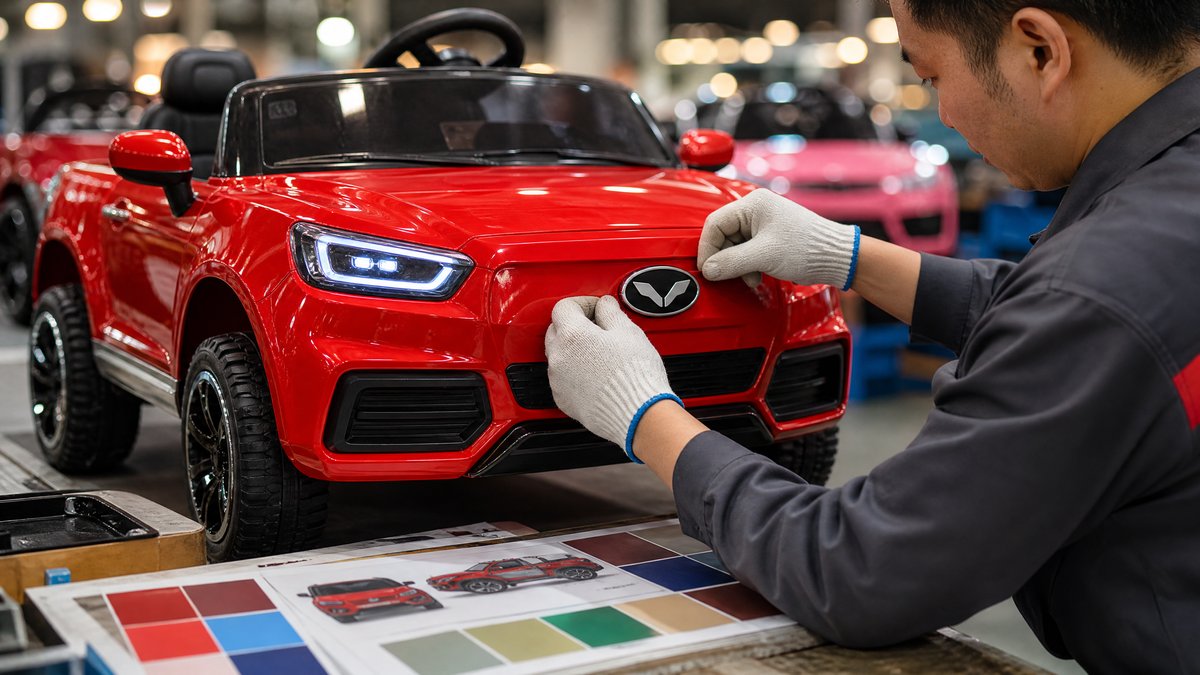
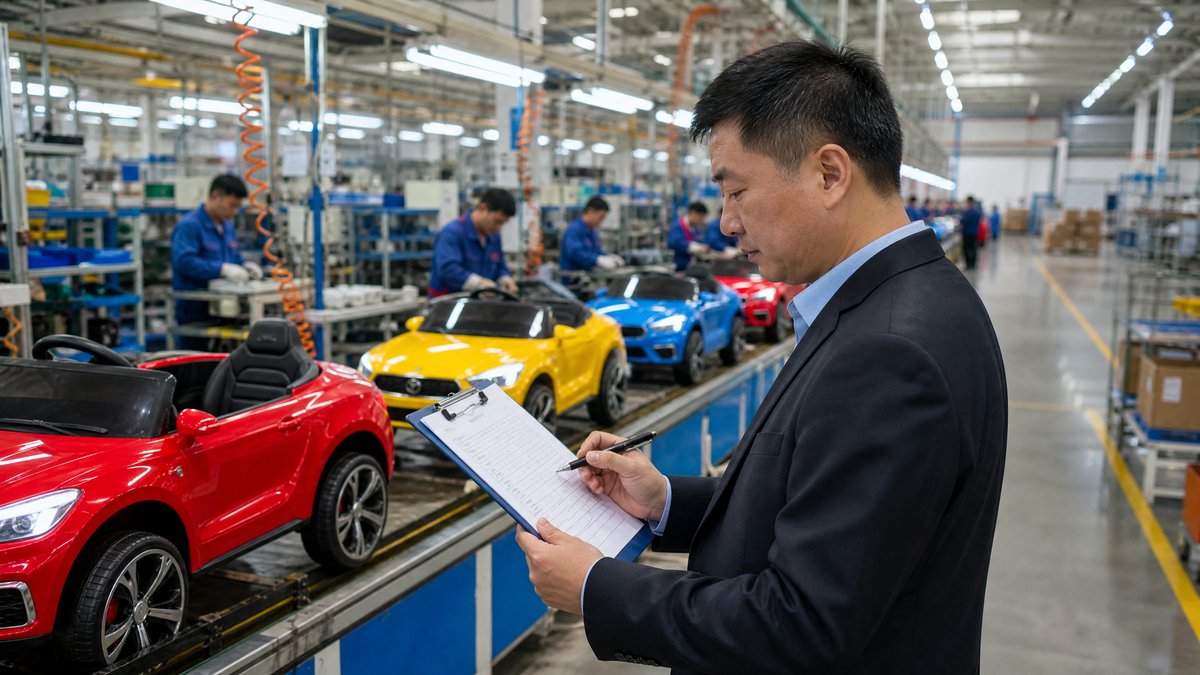
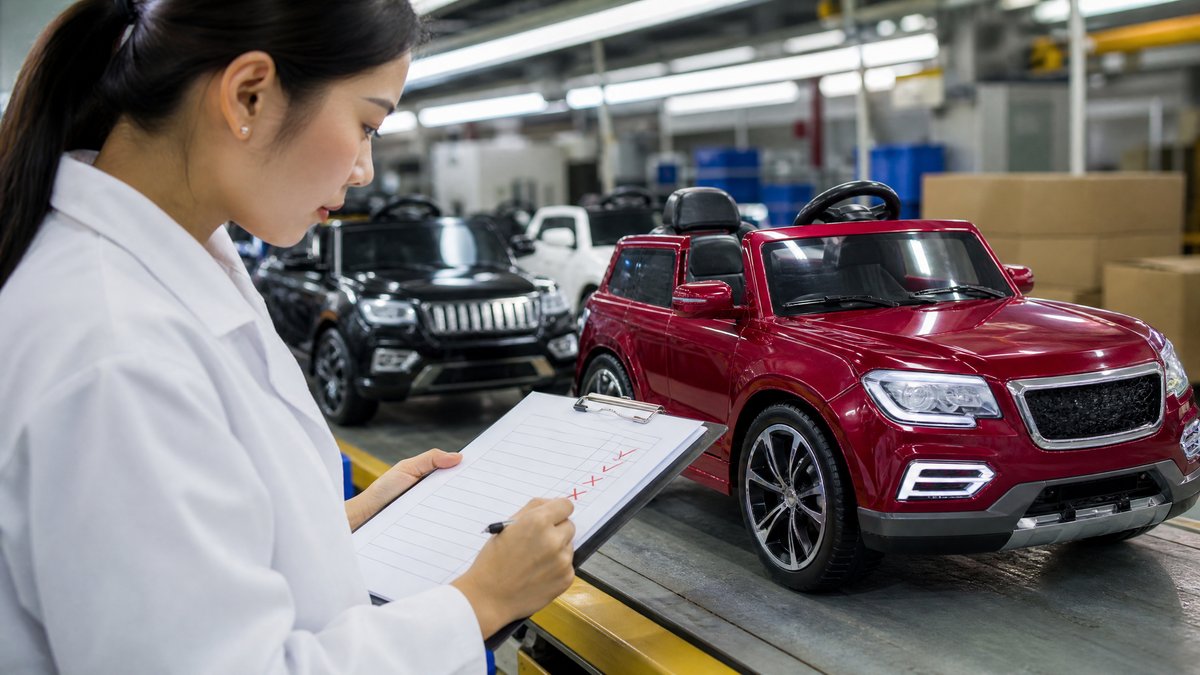
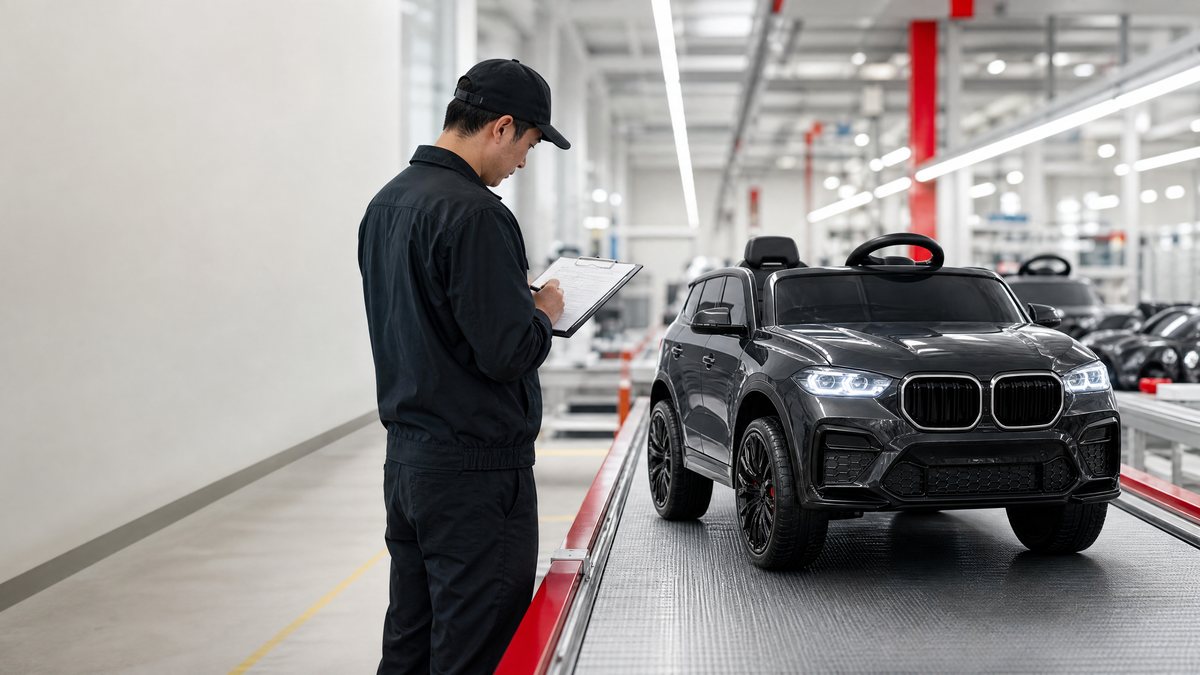
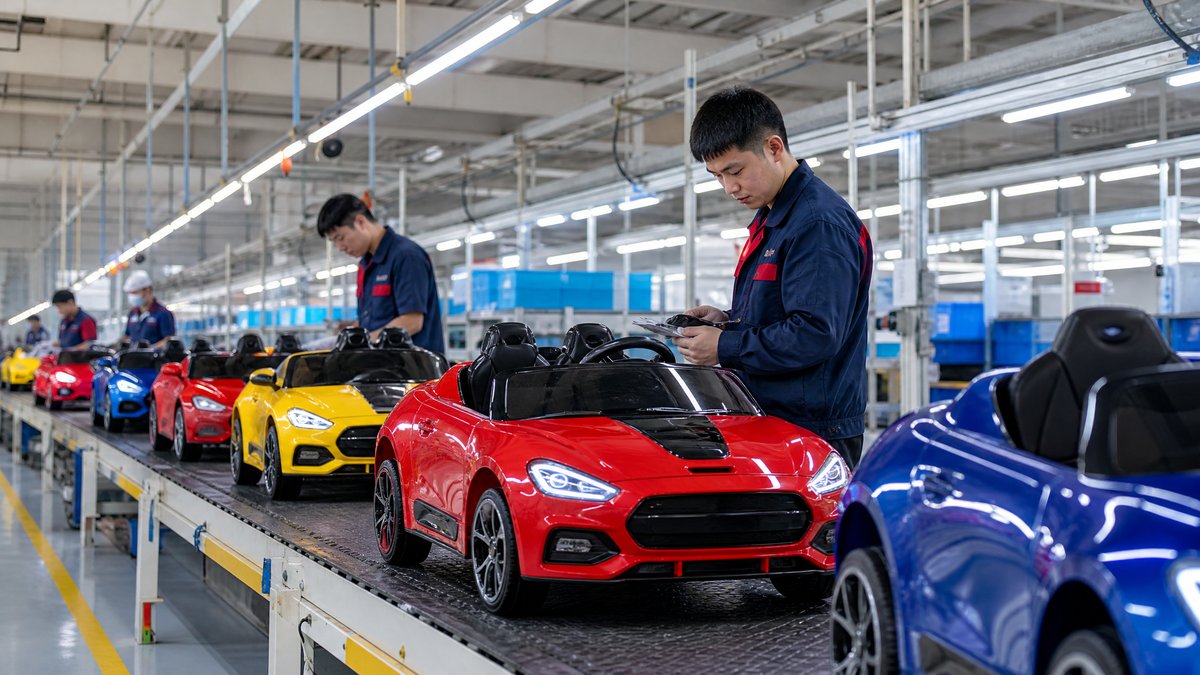
A great sample means little if mass production quality drifts. When visiting a Chinese factory or reviewing third-party audit reports (like Sedex or BSCI), examine their internal Quality Control (QC) protocols:
1. Incoming Material Inspection (IQC): Do they test raw plastic pellets for melt flow index and battery cells for voltage drop before assembly?
2. In-Process Quality Control (IPQC): Are there checkpoint testing stations along the assembly line verifying motor current draw, steering alignment, and remote pairing?
3. End-of-Line Aging & Burn-in Testing: Do finished cars undergo functional test tracks and electrical load testing before packaging? A 100% burn-in test rate distinguishes elite tier-1 manufacturers from basement assembly shops.
Frequently Asked Questions (FAQs)
1. How can I verify if a Chinese factory's CE or ASTM test reports are genuine?
Always request the complete, unedited test report PDF directly from the testing laboratory (e.g., SGS, TÜV Rheinland, Intertek) rather than accepting cropped images from the supplier. Check the report's QR code or contact the lab's customer verification portal with the report number and applicant company name.
2. What is the standard MOQ (Minimum Order Quantity) for customized kids ride-on cars?
Standard catalog models usually have an MOQ of 100 to 200 units per color. For fully customized OEM orders involving custom body molds, branded decals, specific battery capacities, or custom packaging, MOQs typically start at 500 to 1,000 units.
3. Are Lithium-ion batteries better than Lead-Acid batteries for ride-on cars?
Lithium-ion batteries are lighter, charge faster, and offer longer run times, making them ideal for high-end 24V drift cars. However, Sealed Lead-Acid (SLA) batteries remain popular for standard 12V models due to lower costs and easier international shipping compliance.
4. How do I protect my wholesale business against high defect rates during import?
Always hire an independent third-party inspection agency (such as QIMA or Asia Inspection) to perform a Pre-Shipment Inspection (PSI) based on AQL 2.5 sampling standards before releasing your final 70% balance payment to the factory.
Conclusion & Next Steps
Evaluating kids electric ride-on car quality in China requires diligence across regulatory compliance, mechanical engineering, electrical safety, and factory quality control systems. Partnering with a reliable, transparent manufacturer safeguards your brand reputation and minimizes costly after-sales headaches.
Ready to source premium, certified kids electric ride-on cars for your wholesale distribution network? Connect with our manufacturing experts today at mailto:info@kidsridecar.com to request our latest catalog, factory audit documentation, and sample evaluation kits.
Official references
Explore these external resources for current regulatory and trade guidance. Confirm requirements with the relevant authority before placing an order.
Ready to Start?
Factory-Direct · CE & ASTM Certified · MOQ from 50 Units
Our export team works with buyers in 60+ countries. Get a quote within 24 hours.
KR
Written by KidsRideCar
China's leading kids electric ride-on car manufacturer. 500,000+ units shipped annually to 60+ countries. CE, ASTM & EN71 certified.