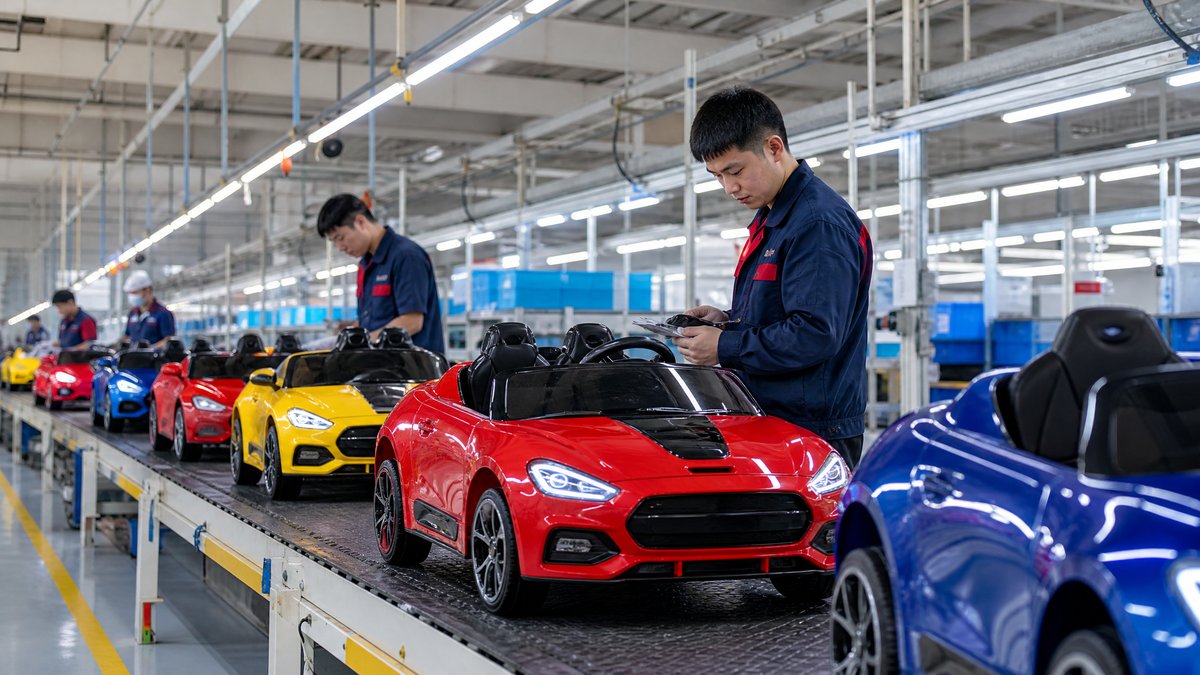
A kids ride-on car trade show lead qualification form should capture who the buyer is, where and how they sell, what product requirements matter, when they plan to buy, and who owns the next action. It should also collect only the contact data needed for that business purpose and make the intended follow-up clear. A well-designed form turns a short booth conversation into a usable buying brief, rather than a stack of business cards with no context.
For KidsRideCar, the practical goal is not to interrogate every visitor. It is to identify whether an importer, wholesaler, distributor, retailer, or OEM buyer has a credible opportunity, document the details that affect fit, and agree on a sensible next step. This makes post-show conversations faster, more relevant, and more respectful of the buyer’s time.
Start with the outcome: a decision-ready buyer record
The best form is designed backward from the decisions the sales and product teams must make after the show. Can the buyer be routed to the right account owner? Does the requested assortment fit their sales channel and destination market? What information must be confirmed before samples, specifications, commercial discussion, or logistics planning can move forward?
A useful record answers those questions in a few minutes. It does not attempt to replace due diligence, a product specification sheet, a contract, or a destination-market compliance review. Those steps come later and should be handled with the appropriate responsible parties.
Use a short digital form, a paper backup, or a scanned badge with structured notes. Keep required fields easy to complete and leave space for details such as a launch plan, an after-sales concern, or an additional decision-maker.
Set simple lead stages before the show opens
Agree on definitions before staff begin scanning badges. A common structure is:
- Priority opportunity: a buyer with a defined market or channel, relevant purchasing role, identifiable requirement, and a follow-up action or timeframe.
- Developing opportunity: a potentially relevant buyer who needs qualification, a catalogue review, or an internal introduction.
- Nurture contact: a legitimate industry contact with no current project or unclear fit.
- Not a sales lead: a visitor whose purpose is press, recruitment, supplier sourcing outside the category, or another non-buying activity.
These are working labels, not judgments. Record the chosen stage and a short reason, then let a manager review it after the show.
Capture a clear buyer profile
Capture enough business context to establish the contact’s role in the purchasing process.
Essential company and contact fields
Ask for the company name, website if voluntarily supplied, contact name, job title, business email, business phone when useful, and the country or region served. The representative should also select or note the buyer type: importer, wholesaler, distributor, retailer, e-commerce seller, chain store, marketplace operator, promotional buyer, or OEM/brand owner.
Record the role: final decision-maker, product buyer, sourcing, technical or quality, logistics, influencer, or researcher. This helps route information to the people who can evaluate it.
Offer an optional field for other stakeholders who should receive technical, commercial, or sample information.
For an OEM buyer, ask whether the project is for its own brand, a licensed program, a retail-exclusive range, or an existing-concept modification. This guides follow-up without collecting sensitive files at the booth.
Qualify legitimacy without overreaching
A trade-show form should not seek personal identification numbers, payment-card data, home addresses, passport information, bank details, or private family information. Those details are unnecessary for initial B2B qualification and create avoidable risk. Ask business-relevant questions only.
A buyer’s website, channels, category plan, and role can support later verification. Treat early answers as self-reported and verify material matters before making commitments.
Map the market and sales channel
The same ride-on car can need a different assortment, packaging approach, service plan, and sell-in story for a specialty retailer than for an online marketplace seller. Market and channel fields prevent generic follow-up.
Start with the destination market. Where several countries are planned, ask for the first launch market. This frames later discussions about labelling, documentation, language, import procedures, product expectations, and transport.
Then capture the sales channel: store retail, toy specialty, chain retail, own e-commerce, marketplace, distributor network, rental or event use, or mixed. Ask, “What does success look like in this channel?” Retailers may prioritize shelf appeal and replenishment; online sellers may need content, returns workflow, and spare-parts support; distributors may need dealer-ready materials.
Useful market questions include:
- Which customer age range or price positioning do you intend to address?
- Is the range seasonal, evergreen, promotional, or tied to a specific launch window?
- What comparable ride-on toys do you currently carry, if any?
- Which features matter most: appearance, seating, remote-control use where offered, sound or lighting, battery type, packaging, or serviceability?
- Do you need private-label presentation, a new colourway, packaging localization, or product-content support?
Do not assume a stated destination establishes every requirement. Ask about the intended market, then plan verification; obligations can change and responsibilities differ among the buyer, importer, manufacturer, and other parties.
Turn product interest into usable requirements
At a show, product interest may begin with “We like this model.” The qualification form should convert that impression into structured requirements without forcing premature technical promises.
Product, assortment, and configuration needs
Capture the model or product family, assortment breadth, colour or trim direction, target user age as stated by the buyer, and whether they seek ready-to-sell products, private label, or OEM development. Include a “must-have / nice-to-have” field.
For existing models, note whether the buyer wants photos, a catalogue, specifications, packing information, sample discussion, or technical follow-up. For OEM concepts, ask for the project objective, design ownership, anticipated development inputs, and the correct technical contact. Handle later drawings and confidential materials through the appropriate process.
Ask about quality and after-sales expectations early: spare-parts information, assembly instructions, retailer training content, warranty-process discussion, or service contacts. Capture the request; do not promise an outcome before review.
Safety and compliance questions need careful wording
Use prompts such as “What destination-market documentation or labelling information should we discuss?” and “Are there retailer or importer requirements to review?” Avoid a checkbox that claims universal certification or an unverified standard.
Because ride-on cars are intended for children, flag requests for age guidance, instructions, warning-label discussion, assembly support, or product-care information. Use model-neutral language: children should use ride-on products with adult supervision, follow supplied instructions and warnings, and use the product only as intended. Any repair, accessory, battery, electrical, or other modification should be reviewed and approved by the manufacturer first.
For battery-powered products, ask for the destination and planned transport mode but do not assume shipping eligibility. IATA notes that requirements can depend on configuration and battery characteristics.[2] Buyers should verify current destination-market and battery-transport requirements with responsible authorities or carriers before planning shipment.
Establish commercial fit and purchase timing
Seek context before treating a unit-price request as a complete opportunity. Capture the purchasing model: trial, seasonal order, replenishment, tender, retailer program, distributor launch, or OEM development. Ask for an approximate order range only if the visitor is comfortable sharing it; “undecided” is valid.
Record business timing: when the buyer needs information, internal review, possible samples, range decision, and the target selling season. Distinguish a deadline from a general ambition.
Add fields for barriers and conditions, such as target positioning, packaging needs, required documents, exclusivity interest, or internal approvals. This supports a relevant response.
Never use the form to promise price, minimum order quantity, production slot, delivery date, certification result, or territory rights. These need appropriate review; a qualified lead is not a binding commitment.
Make follow-up ownership unmistakable
Every completed form should name one internal owner and one specific next step. “Sales team to follow up” is not ownership.
Create fields for:
- Account owner: one named person responsible for initiating the follow-up.
- Supporting owner: product, OEM, logistics, technical, or regional colleague when required.
- Buyer-requested action: catalogue, model list, specifications, meeting, sample discussion, commercial review, or another defined request.
- Due date: based on what was agreed at the booth, not an arbitrary automation rule.
- Contact preference: email, phone, video call, or another preferred business method.
- Conversation note: what was promised, what must be verified, and what should not be assumed.
Review priority records promptly, check what may be shared, and send a tailored message that repeats the agreed next step and gives a named reply contact. If confirmation is needed, say so plainly.
For a consultation on buyer qualification, channel fit, or a ride-on car sourcing brief, email KidsRideCar. For a post-show product or OEM follow-up request, contact the team.
Build privacy-conscious data capture into the workflow
Privacy should shape which fields exist, how the form is shown, where records are stored, who can access them, and how long they remain active.
The European Commission explains that applicable organizations should collect only personal data necessary for a stated purpose and store it no longer than necessary.[1] This is useful trade-show discipline even where another framework applies: match collection to a clearly explained business need.
At capture, provide a short notice or link explaining the purpose, collecting company, follow-up use, and location of full privacy information. If marketing consent is needed for a communication or jurisdiction, do not bury it in a pre-selected box.
Distinguish a request for direct sales follow-up from interest in future marketing updates. A catalogue request does not automatically settle the handling of every future campaign. Route uncertainty to the appropriate privacy or legal team.
Practical controls for booth and CRM data
Limit access to staff who need the record. Do not leave paper forms unattended, badge exports on personal devices, or lead lists in informal messaging channels. Transfer paper records to the approved system and dispose of them securely under company policy.
The U.S. Federal Trade Commission similarly recommends keeping only needed data, limiting access, safeguarding it, and securely disposing of it when no longer needed.[3] Apply this to scanners, forms, inboxes, CRM imports, spreadsheets, and event platforms.
Set a retention or review point for unresponsive contacts. Keep notes accurate, offer a route to update preferences, and document handovers between teams. Follow company policy and obtain appropriate privacy advice for the markets involved.
FAQ
What are the minimum fields for a kids ride-on car trade show lead form?
Collect business identity and role, company, market, channel, product interest, rough timing, requested action, follow-up owner, and a record of the privacy notice or preference. A concise form completed consistently is best.
Should a wholesaler be asked for exact order quantities at the booth?
Ask for a range or purchasing model only if the conversation supports it. A wholesaler may still be building a range. The decision date, target season, and information needed next may qualify the opportunity better than a forced number.
How should OEM ride-on car inquiries be recorded?
Record the brand or program type, target market, project goal, customization level, stakeholder roles, and next discussion. Do not treat a show-floor conversation as a final specification or promise; handle detailed requirements and commercial terms in the proper follow-up process.
Can we scan every visitor badge and market to them later?
A badge scan is not a substitute for transparent, purpose-specific data handling. Tell visitors its purpose, distinguish requested follow-up from marketing preferences, collect only what is needed, and follow applicable company processes.
What battery information should the form capture?
Capture the product, destination, and expected transport mode if known. Do not make shipping or regulatory assurances. Verify current destination-market and battery-transport requirements with responsible authorities or carriers before proceeding.
Conclusion
A strong kids ride-on car trade show lead qualification form captures buyer profile, destination market, sales channel, product needs, timing, and a named owner for the next action. It gives privacy the same operational attention as product information: collect necessary business data, communicate purpose, protect records, and review retention.
When the form is short and used consistently, importers, wholesalers, distributors, retailers, and OEM buyers receive a more relevant response. KidsRideCar can move from booth interest to a properly scoped conversation without overpromising specifications, market access, transport outcomes, or delivery commitments.
References
[1]: https://commission.europa.eu/law/law-topic/data-protection/information-business-and-organisations/principles-gdpr_en "Principles of personal data processing under the GDPR"
[2]: https://www.iata.org/en/programs/cargo/dangerous-goods/lithium-batteries/ "Batteries"
[3]: https://www.ftc.gov/business-guidance/resources/protecting-personal-information-guide-business "Protecting Personal Information: A Guide for Business"
Official references
Explore these external resources for current regulatory and trade guidance. Confirm requirements with the relevant authority before placing an order.
Ready to Start?
Factory-Direct · CE & ASTM Certified · MOQ from 50 Units
Our export team works with buyers in 60+ countries. Get a quote within 24 hours.
KR
Written by KidsRideCar
China's leading kids electric ride-on car manufacturer. 500,000+ units shipped annually to 60+ countries. CE, ASTM & EN71 certified.