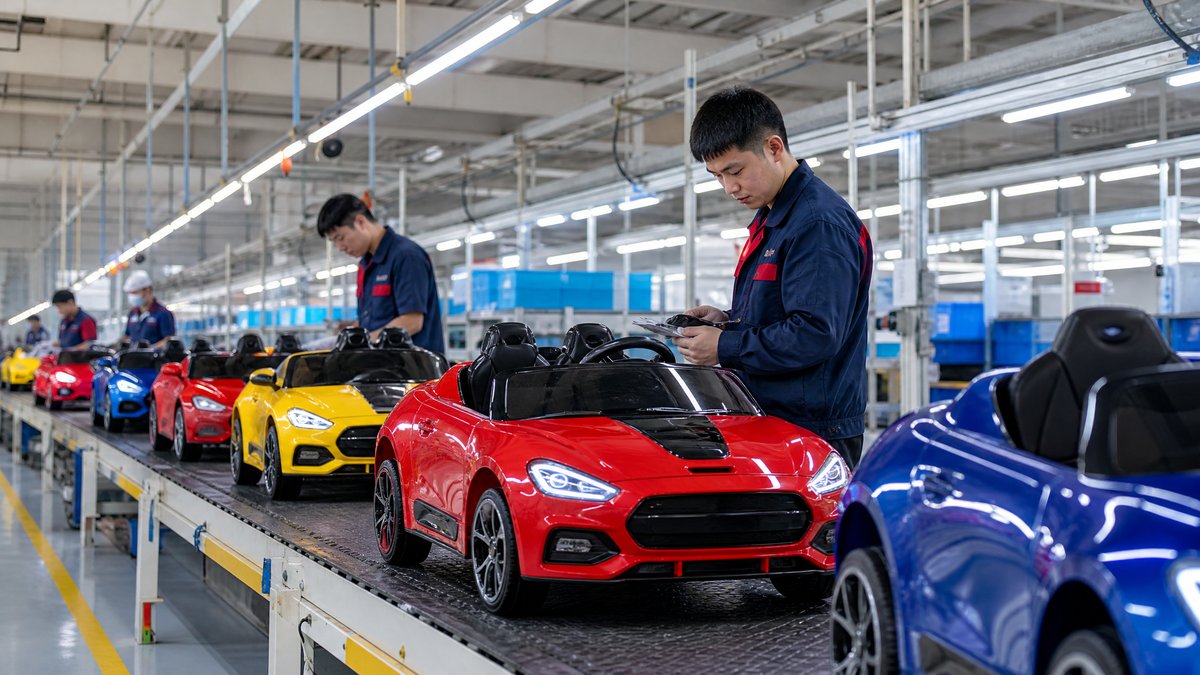
Buyers should confirm that assembly packaging protects every component, makes parts easy to identify, and provides a clear, model-matched route to assembly. Before approving an order, request the packing specification, carton artwork, component layout or packing list, hardware-kit details, manual draft, and a packaged sample or documented packing review. The key question is whether a retailer, warehouse team, or end user receives the approved configuration complete and usable.
For B2B procurement, assembly packaging affects product quality, customer experience, and claims handling. A missing fastener, unmarked wheel cap, mismatched manual, or inadequately protected part can create an avoidable return. Confirm the packaging system during sample approval and before mass production, rather than treating it as a final artwork task.
Define the Delivered Assembly State
Document exactly what “packed for assembly” means for the SKU. Wheels, seats, steering parts, mirrors, windscreens, canopies, or decorative pieces may be packed separately, while other items are factory-fitted. Do not rely on phrases such as “semi-assembled” or “easy assembly.” Ask the supplier to identify which components are installed before packing, detached in the master carton, grouped in a hardware kit, included only with selected variants, or optional accessories.
Match the list to the approved sample, purchase order, product data sheet, and retail listing. If a color, seat type, remote control, or wheel design changes by SKU, establish whether the internal packaging is appropriate for each version. This helps prevent a carton from combining similar-looking but incompatible components.
Agree on a pack-out map
Request a pack-out map: a drawing, photo series, or numbered list showing each part’s carton location. It should identify the main body, protective materials, accessory compartment, hardware bag, manual, charger where applicable, and loose cosmetic parts. This gives receiving, inspection, and after-sales teams a shared reference for shortage or transit-damage claims. Tie the document to the exact model and packaging revision, and require advance notice of changes to part locations, bags, dividers, or trays.
Confirm Protection for Product and Assembly Parts
Review how the supplier separates parts that can rub, bend, or shift during handling. Suitable protection may include molded supports, cardboard partitions, bags, wraps, sleeves, or other materials appropriate to the approved product and shipping route. Focus on painted, plated, or high-gloss surfaces; windscreens, mirrors, and light covers; wheels and steering components; seats; and loose items that could contact the body shell.
Ask what keeps the main body in position and whether every detached component has a defined space. Explain the anticipated route if cartons may be stacked, transshipped, or handled for e-commerce fulfillment. Packaging suited to one import leg may not automatically suit parcel fulfillment or repeated warehouse handling.
Make the Hardware Kit Easy to Check and Use
The hardware kit deserves close attention because its contents are small, similar-looking, and difficult for an end user to replace quickly. Require a clearly labeled, sealed kit with a parts list matching the assembly manual. The label should identify the model or compatible model family, packaging revision where used, and quantity of kits per carton.
Align the packing list, manual, and inspection requirement for every fastener, washer, cap, clip, and supplied tool. Avoid statements such as “screws included.” When different fasteners look alike, the manual should distinguish them clearly enough that a typical customer does not have to guess. If the supplier includes spare or contingency pieces, document that practice rather than presenting them as required parts. For batteries, chargers, and remote-control accessories, confirm inclusion, labels, protection, and model compatibility; retain manufacturer-approved electrical documentation and do not promote rewiring, bypasses, or unapproved disassembly.
Review the Manual as Part of the Packaging System
Assembly packaging and instructions must work together. A technically correct manual is less useful if it is buried beneath heavy parts, refers to another version, or omits items in the hardware bag. Before production, compare the current manual with the approved physical sample and pack-out map.
Confirm that it identifies the model and revision, supplied parts, assembly sequence, warnings, charging information where relevant, and customer-support route. Verify current destination-market requirements for translations, labeling, and safety wording; they vary by jurisdiction and channel. A retailer’s branded quick-start insert should be supplier-approved, must not conflict with required information, and must never suggest unapproved assembly or safety modification.
Specify Carton Information and Receiving Controls
Confirm the outer-carton shipping-mark format, SKU or item number, color or variant identifier, carton quantity, weight and dimension fields where applicable, destination marks, and barcode placement. Check that carton artwork does not promise features absent from the approved product or show an unapproved configuration.
At receiving, compare the carton label, purchase-order SKU, and internal pack list before releasing units into stock. Record carton damage, missing seals, component shortages, or mismatches between the manual and contents. Photos, carton identifiers, and affected-unit counts support a more useful supplier discussion than a general claim. For initial orders, include checks of carton version, manual, hardware kit, visible protection, and pack-out consistency in the agreed pre-shipment inspection plan.
Put Packaging Responsibilities in the Purchase Order
Reference the carton artwork revision, pack-out map, included assembly-items list, manual revision, labeling requirements, and approval date in the purchase order. State who approves a change and how it must be communicated before production. Define the evidence needed for missing-part or damage reports and the corrective-action route. This baseline helps prevent substitution of generic manuals or hardware bags.
> Need a packaging-spec review for an upcoming ride-on car program? Email KidsRideCar’s B2B team with your SKU, market, and fulfillment channel.
FAQ
Should buyers ask for a fully assembled sample?
A fully assembled sample helps evaluate the finished product, but it does not show that the shipping configuration is complete or straightforward to assemble. Request a packaged sample, pack-out photos, or a documented packing review as well. Confirm that the components, hardware kit, and manual match the approved model revision.
What must be in a ride-on car hardware kit?
Contents depend on the design. Require a specific list of all assembly hardware and supplied tools, tied to the manual and approved bill of materials. The kit should be sealed, identifiable, and protected from being lost among larger parts. Verify its contents against the current supplier specification rather than assuming models share identical hardware.
Can a retailer create its own assembly instructions?
A retailer may consider a supplementary quick-start guide, but it should be checked against the manufacturer’s approved manual and current destination-market requirements. It must not contradict warnings, omit required information, or recommend unapproved electrical changes, assembly, or safety modifications. Keep manufacturer instructions with the product unless the supplier and applicable requirements clearly allow otherwise.
How can buyers reduce missing-parts claims?
Use a controlled pack-out map, labeled hardware kit, revision-matched manual, and receiving procedure. In pre-shipment checks, verify the presence and location of included items against the approved specification. If an issue occurs, record the SKU, carton mark, packaging revision, photos, and exact missing item so the supplier can investigate the relevant production batch.
Are assembly packaging requirements the same for every market?
No. Product information, warnings, language, labeling, packaging-waste responsibilities, and sales-channel rules can differ by destination. Confirm current requirements for every market and seek appropriate professional or regulatory advice when needed. A supplier’s standard export carton can be a starting point, not automatic evidence of suitability.
Conclusion
Effective kids ride-on car assembly packaging creates a controlled handoff from factory to distributor, retailer, and end user: protected components, an identifiable hardware kit, a manual that matches the model, and carton data that supports receiving and claims handling. Approve these elements as one system and record the revision in the purchase order to detect issues before inventory reaches customers.
For a model-specific assembly-packaging checklist or quotation discussion, contact KidsRideCar at info@kidsridecar.com.
Official references
Explore these external resources for current regulatory and trade guidance. Confirm requirements with the relevant authority before placing an order.
Ready to Start?
Factory-Direct · CE & ASTM Certified · MOQ from 50 Units
Our export team works with buyers in 60+ countries. Get a quote within 24 hours.
KR
Written by KidsRideCar
China's leading kids electric ride-on car manufacturer. 500,000+ units shipped annually to 60+ countries. CE, ASTM & EN71 certified.