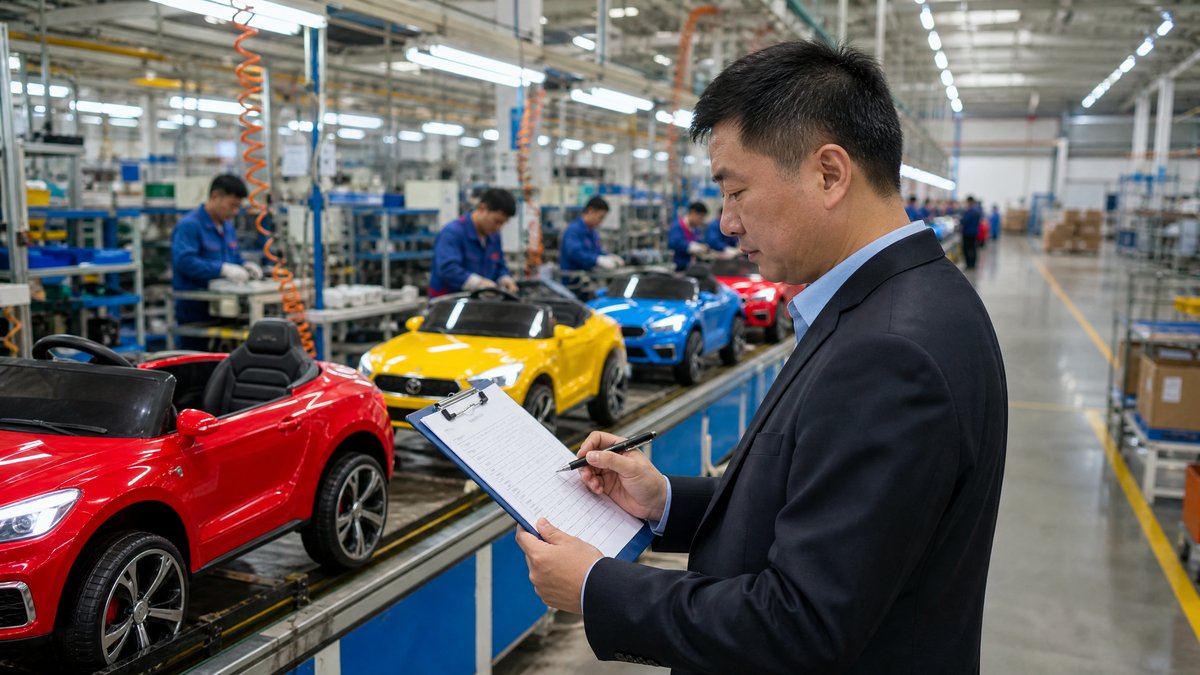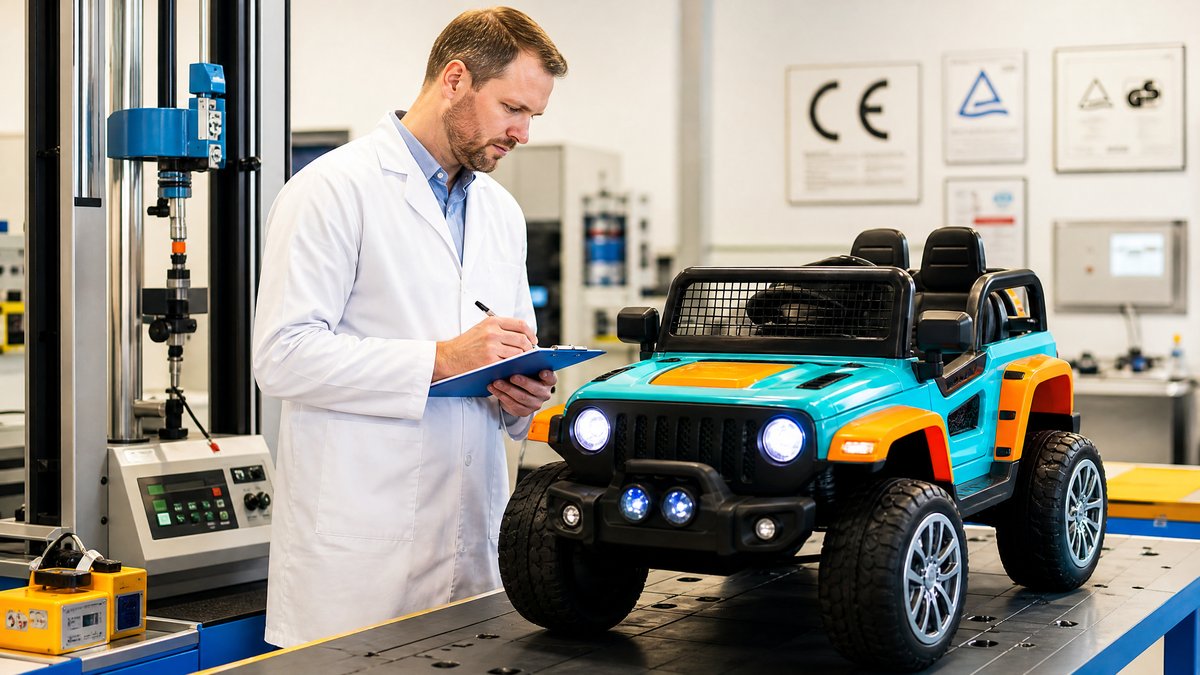
Safety certification is the single most consequential compliance decision a wholesale buyer of kids electric ride-on cars will make. Get it right, and your products clear customs, pass retailer audits, and build consumer trust. Get it wrong, and you face product recalls, customs seizures, retailer chargebacks, and — in the worst cases — personal liability for injuries.
This guide explains what each major certification actually covers, how to read and verify test reports, and what the practical compliance risks are for buyers in each major market. It is written for wholesale buyers and importers, not for laboratory technicians — the goal is to give you enough knowledge to ask the right questions and spot the red flags.
Why Certification Matters More Than Ever in 2026
Customs authorities in the EU, US, UK, and Australia have significantly increased enforcement of toy safety regulations over the past three years. The EU's General Product Safety Regulation (GPSR), which came into full effect in December 2024, introduced stricter traceability requirements and expanded market surveillance powers. In the US, CPSC enforcement actions against non-compliant ride-on toys increased by an estimated 35% between 2023 and 2025.
For wholesale buyers, this means that a supplier's claim of 'CE certified' is no longer sufficient due diligence. You need to verify the test report, confirm the laboratory's accreditation, and ensure the certification covers the specific model you are ordering — not a similar model from the same factory.
CE Marking and EN71: The European Standard
| Standard / Directive | Scope | Key Requirements |
|---|---|---|
| EN71-1 (Mechanical & Physical) | Physical hazards | No sharp edges, no small parts for under-3s, structural integrity |
| EN71-2 (Flammability) | Fire resistance | Fabric and foam components must meet burn rate limits |
| EN71-3 (Chemical Migration) | Toxic substances | Lead, cadmium, phthalates limits in surface coatings |
| EN62115 (Electric Toys) | Electrical safety | Motor insulation, battery protection, wiring standards |
| EMC Directive 2014/30/EU | Electromagnetic compatibility | Radio frequency emissions from motors and electronics |
A complete CE technical file for a kids electric ride-on car should include: a Declaration of Conformity signed by the manufacturer or EU-authorized representative, EN71 Parts 1–3 test reports from an accredited laboratory, EN62115 test report, a risk assessment document, and user instructions in the language of the destination country.
ASTM F963 and CPSIA: The US Standard
| Requirement | Standard | Key Scope |
|---|---|---|
| Toy Safety | ASTM F963-23 | Mechanical hazards, electrical safety, battery requirements |
| Lead in Paint | CPSIA Section 101 | Max 90 ppm lead in surface coatings |
| Total Lead Content | CPSIA Section 101 | Max 100 ppm in substrate materials |
| Phthalates | CPSIA Section 108 | Max 0.1% in accessible plastic components |
| Tracking Label | CPSIA Section 103 | Manufacturer, date, location must be on product and packaging |
"We had a buyer in Florida receive a CPSC inquiry because the tracking label on the product did not match the packaging. The product was fully compliant — but the documentation mismatch triggered a six-week investigation. Documentation consistency matters as much as the test results." — KidsRideCar Export Team
UKCA: The Post-Brexit UK Standard
Since January 2021, products sold in Great Britain require UKCA marking instead of CE marking. The technical requirements are substantially identical to CE/EN71, but the conformity assessment must be conducted by a UK Approved Body. Many manufacturers offer dual CE/UKCA certification, which is the most practical solution for buyers selling in both EU and UK markets.
All KidsRideCar models ship with full certification documentation. Tell us your target market and we'll confirm which certifications are included.
Check Certification Status →How to Verify a Certification is Genuine
- Request the full test report, not just the certificate. A genuine EN71 report is typically 40–80 pages with detailed results for each section.
- Verify the laboratory's accreditation through the ILAC MRA database at ilac.org. Search for the lab name and confirm it holds accreditation for the relevant test standards.
- Check the report date. If the factory has changed materials or components, a new test report is required.
- Confirm the model coverage. The test report must specifically identify the model you are ordering — a report for 'Model KR-S900' does not cover 'Model KR-S900-V2'.
- Verify the Declaration of Conformity is signed by an authorized representative and references the correct directives for your target market.
The Cost of Non-Compliance: Real-World Consequences
Non-compliance with toy safety standards carries significant financial and legal consequences. In the EU, products found to be non-compliant can be subject to immediate market withdrawal, with costs borne by the importer. In the US, CPSC can issue mandatory recalls with civil penalties of up to $15 million per violation series. Major retailers including Amazon, Walmart, and Decathlon require third-party test reports as a condition of listing.
Frequently Asked Questions
Does CE certification cover all EU countries?
Yes. CE marking is valid across all 27 EU member states plus Iceland, Liechtenstein, and Norway (EEA). Switzerland accepts CE-marked products under mutual recognition agreements for most product categories.
How long does it take to get EN71 certification for a new model?
Testing typically takes 15–25 business days at an accredited laboratory. Rush testing (7–10 days) is available at a 30–50% premium. Plan for 4–6 weeks from sample submission to complete documentation.
Can one test report cover multiple markets?
Partially. An EN71 test report from an ILAC MRA-accredited laboratory is generally accepted for EU, UK (with UKCA adaptation), and Australia/NZ. ASTM F963 requires separate testing. Some laboratories offer combined EN71/ASTM F963 test packages that reduce cost and time.
Who is legally responsible for compliance — the manufacturer or the importer?
In most jurisdictions, the importer bears primary legal responsibility for products they place on the market. Even if the manufacturer provided false certification documents, the importer may still face regulatory action. This is why independent verification of certification documents is essential, not optional.
Safety certification is not a bureaucratic hurdle — it is the foundation of a sustainable wholesale business. Buyers who invest in understanding the certification requirements for their target markets, who verify documentation rather than assuming it, and who work with manufacturers that maintain current test reports will build a business that can scale without compliance surprises.
Official references
Explore these external resources for current regulatory and trade guidance. Confirm requirements with the relevant authority before placing an order.
Ready to Start?
Factory-Direct · CE & ASTM Certified · MOQ from 50 Units
Our export team works with buyers in 60+ countries. Get a quote within 24 hours.
China's leading kids electric ride-on car manufacturer. 500,000+ units shipped annually to 60+ countries. CE, ASTM & EN71 certified.