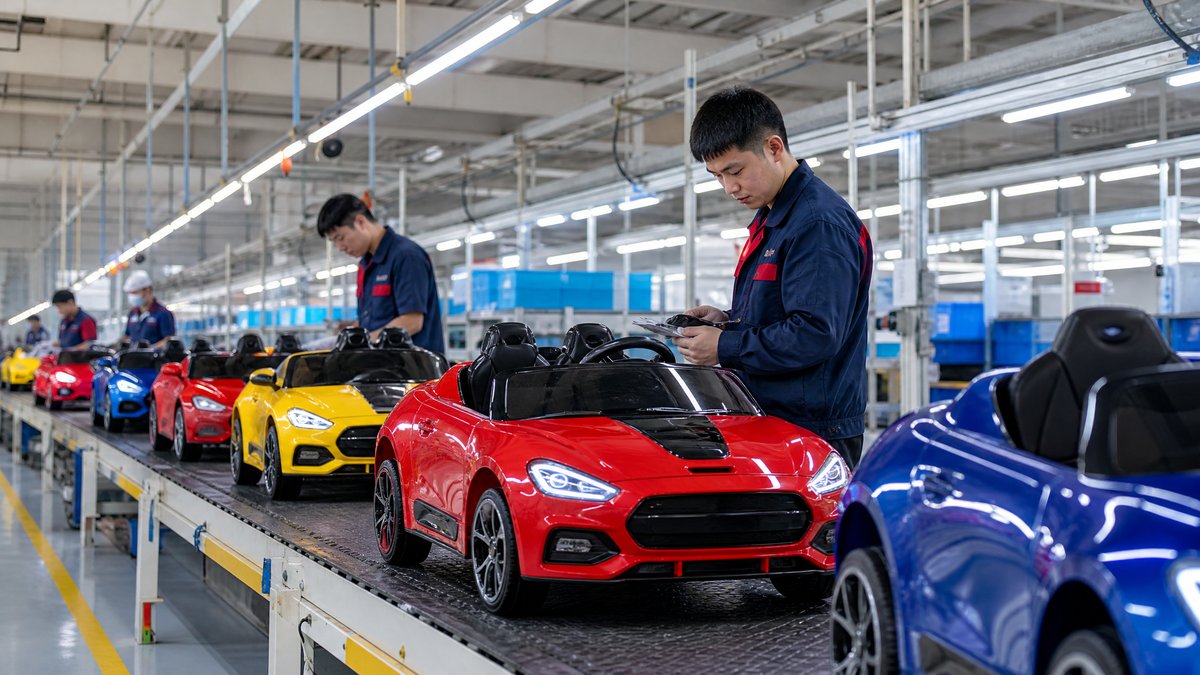
Product images often do the selling before a buyer reads a specification. For importers, wholesalers, distributors, retailers, and OEM buyers of kids ride-on cars, however, an attractive image is also a commercial representation of the product. If the photograph is unauthorized, shows a different model, or implies features that are not supplied, it can create takedowns, customer complaints, returns, marketplace disputes, and costly rework.
Before uploading images to a store, marketplace, catalog, dealer portal, or advertising campaign, treat every image as controlled product information. Confirm who owns or licenses it, what exact SKU it depicts, which features are visible, and whether claims are supported for the destination market. A disciplined review protects the importer’s brand and buyer expectations.
1. Confirm who owns the image and what use is permitted
Start with provenance. Ask the supplier whether the image was created by the factory, commissioned from a photographer, supplied by a brand owner, or copied from another website. Do not assume that receiving a photo in a quotation or messaging app gives your company unlimited rights to publish it.
Request written permission identifying permitted users, channels, territories, duration, and purposes. Clarify whether it covers your website, third-party marketplaces, social media, paid advertising, catalogs, dealer portals, and translations. If you will crop, retouch, overlay a logo, remove a background, or create a composite, confirm editing is allowed.
Keep the approval with the SKU and project records. A useful file should include the source contact, approval date, original filenames, permitted channels, and any restrictions. If the image includes a recognizable child, adult, photographer, property, trademark, or licensed vehicle brand, ask what separate releases or permissions apply. Image permission does not automatically settle rights relating to people, artwork, logos, or licensed designs.
For an OEM program, put ownership and usage terms into the quotation, purchase order, or OEM agreement. Specify whether the buyer receives final images, source files, and usage rights after a model refresh or supplier change. If rights cannot be documented, commission new photography or use approved assets.
2. Match every image to the exact model and configuration
A product listing should show the unit customers will receive, not a visually similar sample. Compare each image against the approved sample, product data sheet, purchase order, and current production configuration. Record the model code, color, seat count, voltage where relevant, battery type, drive layout, wheel design, dashboard, lighting, remote control, charger, and included accessories.
Pay attention to details that are easy to change between versions: grille shape, stickers, steering wheel, seat material, door hardware, tire pattern, connector location, and control panel. A supplier may use one lifestyle image for a product family even though the pictured car has optional equipment or belongs to an older revision. Ask for a model-specific image set when the differences affect buying decisions.
Create a simple image-to-SKU register. For each file, note the SKU, view, color, production revision, date approved, and responsible reviewer. Mark images that are “reference only” and keep them out of customer-facing listings unless the variation is clearly explained. For mixed-container orders, this step helps sales teams avoid attaching one model’s photographs to another model’s offer.
If a product changes after photography, pause publication until the image and specifications are reconciled. A sample approval process for models such as [KR-S900](/products/kr-s900), [KR-L700](/products/kr-l700), or [KR-T600](/products/kr-t600) should identify which photos are approved for which exact configuration. The model paths are useful internal references, but the listing still needs current supplier-confirmed data.
3. Check that visual claims agree with the written listing
Images can imply claims without using words. A car shown on grass may suggest outdoor suitability; a child wearing a belt may suggest that a belt is included; a lit dashboard may suggest lighting equipment; two children in a vehicle may suggest a two-seat configuration. Importers should review these implications just as carefully as headlines and bullet points.
Build a claim check for every image and caption. Verify age guidance, dimensions, maximum load, number of seats, speed modes, remote-control functions, battery and charger information, materials, tires, suspension, lights, sound, Bluetooth, and included accessories against controlled product documentation. Do not infer performance from a photograph. A close-up of a tread pattern does not prove traction, and a staged outdoor scene does not prove that operation is suitable on every surface or in every weather condition.
Separate standard equipment from optional equipment. If a photo includes a canopy, personalized decal, upgraded wheel, spare battery, floor mat, or retail display prop that is not included, label it prominently or replace the image. Use callouts, captions, or a “what’s included” image when needed. Avoid digitally adding accessories that are not part of the order.
Also check dimensions and scale. A perspective-heavy image can make a product look larger than it is. Include a dimension diagram or a clear specification table, and make sure the product title, image alt text, and variant selector use the same model naming. Listing accuracy reduces avoidable returns and gives distributors dependable material for their own channels.
4. Review trademarks, licensed designs, people, and background content
Inspect the full frame, not only the car. Logos on the vehicle, clothing, buildings, signage, packaging, music controls, and number plates may introduce separate intellectual-property or privacy questions. If a licensed automotive mark appears, verify that the relevant license permits the proposed territory, channel, product presentation, and marketing use. Do not describe a product as licensed merely because an image resembles a real vehicle.
For lifestyle photos, confirm permission for identifiable people and children and check whether the location or visible artwork requires approval. If the supplier cannot document releases, choose a product-only image or arrange compliant photography. Avoid competitor products, copied marketplace images, watermarked photographs, and files with an untraceable origin. Keep an untouched master and a publication version, using consistent filenames such as `model-color-front-revision-date`.
5. Verify market-specific compliance information before publishing
An image is not a substitute for a compliance file. Before listing, confirm which safety, labeling, documentation, battery-shipping, language, age-grading, and consumer-information requirements apply to the destination market and the exact model. Market compliance must be confirmed for the destination market and model; requirements can differ by jurisdiction, product configuration, battery chemistry, intended age, and sales channel.
Do not place certification marks, test symbols, registration references, or safety claims in an image unless the supplier has provided current, relevant documentation and you have confirmed that the mark may be used for that product and market. A factory logo or generic “CE” graphic is not proof of compliance. Likewise, avoid image text such as “safe,” “certified,” “all-weather,” or “non-toxic” unless your compliance and legal review support the precise wording.
Check that warnings and instructions shown in graphics match the destination language and the final packaging or manual. Coordinate with the person responsible for import compliance, marketplace policy, and product safety. Maintain a versioned compliance folder alongside the image register, and record the reviewer and approval date. Where uncertainty remains, hold the image for review rather than publishing an unsupported claim.
6. Build a repeatable approval and update workflow
Image verification works best as a gate before launch, not as a response to complaints. Assign owners for supplier approval, product-data checking, rights review, compliance review, channel formatting, and final publication. For each SKU, use a short checklist:
1. Source and permission are documented.
2. Image matches the exact approved model, color, and revision.
3. Visible features and accessories match the order.
4. Captions, alt text, variants, and specifications agree.
5. Trademarks, people, and background content are cleared or removed.
6. Destination-market claims and marks are reviewed.
7. Files are labeled, stored, and linked to an expiry or review date.
Apply the same gate to retailer and dealer packs. Give channel partners approved image URLs or a controlled download folder rather than allowing uncontrolled copying. When a model changes, issue a replacement notice, archive obsolete files, update the [inquiry](/inquiry) team’s reference material, and review the [blog](/blog) and product pages for stale images. Keep a change log so customer service can explain why a photo differs from a later production batch.
A pre-launch sample review should compare the physical sample, final carton, manual, and approved images. After the first shipment, ask receiving and quality teams to report meaningful visual differences. This closes the loop between content, purchasing, and production without unsafe modifications or unsupported claims.
FAQ: Ride-On Car Product Images for Importers
Can a supplier send me product photos for unlimited use?
Not automatically. Request written permission that states the users, territories, channels, duration, and permitted edits. Preserve that approval with the relevant SKU and confirm whether third-party brands, people, or artwork require separate clearance.
What if the supplier’s photo shows an accessory that is not in my order?
Do not publish it without a clear disclosure. Ask for a corrected image, label the accessory as optional, or use a product-only photograph. The listing’s images, variants, specifications, and “what’s included” information should tell the same story.
Can I use an image of a similar ride-on car when my model is unavailable?
Only as a clearly labeled reference, and preferably not in a purchase-focused listing. Similar models can differ in dimensions, seats, battery, controls, accessories, or compliance documentation. Obtain model-specific images before taking orders.
Should compliance marks be added to product images?
Only after confirming the mark, documentation, product scope, destination market, and channel rules. Market compliance must be confirmed for the destination market and model. A decorative symbol or generic claim can mislead buyers and create marketplace or regulatory problems.
How often should online product images be reviewed?
Review them whenever the model, color, accessories, packaging, branding, specification, supplier, or destination market changes. A scheduled review before seasonal campaigns and after each approved production revision also helps remove obsolete assets.
Conclusion
For B2B ride-on car listings, image verification is a combined rights, product-data, brand, and market-compliance exercise. Importers should document permission, match every image to the exact SKU, reconcile visual and written claims, clear trademarks and people, and approve destination-specific content before publication. A controlled image register and change workflow make it easier for wholesalers, distributors, retailers, and OEM teams to keep every sales channel accurate.
For model-specific product images, OEM content approval, and wholesale sourcing support, contact KidsRideCar at info@kidsridecar.com.
Official references
Explore these external resources for current regulatory and trade guidance. Confirm requirements with the relevant authority before placing an order.
Ready to Start?
Factory-Direct · CE & ASTM Certified · MOQ from 50 Units
Our export team works with buyers in 60+ countries. Get a quote within 24 hours.
KR
Written by KidsRideCar
China's leading kids electric ride-on car manufacturer. 500,000+ units shipped annually to 60+ countries. CE, ASTM & EN71 certified.