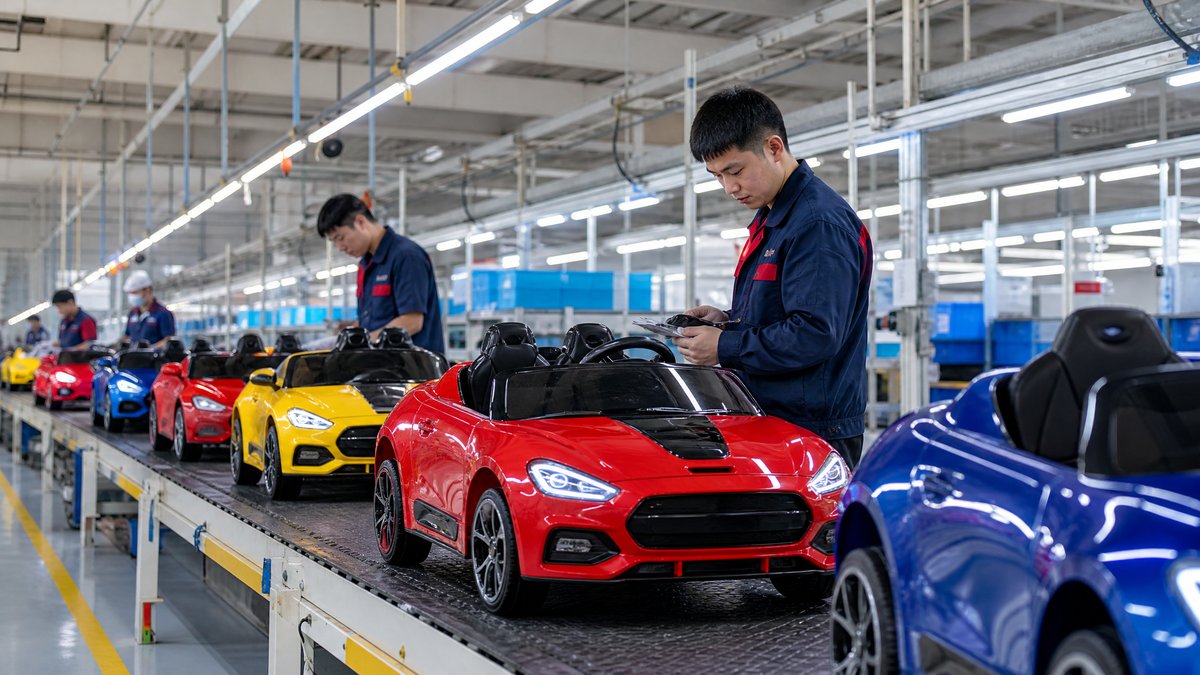
In the global juvenile mobility market, selecting four-wheel ride-on vehicles has evolved into a sophisticated process focusing on safety-oriented features and robust supervision tools. For professional importers and retail entities, this selection is no longer just about aesthetics or cost. It is a rigorous evaluation of tools that allow adults to maintain a controlled environment for young operators. Advanced wireless systems, tiered velocity settings, and adult intervention features are now foundational for any business seeking a reputable global presence.
To answer the inquiry directly, the selection of parental intervention tools, velocity modes, and supervision features must be based on a thorough analysis of the developmental stage of the intended user, the reliability of the wireless communication protocol, and the specific requirements of the destination market. It is vital for all professional buyers to recognize that these electronic features are intended to supplement, rather than replace, active adult involvement. All stakeholders must verify the written model documentation, current supplier evidence, and appropriate product markings before finalizing any procurement. No electronic system can substitute for the necessity of constant adult presence and strict adherence to the manufacturer-approved support guidelines provided in the official documentation.
The Strategic Role of Supervision Features in Professional Distribution
High-quality supervision features are directly linked to risk mitigation and brand integrity. In major markets, lacking reliable control mechanisms can lead to challenges like product recalls and eroded consumer trust. Sourcing vehicles with sophisticated electronic control units and stable wireless communication is a strategic imperative. Importers must evaluate how these features contribute to a safety ecosystem. A well-implemented control system minimizes unintended momentum and prevents unauthorized use, allowing retailers to offer products with confidence. By prioritizing these elements, buyers distinguish their lines through safety-first principles demanded by modern consumers.
Advanced Wireless Control Systems for Adult Intervention
The parental control unit is a vital link for immediate intervention. Technical quality varies, so buyers must ensure products are resilient to disruptions. Historically, analog frequencies were prone to interference from household electronics and routers, leading to unpredictable behavior in public settings. Modern premium products use digital wireless frequencies with unique synchronization, ensuring each unit is linked exclusively to one vehicle and removing cross-device interference. These protocols enhance stability by navigating frequency bands, maintaining connections even in high-density areas and providing an ample range for outdoor use.
Priority Logic for Adult Intervention
A critical requirement for any parental control system is the priority logic that ensures adult inputs always take precedence over the manual inputs of the child. For importers targeting products for younger children, this feature is essential. If a child directs the vehicle toward a potential hazard, the adult must be able to immediately correct the direction or pause the motion regardless of the child's actions at the foot pedal or steering wheel. Professional buyers should seek written supplier confirmation that the control firmware is designed with this hierarchical structure to ensure maximum oversight.
Managing Travel Velocity and Acceleration Profiles
Effective motion management is another cornerstone of adult supervision, allowing the vehicle's performance to be tailored to the child's skill level and the surrounding environment.
Smooth Acceleration Technology
A common issue in lower-quality vehicles is abrupt or jerky acceleration. When a child engages the power, the motors may receive a sudden surge of energy, causing the vehicle to lurch forward. This can be unsettling for younger children and may lead to a loss of balance. Professional sourcing should prioritize vehicles equipped with smooth acceleration technology.
This is achieved through sophisticated electronic control units that gradually increase the power delivered to the motors over a period of several seconds. This results in a linear and predictable increase in momentum. Beyond the immediate benefit to the user, this technology also reduces mechanical stress on the internal components, potentially lowering the frequency of support requests for distributors.
Tiered Velocity Settings and Adult-Controlled Locking
A versatile product line for professional distribution should offer multiple distinct velocity settings to accommodate various developmental stages. A lower setting is ideal for indoor environments or for children who are just beginning to learn the basics of maneuvering. A moderate setting is suitable for outdoor paths, matching a comfortable walking pace for the supervising adult. Finally, a higher setting should be reserved for more experienced children operating the vehicle in unobstructed, controlled areas.
Crucially, these velocity modes should be managed through an adult-controlled locking mechanism. In high-quality models, the ability to switch between these modes is restricted to the parental control unit or a hidden toggle that requires a specific tool to access. This prevents a child from inadvertently engaging a higher velocity than they are capable of handling safely.
Supervision Features and Physical Safeguards
While electronic systems are vital, they must be complemented by physical design elements that provide a comprehensive safety net.
The Immediate Pause Function
The pause button on the parental control unit is perhaps the most important tool for active supervision. When activated, it should not only stop the vehicle's motion but also engage the electronic braking system, ensuring the vehicle remains stationary even if the child continues to press the foot pedal. This is indispensable for situations where the supervisor needs to momentarily focus on another task, providing peace of mind that the vehicle will not move unexpectedly.
Ergonomic Design for Manual Guidance
For products intended for the youngest users, some vehicles incorporate physical handles integrated into the frame. These handles allow an adult to manually guide the vehicle or provide steering assistance without relying solely on the electronic controls. Additionally, some models feature integrated wheels and handles that allow for easy manual transport when the power source is depleted, adding significant practical value for the end consumer and reducing the physical effort required for transport.
Business Selection Framework: Qualitative Feature Alignment
The following framework helps professional buyers align feature sets with specific market segments and developmental needs without relying on specific numerical limits.
| Market Segment | Target User Group | Essential Supervision Features | Technical Profile |
|---|---|---|---|
| General Retail | Early Elementary Ages | Digital Wireless Control, Basic Safety Belt, Single Velocity | Standard Power, Digital Sync |
| Specialty Distribution | Preschool Ages | Smooth Acceleration, Dual Velocity, Multi-Point Harness | Enhanced Power, Advanced Control Unit |
| Premium Selection | Advanced Young Users | Triple Velocity, Enhanced Harness, Immediate Pause | High-Torque Motors, Extended Range Control |
| Toddler Focus | Very Young Children | Full Priority Logic, Manual Assist Handle | Gentle Power, High-Back Support, Smooth Start |
Meeting Regulatory Requirements and Documentation for International Markets
Sourcing vehicles with advanced electronic controls requires diligent oversight regarding international requirements. Importers must ensure that all supervision features are supported by current supplier evidence and written documentation from reputable laboratories.
For the North American market, adherence to the applicable destination-market requirements is mandatory, covering mechanical aspects and the integrity of the wireless control systems. In the European market, similar standards are essential, particularly those concerning mechanical properties and the safety of electronic components. Furthermore, because the control unit functions as a wireless transmitter, it must possess the appropriate markings to ensure smooth passage through international customs.
Professional buyers should request visual evidence of the internal assembly and component organization. Modular connectors and proper insulation are indicators of high-quality manufacturing. Conversely, disorganized or poorly secured internal components are a clear sign of potential issues and should be avoided.
Risk Management and Operational Boundaries
To maintain the integrity of the product and manage professional responsibilities, distributors must establish clear boundaries regarding maintenance and support.
Professional Support vs. User Actions
Importers should clearly communicate to their retail partners that most aspects of the vehicle are not intended for user-led maintenance. User actions should be strictly limited to external cleaning, replenishing the power source in accordance with the manual using the provided equipment, and replacing the batteries in the control unit. Supervisors should also perform regular external visual checks to ensure the control unit is pairing correctly and that the pause function remains operational.
Prohibited Internal Work and Modifications
Under no circumstances should distributors or consumers be encouraged to perform internal mechanical or electronic work. This includes any attempt to access the motor or energy storage areas, altering internal components, or attempting to circumvent velocity limiters. Furthermore, users must never attempt to perform a non-professional assessment of the steering or braking systems, as these are critical to the vehicle's safety.
If a control unit fails to pair, or if the velocity modes do not function as intended, the vehicle must be removed from use immediately. All concerns should be addressed by contacting manufacturer-approved support or a qualified professional. Attempting to circumvent safety controls or perform internal work poses a severe risk and voids all existing documentation and support agreements.
Sourcing Checklist for Professional Importers
When evaluating new suppliers for ride-on vehicles with advanced supervision features, consider the following non-numeric criteria:
* Wireless Protocol Stability: Does the supplier provide evidence of a digital, interference-resistant wireless frequency?
* Priority Logic Confirmation: Is there written confirmation that adult inputs override all manual controls by the child?
* Acceleration Quality: Does the vehicle feature technology to ensure a smooth, gradual increase in momentum?
* Adult-Locked Velocity Modes: Are the different travel rates secured against unauthorized changes by the child?
* Immediate Pause Functionality: Does the control unit feature a dedicated button to instantly halt all motion and lock the brakes?
* Documentation Completeness: Are all safety features backed by current supplier evidence and appropriate markings for the target market?
* Physical Guidance Aids: For younger age groups, are there ergonomic handles for manual adult assistance?
* Internal Assembly Quality: Does the internal component organization meet professional standards for insulation and security?
Frequently Asked Questions
Q: Can a single digital control unit be used to manage multiple vehicles at the same time?
A: In most standard configurations, the answer is no. A primary safety feature of modern digital wireless technology is the unique pairing process that links one control unit to one specific vehicle. This is designed to prevent unintended interference and ensure that the adult has exclusive control over the intended vehicle. For businesses requiring a solution for managing a fleet of vehicles simultaneously, it is recommended to seek specialized professional equipment rather than attempting to use standard consumer-grade units.
Q: Does the smooth acceleration feature reduce the vehicle's ability to navigate inclines?
A: The smooth acceleration technology is designed to manage the initial transition from a stationary state to motion, preventing sudden jerks that could startle a child. It does not limit the overall power available to the vehicle once it is in motion. When navigating an incline, the vehicle will still utilize its full intended energy profile to maintain the selected velocity. Professional buyers should ensure that the written model documentation clearly explains this to help manage consumer expectations regarding performance on various terrains.
Q: What is the recommended course of action if the control unit loses its connection to the vehicle during use?
A: If the wireless signal is interrupted, high-quality vehicles are designed to automatically transition to a stationary state as a safety measure. The first step for the supervisor should be to check the batteries within the control unit and ensure they are properly installed. If the connection is not immediately restored, the supervisor should follow the pairing instructions provided in the manufacturer-approved manual. If the issue persists, the vehicle should be removed from service and referred to qualified support for a professional assessment. Users should never attempt to perform an internal inspection of the electronic compartments.
In conclusion, the selection of appropriate parental intervention tools, velocity modes, and supervision features is a vital responsibility for professional importers and distributors. By focusing on digital wireless stability, smooth acceleration technology, and rigorous adherence to destination-market requirements, businesses can provide products that offer both an engaging experience for children and peace of mind for their parents. A commitment to safety, supported by clear documentation and professional-grade components, is the key to success in the competitive market for juvenile electric mobility.
Request a wholesale quote
Official references
Explore these external resources for current regulatory and trade guidance. Confirm requirements with the relevant authority before placing an order.
Ready to Start?
Factory-Direct · CE & ASTM Certified · MOQ from 50 Units
Our export team works with buyers in 60+ countries. Get a quote within 24 hours.
KR
Written by KidsRideCar
China's leading kids electric ride-on car manufacturer. 500,000+ units shipped annually to 60+ countries. CE, ASTM & EN71 certified.