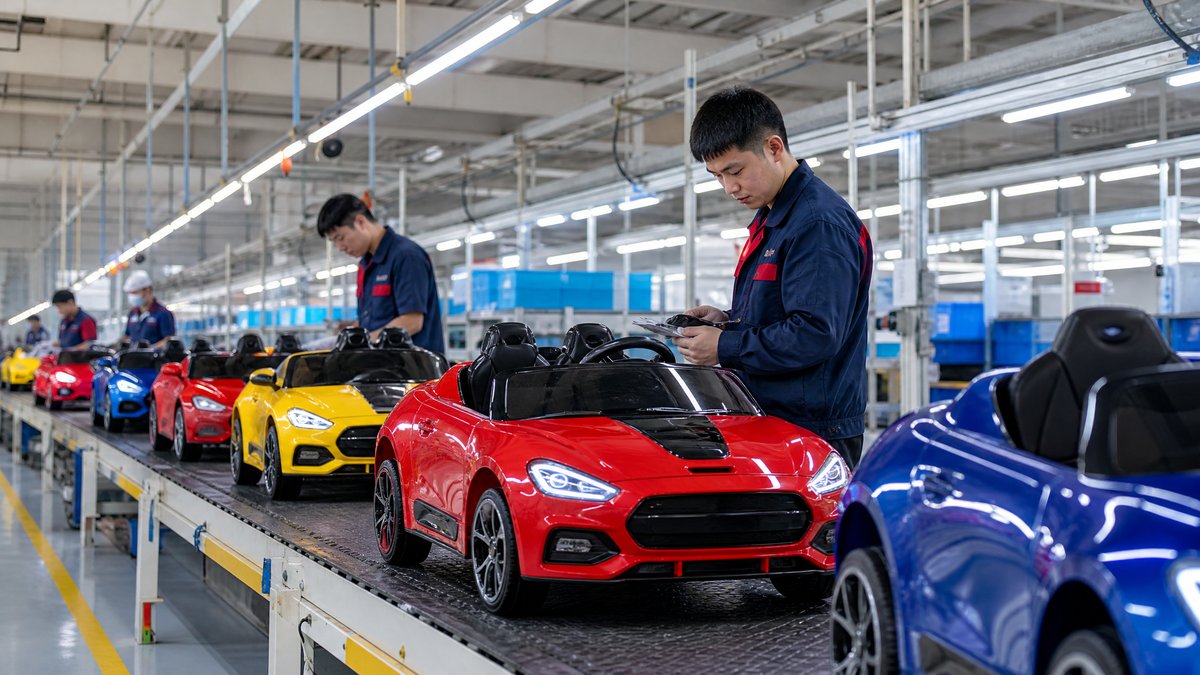
For professional importers and global distributors, the process of sourcing children’s four-wheel ride-on vehicles in large quantities involves significant investment and a high degree of responsibility toward brand reputation. While the initial focus often rests on the unit cost, the actual value of a procurement cycle is determined by the long-term reliability and safety of the final product. In the competitive international market for children’s recreational goods, maintaining high standards is the most effective strategy for risk mitigation. Before authorizing a full production run, professional buyers must ensure that a comprehensive series of quality assessments has been successfully finished.
To address the primary inquiry, the essential checks for bulk sourcing include a multi-layered verification of supplier legitimacy, thorough review of regional documentation, physical assessments, and rigorous inspections before the goods depart the factory. However, it is vital to emphasize that these assessments must be conducted in alignment with the specific model’s current written model documentation and the latest supplier evidence relevant to your intended market. Importers should always consult with qualified support and legal professionals to ensure their activities align with the applicable destination-market requirements of their specific region.
The Strategic Importance of Quality Assurance in Bulk Procurement
In the professional sector, quality assurance serves as the primary defense against the significant costs associated with product recalls, market rejections, and potential claims. When sourcing hundreds or even thousands of units, a single systemic issue—such as a structural weakness in the frame or a failure in the power distribution system—can lead to the loss of an entire shipment’s value. This is further complicated by the logistical expenses of returning goods and the potential damage to relationships with retail partners.
A professional quality framework for children’s ride-on vehicles is proactive in nature. It shifts the focus from identifying errors after they occur to preventing failures before they begin by establishing clear expectations with the manufacturer at the start of the relationship. This involves defining a golden sample, establishing acceptable quality thresholds, and ensuring the manufacturer’s internal processes are robust enough to maintain consistency across a high-volume production cycle. For importers, the goal is to create a transparent supply chain where every technical claim is supported by verifiable written supplier confirmation.
Phase One: Supplier and Facility Verification
Before a single unit is produced, the importer must verify the capability and reliability of the manufacturing facility. A thorough factory audit is the most effective tool for determining whether a supplier can meet the rigorous demands of a large-scale order. This phase focuses on the infrastructure, management, and internal controls of the production site.
A reputable manufacturer should operate under a recognized quality management system. This indicates the factory has documented processes for material sourcing, production monitoring, and final product evaluation. During an audit, importers should look for evidence of incoming quality control, where the factory evaluates raw materials like plastics and electronic components before they enter the assembly line. Furthermore, in-process quality control is essential, involving checkpoints along the assembly line where sub-assemblies are evaluated for correct integration.
Professional buyers should also request a detailed technical dossier for the specific models they intend to source. This dossier should include exploded view diagrams, circuit layouts, a list of materials, and a history of internal evaluations. Reviewing this documentation allows the importer to verify that the manufacturer understands the technical complexity of the product and has a plan for maintaining consistency. If a manufacturer is unable to provide detailed documentation, it may indicate a lack of control over their sub-suppliers, which represents a significant risk factor for the importer.
Phase Two: Regulatory Adherence and Market-Specific Requirements
Adherence to regional standards is a fundamental requirement for the international toy market. Every destination market has unique requirements that must be met to ensure the product can be imported and sold without interruption. While specific names of standards vary, the underlying principle remains the same: the product must be evaluated against the safety and quality expectations of the region where it will be used.
For the majority of professional importers, certain safety benchmarks represent the baseline for quality. These benchmarks cover a wide range of factors, including mechanical hazards, flammability, and the presence of certain chemical substances. Importers must ensure that their products have undergone professional evaluation by recognized third-party laboratories. This evaluation should result in written supplier confirmation that the product meets the applicable destination-market requirements.
Importers targeting regions outside of the major established markets must be aware of local requirements, which may differ significantly. Some regions require specific markings on the product or packaging, while others may require a factory audit by a locally recognized body. In some cases, a specific type of written model documentation must be provided in the local language to ensure that both retailers and consumers have access to necessary safety information. Always verify the current status of all safety documentation before authorizing a shipment.
Phase Three: Physical and Visual Assessment Protocols
Physical evaluation is where the theoretical safety of a design is confirmed through practical assessment. These checks should be performed on production samples and verified throughout the manufacturing process. The focus here is on the structural integrity and the overall build quality of the vehicle.
Children’s four-wheel ride-on vehicles must be designed to withstand regular use while maintaining their balance. A critical assessment is the incline evaluation, where the vehicle is placed on a sloped surface in various orientations to ensure it remains stable. This is particularly important for models with a higher profile, as they may have a different center of gravity. Additionally, the vehicle should be assessed for its ability to support the intended weight threshold through a non-destructive assessment of the frame and wheels.
The power system is a complex part of the vehicle and requires careful observation. While internal components should only be handled by qualified support, importers can perform an external visual check to ensure that all accessible parts are properly secured. For example, any visible power connection points should be covered and protected from the elements. The internal electrical connections should be neatly organized and kept away from any moving parts of the propulsion mechanism. Importers should request written supplier confirmation that the power system has been designed with these safety features in mind.
Phase Four: Logistics and Packaging Integrity
In the world of bulk sourcing, the quality of the packaging is just as important as the product itself. A ride-on vehicle that arrives damaged due to poor packaging represents a direct loss for the importer and the retailer. Therefore, the packaging must be designed to withstand the rigors of international shipping, including multiple handlings and long periods of transit.
The shipping carton should be made of high-strength corrugated material that can resist crushing when stacked in a container. Inside the carton, the vehicle should be secured with protective inserts that prevent it from moving during transit. A common method for evaluating packaging is the carton drop assessment, which involves dropping a fully packed carton from a specific height onto its various faces and edges. If the vehicle inside remains undamaged, the packaging is considered suitable for bulk shipment.
Business-to-Business Sourcing and Quality Framework
The following framework provides a structured approach for importers to manage the quality of their bulk orders.
| Assessment Category | Focus Area | Importer Action Item |
|---|---|---|
| Documentation | Written Supplier Evidence | Verify that all regional safety documents are current and relevant to the destination market. |
| Facility Audit | Management Systems | Review the manufacturer’s internal quality control processes and material sourcing history. |
| Physical Build | Structural Integrity | Conduct a non-destructive assessment of the frame and wheels for durability. |
| Stability | Incline Evaluation | Perform a visual check of the vehicle’s balance on a sloped surface in multiple orientations. |
| Power System | Internal Connections | Confirm that all accessible electrical points are secured and protected as per the manual. |
| Functionality | Parental Control Priority | Verify that the adult-led control system can immediately halt the vehicle’s movement. |
| Packaging | Transit Readiness | Execute a carton drop evaluation to ensure the vehicle is protected during international transit. |
| Labeling | Product Markings | Ensure all required tracking information and safety warnings are clearly visible and permanent. |
Frequently Asked Questions
Q: How can a professional importer verify the authenticity of a supplier’s safety documentation?
A: Authenticity can be confirmed by contacting the issuing laboratory directly through their official communication channels. Most reputable laboratories provide a way to verify report numbers and the scope of the evaluation. It is also essential to ensure that the documentation specifically references the models and technical specifications included in your procurement order.
Q: What is the recommended approach for managing defective units identified during a pre-shipment inspection?
A: If any issues are identified, the importer should provide a detailed report to the manufacturer and request that the units be addressed in a controlled factory environment. Importers and their staff should never attempt to perform internal mechanical or electrical work. All restorations should be handled by the manufacturer’s authorized team or through qualified support.
Q: Why is the incline evaluation considered a critical safety check for ride-on vehicles?
A: The incline evaluation ensures that the vehicle maintains its balance and does not tip over when used on uneven surfaces. This is a vital part of the overall stability assessment, especially for larger models that may be used in various outdoor environments. A stable vehicle provides a safer experience for the child and reduces the risk of accidents related to structural imbalance.
Q: How should an importer handle power system concerns discovered after the shipment has arrived?
A: If there is any concern regarding the power system or internal connections after delivery, the importer should immediately stop use of the affected units. The next step is to contact the manufacturer for guidance or seek assistance from qualified support. Do not attempt to dismantle the engine casing or alter the internal connections, as this could compromise the safety of the vehicle.
Conclusion
Sourcing children’s four-wheel ride-on vehicles in bulk is a complex process that requires a disciplined and evidence-based approach to quality management. By implementing a comprehensive strategy that includes factory audits, thorough documentation reviews, and rigorous physical assessments, Business-to-Business importers can protect their investment and ensure a high standard of safety for the end-user. Success in this industry is built on the foundation of transparency, reliability, and a commitment to excellence in every shipment.
Request a wholesale quote
Official references
Explore these external resources for current regulatory and trade guidance. Confirm requirements with the relevant authority before placing an order.
Ready to Start?
Factory-Direct · CE & ASTM Certified · MOQ from 50 Units
Our export team works with buyers in 60+ countries. Get a quote within 24 hours.
KR
Written by KidsRideCar
China's leading kids electric ride-on car manufacturer. 500,000+ units shipped annually to 60+ countries. CE, ASTM & EN71 certified.