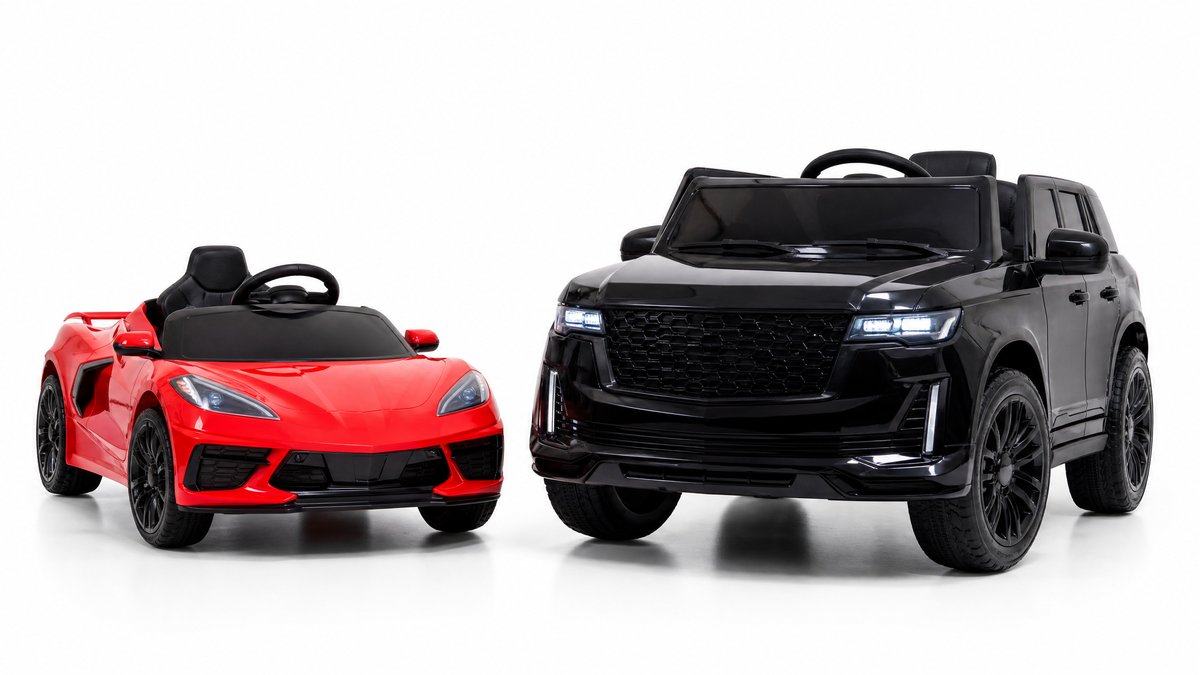
For retail buyers and toy store owners sourcing children's electric ride-on cars, end-consumer satisfaction often hinges on one critical performance metric: real-world terrain capability. While standard ride-on vehicles look stunning on smooth showroom floors or paved suburban driveways, parents and children frequently test their limits on backyard lawns, gravel pathways, and garden slopes.
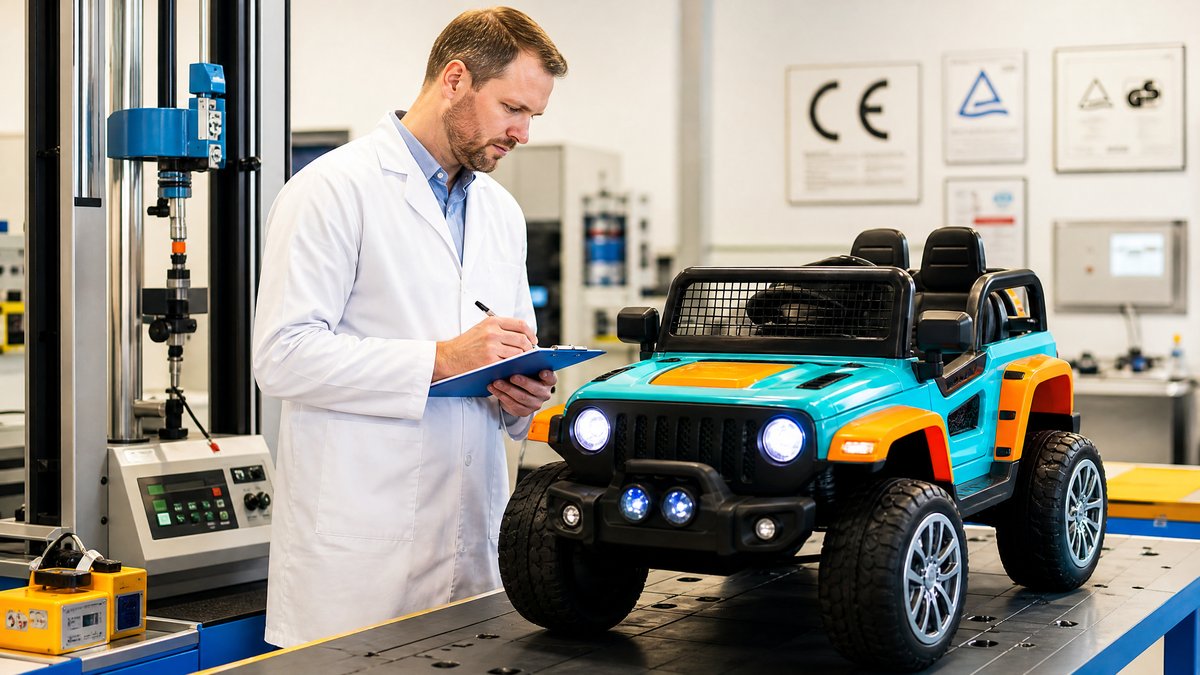
When a customer complains that a newly purchased 12V ride-on stalls out the moment it hits the grass, it directly impacts your brand reputation and return rates. To help B2B importers, distributors, and retail partners make informed catalog selections, our technical testing team conducted a rigorous, multi-surface stress test across various ride-on specifications.
In this article, we break down the engineering factors that dictate rough terrain performance, analyze our empirical field test data, and provide actionable sourcing guidelines for stock selection.
The Engineering Behind Terrain Performance
Before examining our field test results, it is essential to understand the mechanical components that separate a basic flat-surface toy from a genuine all-terrain ride-on car. When evaluating manufacturer specifications, four core pillars determine whether a vehicle can conquer grass and gravel:
1. Motor Configuration (Voltage and Wattage)
The propulsion power source is the primary bottleneck on uneven terrain.
* 6V Systems: Strictly designed for smooth indoor flooring or flat concrete. They completely lack the torque required to rotate wheels against the friction and resistance of natural turf.
* Standard 12V Systems: Equipped with dual 35W to 45W motors. They handle short, well-manicured lawns adequately with a light toddler on board, but struggle on thick or damp grass and steep inclines.
* Upgraded 12V and 24V Systems: Utilizing dual 55W+ motors or heavy-duty quad-motor setups (4WD), these systems deliver high torque at lower RPMs, making them capable of powering through challenging outdoor environments.
2. Wheel Construction and Tread Design
Plastic wheels molded with a simple center traction strip offer minimal grip on loose soil or wet grass. Premium ride-ons feature EVA foam tires with deep rubberized tread patterns or pneumatic (air-filled) tires. EVA tires compress slightly over pebbles and grass roots, significantly increasing surface contact friction and preventing wheel spin.
3. Suspension Systems
Rough terrain translates directly into mechanical shock and driver discomfort. Independent spring suspension on rear axles—and increasingly on all four wheels—keeps the drive wheels firmly planted on the ground. Without suspension, lifting over a small bump causes one drive wheel to suspend in mid-air, resulting in an immediate loss of traction and stalled momentum.
4. Gearbox Ratio and Drive Control
High-torque gearboxes prioritize pulling power over top speed. Commercial-grade ride-ons utilize reinforced metal-gear or thick nylon-gear reduction boxes that withstand the high thermal stress generated when tires get stuck in mud or thick turf.
Comparative Field Test Data
To quantify performance, our testing team subjected four representative vehicle categories to standardized obstacle courses comprising 5-centimeter tall Kentucky bluegrass, loose pea gravel, and a 15-degree grass incline. Each vehicle carried a standardized 30kg payload.
| Vehicle Category | Motor Specs | Tire Type | Grass Performance (5cm Turf) | Gravel Traversal | Max Incline (Grass) | Retail Sourcing Viability |
|---|---|---|---|---|---|---|
| Entry-Level 12V Sedan | Dual 35W | Hard Plastic (Smooth) | Poor (Stalls frequently) | Fair (Slips and bogs down) | 5° | Budget / Indoor-focused |
| Mid-Range 12V SUV | Dual 45W with Suspension | EVA Foam (Treaded) | Good (Navigates smoothly) | Good (Steady traction) | 12° | Mass Market / General Retail |
| Heavy-Duty 24V UTV | Dual 75W (High Torque) | EVA Foam (Deep Tread) | Excellent (Zero stalling) | Very Good (Maintains speed) | 18° | Premium Outdoor / High Margin |
| Extreme 4WD Off-Roader | Quad 45W (4x4 Drive) | Pneumatic Rubber | Outstanding (Unstoppable) | Outstanding (Deep gravel master) | 22°+ | Specialty / High-End Catalog |
As illustrated in the data, entry-level plastic-wheeled sedans are entirely unsuited for outdoor turf environments. Conversely, 24V dual-motor and quad-motor configurations maintain consistent torque delivery, preventing thermal overload in the control boards during extended backyard play.
Real-World Observations: What B2B Buyers Must Know
Thermal Management and Overload Protection
During our stress tests on thick, damp grass, standard 12V control boxes experienced significant heat buildup. Models lacking built-in thermal auto-reset fuses suffered temporary circuit shutdowns to prevent motor burnout. For B2B importers, confirming that factory suppliers install certified thermal circuit breakers is vital for minimizing warranty claims.
Battery Drain Disparities
Terrain resistance drastically alters battery efficiency. While a standard 12V 7Ah battery provides roughly 60-90 minutes of continuous runtime on smooth asphalt, operating exclusively on thick grass increases current draw by up to 45%, reducing effective runtime to 35-50 minutes. Advising your retail customers to stock upgraded 12V 10Ah or 24V 7Ah battery packs creates an excellent upsell opportunity.
Parental Control Override
When children navigate rough terrain, uneven obstacles can jerk the steering wheel abruptly. High-end 2.4G remote controls with instantaneous emergency brake (P-button) and proportional steering override are essential safety features that parents demand when children operate ride-ons near garden borders or rough backyard terrain.
Frequently Asked Questions (FAQ)
1. Which motor configuration is best for markets with suburban backyards?
For markets where suburban backyards with lawns are standard (such as North America and Northern Europe), we strongly recommend sourcing vehicles with at least a 12V upgraded dual-motor setup (45W+) paired with EVA foam tires. Pure plastic-wheel models will generate high customer dissatisfaction and return rates in these regions.
2. Do 4-wheel drive (4WD) ride-on cars justify their higher wholesale cost?
Yes, for premium retail tiers. 4WD models utilize independent motors on each wheel, eliminating differential slip on loose gravel and wet grass. They offer superior hill-climbing ability and command a higher retail price point, yielding better profit margins for specialty toy distributors.
3. How does wet grass impact ride-on performance compared to dry grass?
Wet grass reduces tire friction coefficients by nearly 50%. Standard plastic wheels will spin uselessly in place. Vehicles equipped with deep-tread EVA tires and soft-start acceleration controllers mitigate this slippage by delivering measured torque rather than sudden wheel-spinning bursts.
4. What certification standards should we verify when importing off-road ride-on cars?
Ensure your manufacturing partners provide full compliance documentation, including CE, EN71, ASTM F963, and RoHS, alongside electrical safety certifications for chargers and lithium/lead-acid battery packs (UN38.3).
Conclusion & Sourcing Recommendation
Terrain capability is no longer a secondary feature—it is a core purchasing criterion for modern parents seeking durable, versatile outdoor toys. By stocking ride-on vehicles equipped with high-torque motors, EVA foam tires, and robust suspension systems, B2B retailers can drastically reduce customer complaints and capture higher-margin segments of the outdoor toy market.
To explore our complete catalog of all-terrain 12V and 24V ride-on cars, request bulk wholesale pricing, or discuss custom OEM/ODM configurations for your retail brand, contact our international trade team today at info@kidsridecar.com.
Official references
Explore these external resources for current regulatory and trade guidance. Confirm requirements with the relevant authority before placing an order.
Ready to Start?
Factory-Direct · CE & ASTM Certified · MOQ from 50 Units
Our export team works with buyers in 60+ countries. Get a quote within 24 hours.
KR
Written by KidsRideCar
China's leading kids electric ride-on car manufacturer. 500,000+ units shipped annually to 60+ countries. CE, ASTM & EN71 certified.