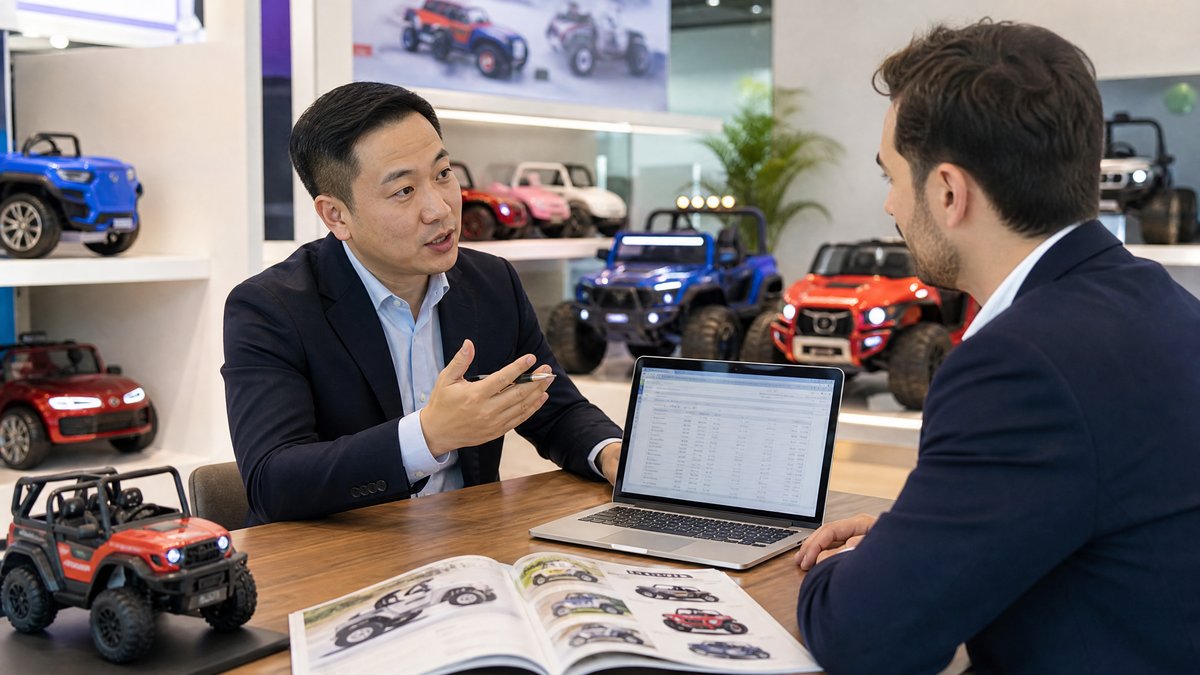
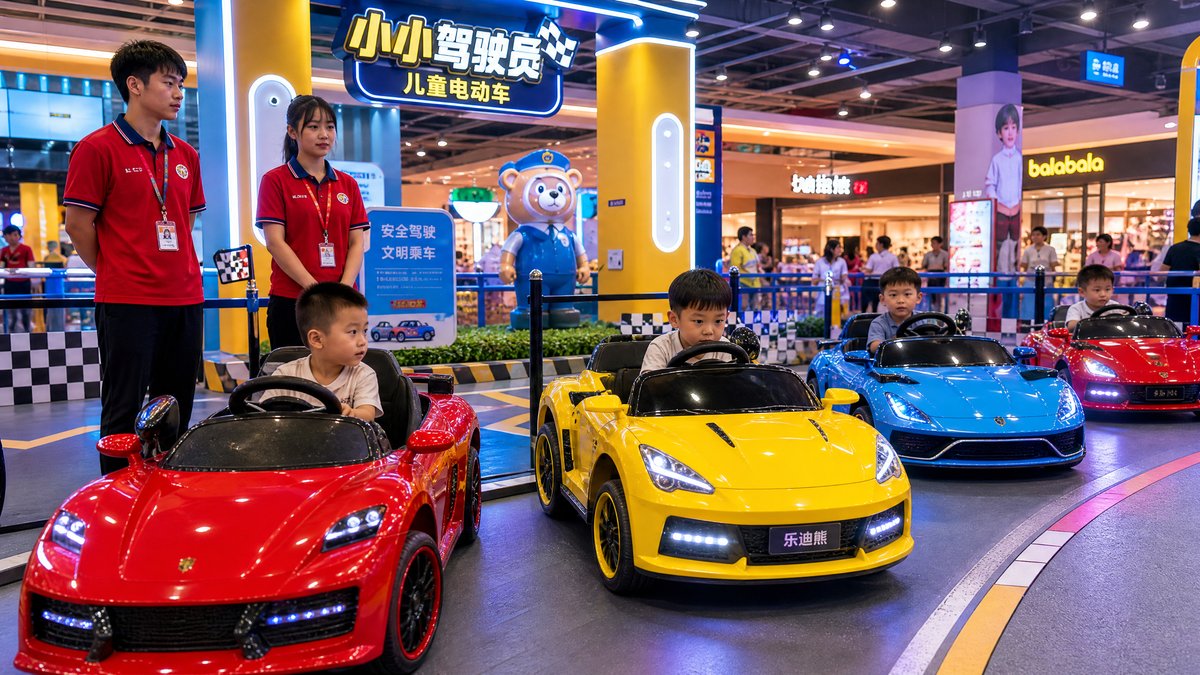
Yes—commercial kids ride-on cars can be suitable for rental businesses when the selected models, operating rules, staffing, maintenance process, and local requirements match the venue. They are not automatically “rental grade” simply because a supplier uses the word commercial. A rental operator should evaluate each vehicle as a frequently handled business asset, not only as a toy sold for home use.
For an importer, wholesaler, distributor, retailer, or operator, the central question is practical: can the fleet be checked, charged, cleaned, controlled, repaired through approved procedures, and returned to service consistently? A suitable fleet should also fit the age range, site layout, customer experience, and risk controls of the intended venue.
This guide explains how to make that decision without relying on unverified claims about service life, revenue, speed, or return on investment.
What makes a ride-on car suitable for rental use?
A rental fleet normally experiences a different use pattern from a household vehicle. It may be used by many children in one day, handled by staff between sessions, moved across a venue, and exposed to repeated cleaning and charging. Suitability therefore comes from the whole operating system rather than from one feature.
Look for a model and supplier that can support the following:
- A clearly defined intended age, user size, occupancy, and environment.
- Straightforward pre-use and post-use inspection procedures.
- Controls that staff can understand and supervise.
- Replaceable approved consumables and service parts, with clear identification.
- Consistent assembly instructions and technical documentation.
- Packaging and shipment arrangements that make replenishment practical.
- A documented process for reporting, isolating, and resolving faults.
- Product information that helps the operator set rules without making unsupported safety promises.
A model can be attractive to customers and still be unsuitable for rental if staff cannot inspect it efficiently or if the supplier cannot explain the approved charging and maintenance process.
When should a business consider a rental fleet?
Commercial kids ride-on cars may work in settings such as family entertainment centers, shopping centers, holiday venues, indoor play areas, resorts, event operators, and other controlled spaces. The business case is strongest when the operator can manage the riding area, define sessions or routes, supervise children, and keep vehicles out of service when they need attention.
Before contacting suppliers, map the operating concept:
1. Define the customer experience
Decide whether the service is a short supervised ride, a timed circuit, a self-contained play-zone activity, or a vehicle included in a wider attraction. Clarify whether a parent remains nearby, whether staff control the vehicle, and how customers receive instructions.
This affects the preferred controls, seating arrangement, access process, and staff training. It also prevents a buyer from choosing a model based only on appearance or wholesale price.
2. Assess the venue
Record the surface, turning areas, slopes, doorways, storage space, charging location, weather exposure, and cleaning facilities. Indoor and outdoor operations may require different product configurations and procedures. Ask the supplier to confirm the intended environment for the specific model rather than assuming that a vehicle is suitable for every surface or weather condition.
Also consider noise, pedestrian separation, visibility, queue design, emergency access, and how a staff member can stop or isolate a vehicle. These are operating decisions, not claims about a product’s performance.
3. Set a fleet mix
A rental fleet may benefit from more than one body style or seating layout, but a large variety can complicate training, spare-parts control, charging, and customer instructions. Start with a small, clearly documented range. Compare models by seat access, control layout, inspection points, parts commonality, and cleaning needs.
For buyers building a broader product assortment, the [KidsRideCar product range](/products/) can be used as a starting point for comparing available configurations. Confirm current specifications with the supplier before placing an order.
Commercial features to verify before ordering
The word “commercial” should lead to specific questions. Ask for model-level information, not general statements about a factory.
Construction and high-touch areas
Inspect the body panels, seat area, steering controls, wheels, connectors, and other parts that staff or customers handle frequently. Ask which components are considered replaceable and how they are identified in parts lists. Request assembly diagrams and approved service instructions where available.
Do not infer durability from photographs, a licensed appearance, or a heavy-looking shell. If the fleet will operate in a demanding environment, arrange a sample evaluation under the same type of handling and cleaning expected in service.
Controls and supervision
The operator should understand every control mode before buying. Ask whether the model includes a parental or staff remote, how control authority is managed, and what the operating instructions say about supervision. Confirm that the control system suits the venue’s staffing plan and that staff can identify a vehicle that must be removed from service.
Safety guidance should remain model-neutral: follow the supplied instructions, use only intended controls, supervise children, keep riders within the stated user limits, and stop operation when a fault or unsafe condition is observed.
Power system and charging workflow
Request the exact battery type, charger specification, charging instructions, storage guidance, and approved replacement process for each model. Plan a charging area with appropriate supervision, ventilation where required by the instructions, protection from unsuitable conditions, and clear separation between charged, in-use, and quarantined units.
Staff should use only the supplied or approved charging equipment and follow the model documentation. Never advise operators to open batteries, bypass protections, rewire a vehicle, solder connections, or attempt internal repairs. A supplier should provide a safe escalation path for battery, charger, wiring, or control faults.
Cleaning and hygiene
Rental vehicles need a repeatable cleaning method between users. Ask which surfaces and materials can be cleaned using the venue’s intended products and whether moisture must be kept away from particular components. Build cleaning into the turnaround checklist rather than treating it as an occasional deep-cleaning task.
Avoid promising that a model is waterproof or suitable for every cleaning chemical unless the supplier has provided model-specific documentation. The operator remains responsible for following the product instructions and its own venue procedures.
A practical rental-fleet inspection system
A simple inspection system can protect customers, staff, and inventory. Adapt it to the product manual and local operating requirements.
Before opening or each operating period
A trained staff member can check the general condition, seat and restraints where fitted, wheels, steering, visible fasteners, controls, remote, charger status, and obvious body damage. The check should also confirm that the vehicle is clean and that labels or instructions remain readable.
Between users
Staff should confirm that the previous session ended normally, remove visible debris, look for new damage, and verify that the vehicle responds as expected within the permitted operating area. If anything is unusual, stop issuing that vehicle until it has been assessed.
After closing
Record units needing charging, cleaning, parts, or supplier support. Store vehicles and chargers as instructed. A shared log—paper or digital—can include the vehicle identifier, date, operator initials, issue description, action taken, and release decision.
The goal is not to create a complicated bureaucracy. It is to make decisions traceable and prevent a known problem from being passed to the next customer.
Procurement checklist for importers and OEM buyers
A rental operator buying directly, or a distributor developing a rental offer, should put operational requirements into the inquiry and purchase order. Useful questions include:
1. Which exact models and configurations are intended for the proposed venue?
2. What user age, size, occupancy, environment, and operating limitations are stated in the documentation?
3. Which parts are replaceable, and are part numbers or diagrams available?
4. What are the approved charger, battery, storage, and inspection instructions?
5. Which components are common across the proposed fleet?
6. What packaging protects the units during international shipment and local handling?
7. What documentation is supplied in the target language or can be translated for staff?
8. How are faults, warranty requests, and replacement-part inquiries submitted?
9. Can the buyer evaluate a sample before committing to a larger fleet?
10. Which markings, manuals, warnings, and compliance documents apply to the destination market and the chosen configuration?
For a custom-branded fleet, specify the logo, colors, labels, manuals, spare-parts identification, and packaging separately. Review artwork and operating instructions before mass production. An OEM request should improve consistency and serviceability, not merely change the exterior appearance. See the [OEM and customization resources](/blog/oem-kids-electric-ride-on-cars-customization-guide) for related planning considerations.
Compliance and documentation: what buyers should confirm
Requirements vary by destination market, product classification, intended age, electrical configuration, battery type, venue, and other details. A document that is relevant to one market or configuration may not satisfy another. Do not treat a supplier’s general certificate image or a “CE” statement as a complete compliance assessment.
Ask the supplier for the documentation applicable to the exact model and configuration, then confirm obligations with a qualified local compliance professional, test laboratory, insurer, venue owner, or relevant authority as appropriate. Consider product labeling, warnings, language, electrical safety, battery transport, consumer-product rules, insurance, and venue-specific operating requirements.
The operator should also maintain records of purchase documents, manuals, inspections, incidents, repairs performed through approved channels, and staff training. These records support consistent operations without making a legal conclusion about any particular market.
How distributors and wholesalers can package a rental offer
A distributor can add value by selling an operating solution rather than a carton of vehicles. A useful rental-focused offer may include:
- A recommended starter fleet configuration based on the buyer’s venue information.
- A model comparison sheet with documented limitations.
- Spare-part identification and reorder guidance.
- A pre-opening and between-user inspection template.
- Charging, storage, cleaning, and quarantine instructions.
- Staff onboarding material and customer-facing usage rules.
- A clear channel for technical questions and approved service escalation.
Avoid promising a fixed payback period, utilization rate, lifespan, or revenue result without verified data from the buyer’s own venue. Procurement decisions should use the operator’s actual session price, opening schedule, staffing, floor space, maintenance budget, insurance, taxes, and local costs.
Common reasons a rental fleet underperforms operationally
The most preventable problems often arise before delivery. Buyers may select a visually appealing consumer-oriented model without defining the venue, order too many different configurations, omit spare-part planning, or give staff no written release-from-service rule.
Other warning signs include unclear battery instructions, no process for damaged units, weak identification of model variants, missing translated manuals, and a purchase order that does not state the agreed configuration. These gaps can create inconsistent customer experiences even when the vehicles themselves are functional.
A disciplined pilot can reduce uncertainty. Start with a manageable number of units, document actual cleaning and inspection time, gather staff feedback, and record recurring issues. Then use those findings to refine the next order. The pilot should follow the same supervision and safety rules intended for regular operations.
Frequently Asked Questions (FAQ)
Are commercial kids ride-on cars better than home-use models for rentals?
They may be a better fit when their documented configuration, service support, parts availability, and operating controls match repeated supervised use. “Commercial” is not a universal technical category, so compare model-level documentation and test a sample instead of relying on the label.
How many ride-on cars should a rental business order first?
There is no universal number. Base the initial quantity on the venue’s usable area, supervision capacity, expected session flow, storage, charging capability, budget, and ability to remove units from service. A controlled pilot is often more informative than a large first order.
What safety features should a rental operator look for?
Look for features and controls that are appropriate to the model and venue, such as documented user limits, supervised operating controls, clear instructions, suitable restraints where provided, and a practical way to stop or quarantine a vehicle. Verify each feature in the exact product documentation and follow local requirements.
Can rental operators repair ride-on cars themselves?
Operators should limit work to the maintenance and replacement procedures explicitly approved in the product documentation. They should not open batteries, bypass protections, rewire, solder, or perform internal repairs. Escalate electrical, battery, control, or structural faults to the supplier or a qualified service provider.
What should an overseas buyer ask a KidsRideCar supplier?
Share the venue type, destination market, user profile, operating environment, desired controls, fleet size range, branding needs, and service expectations. Ask for exact specifications, manuals, approved charging guidance, parts information, packaging details, and applicable documentation for the selected configuration. You can send a structured request through the [KidsRideCar inquiry page](/inquiry).
Conclusion: suitability depends on the operating system
Commercial kids ride-on cars can support a rental business, but suitability is a procurement and operations decision—not a marketing label. The right choice combines a venue-appropriate configuration with supervision, inspection, charging, cleaning, storage, service escalation, documentation, and destination-market review.
Importers and distributors should define the use case before requesting quotations, compare a focused fleet, evaluate a sample where practical, and put approved procedures and support expectations into the order. Rental operators should measure their own turnaround workload and remove questionable units from service promptly.
To discuss a rental-focused configuration, OEM requirements, or distributor sourcing questions with KidsRideCar, contact the team at info@kidsridecar.com.
Official references
Explore these external resources for current regulatory and trade guidance. Confirm requirements with the relevant authority before placing an order.
Ready to Start?
Factory-Direct · CE & ASTM Certified · MOQ from 50 Units
Our export team works with buyers in 60+ countries. Get a quote within 24 hours.
KR
Written by KidsRideCar
China's leading kids electric ride-on car manufacturer. 500,000+ units shipped annually to 60+ countries. CE, ASTM & EN71 certified.